
Sourdough Crescent Rolls: Soft, Buttery, and Irresistibly Flavorful for Any Meal
Imagine a roll that is incredibly soft, delicately buttery, with just a hint of sweetness, and that signature, complex sourdough tang. That’s precisely what our homemade sourdough crescent rolls deliver. Perfect as an accompaniment to any dinner, a delightful breakfast pastry, or a comforting snack, these rolls are not only a delicious addition to your table but also an ingenious and rewarding way to utilize your sourdough starter discard. Get ready to impress your family and friends with this simple yet immensely satisfying baking project.

Embracing the Magic of Sourdough Discard in Baking
For many enthusiastic home bakers, maintaining a sourdough starter is a true labor of love. This often results in a surplus of “discard” during regular feedings. Rather than letting this flavorful byproduct go to waste, this recipe provides a fabulous and incredibly delicious outlet for it. The entire process to create these delightful rolls is surprisingly easy, and the outcome is nothing short of exceptional – every bite is as delicious as you could possibly imagine, offering a perfect blend of rich flavor and tender texture.
My Sourdough Journey: A Tale of Bertha and Beyond
If you’re new to my culinary adventures, allow me to introduce you to Bertha, my cherished sourdough starter. My journey into the captivating world of sourdough began unexpectedly after I watched a captivating television segment that ignited an unquenchable excitement for all things culinary. Inspired by the possibilities, I immediately raced to my kitchen, eager to mix flour and water and embark on my own sourdough experiment. Five days and five diligent feedings later, Bertha sprang to life, perking away with active bubbles and a promising aroma, ready to transform ordinary ingredients into extraordinary baked goods.
Since then, Bertha and I have shared countless baking successes, most notably in the realm of muffins. If you haven’t yet had the pleasure of trying any sourdough muffins, you are truly missing out – they are absolutely amazing! I particularly enjoy incorporating hearty oatmeal and just a touch of sugar to create a wholesome, grab-and-go sourdough breakfast that not only tastes incredible but also feels nourishing and satisfying.
Among our earliest triumphs, the chocolate chip sourdough muffins quickly became an undisputed family favorite. More recently, however, the indulgent caramel apple sourdough muffins have emerged as a new winner, captivating everyone with their comforting flavors. I’ve proudly shared a wide array of flavor variations on my blog, so if you’re a fellow sourdough starter owner, I am confident you’ll discover a muffin recipe you’ll absolutely adore!
My culinary exploration with diverse sourdough recipes has been an incredibly fun and rewarding experience. Among all the delightful creations, these sourdough crescent rolls quickly ascended to the top of my personal favorites list. From the very first bite, it was clear: this was love at first taste! Their delicate balance of texture and flavor instantly captivated my senses.
Crafting the Perfect Sourdough Crescent Roll: A Balanced Delight
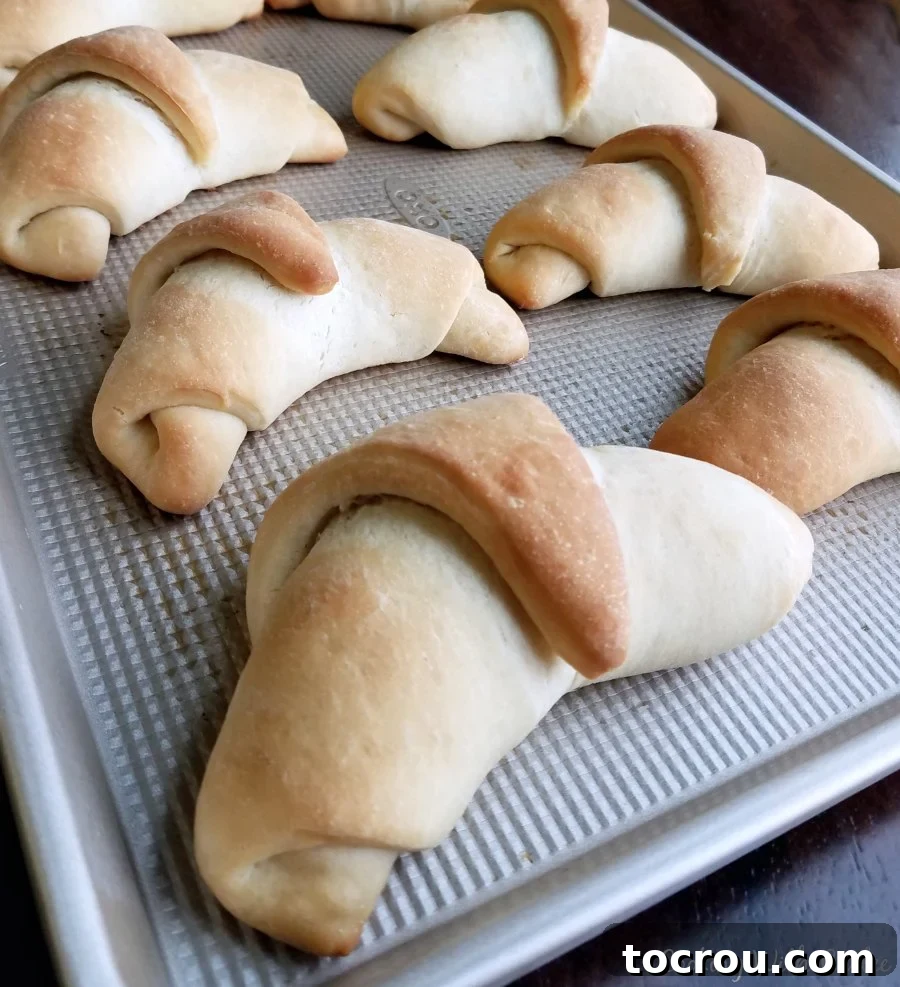
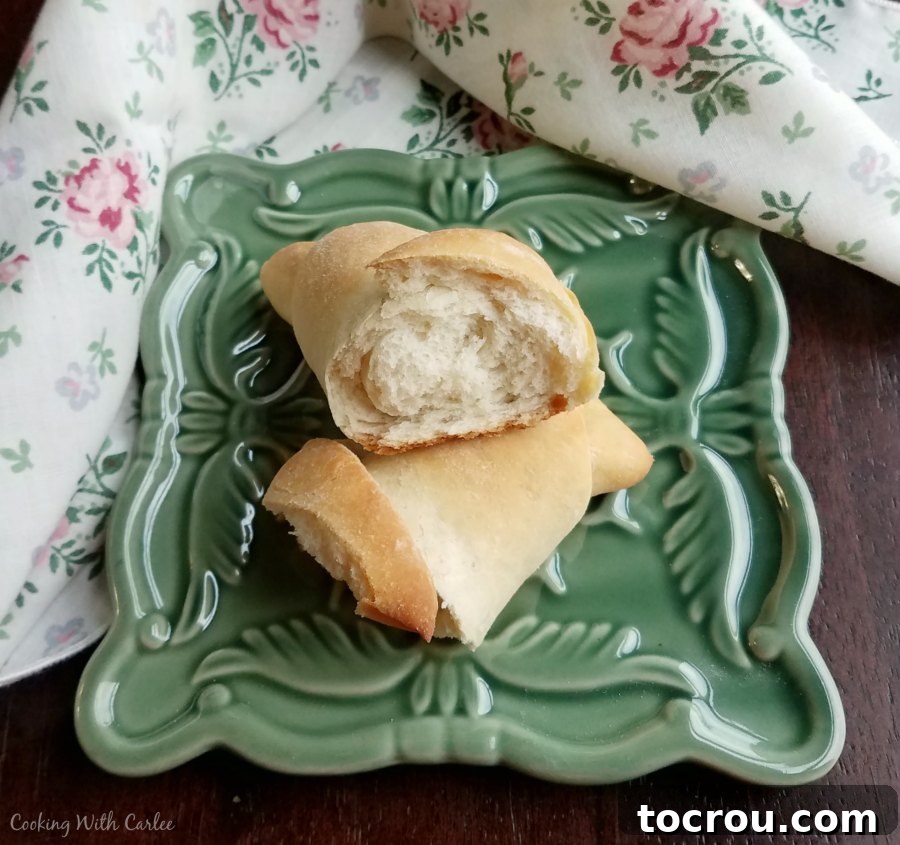
These sourdough crescent rolls truly are a remarkable creation – exceptionally easy to make and exquisitely delicious. They boast just the right amount of butter and sugar, contributing to their signature light, airy, and fluffy texture, alongside a subtle, gentle sweetness that never overwhelms the palate. While we dearly love our other favorite homemade crescent rolls, these sourdough variations offer a distinctly different character with slightly less richness, allowing the unique, tangy notes of the sourdough to truly shine and add a layer of complex flavor.
Typically, this recipe yields 16 generously sized, satisfying rolls. However, if you prefer smaller portions or are serving a larger crowd, you can easily adapt the recipe by forming three balls of dough instead of two. This adjustment will result in approximately 24 delightful smaller rolls. When opting for smaller rolls, simply keep a closer eye on the baking time to ensure you don’t overdo them, preserving their tender, melt-in-your-mouth texture.
Why These Sourdough Crescent Rolls Will Quickly Become Your New Culinary Obsession
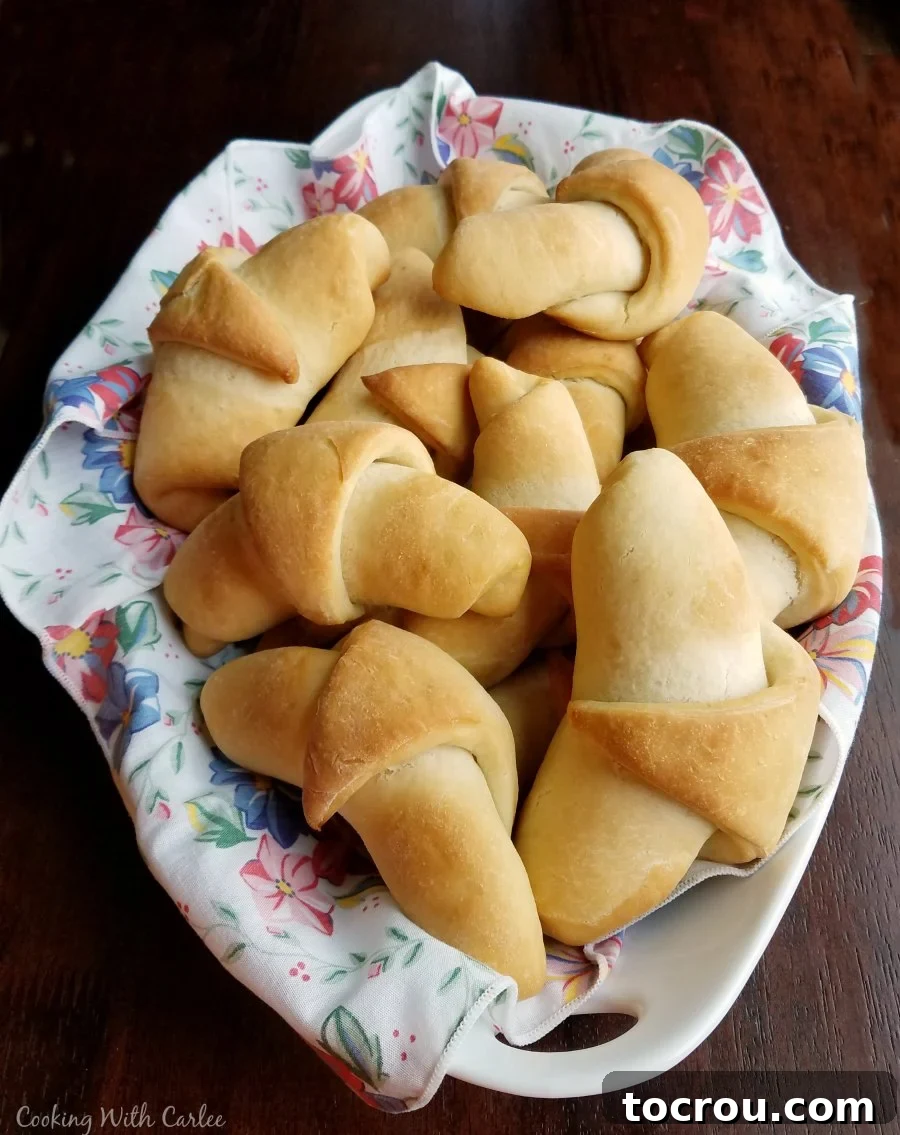
If you’re on the hunt for exquisitely soft, deeply flavorful rolls that boast a beautifully well-rounded taste profile, seamlessly marrying the comforting familiarity of a classic crescent roll with the sophisticated tang of sourdough, then your search ends here. Bertha, my trusty sourdough starter, and I were absolutely delighted with the exceptional results. Our enthusiasm was mirrored by every single person we shared these rolls with, all of whom praised their irresistible charm. These rolls are more than just a mere side dish; they are a delightful culinary experience that elevates any meal.
I wholeheartedly encourage you to bake a batch and discover their undeniable magic for yourself. Not only do they taste incredible, but they also represent a truly wonderful and delicious way to utilize your sourdough discard. This transforms what might otherwise be discarded into a triumphant culinary creation. The process itself is deeply satisfying, connecting you more intimately with the ancient and rewarding art of bread making. Prepare to be charmed by every buttery, tangy, and tender bite.
Carlee’s Essential Tips, Tricks, and Frequently Asked Questions (FAQs)
Choosing the Right Sourdough Starter for This Recipe
One of the many beautiful aspects of this particular sourdough crescent roll recipe is its remarkable flexibility regarding your sourdough starter. Unlike some more traditional sourdough recipes that explicitly require a freshly fed, highly active, and bubbly starter, these crescent rolls are incredibly forgiving. Because the recipe thoughtfully incorporates an additional measure of dry active yeast, you can breathe easy knowing you don’t have to stress about feeding your starter precisely 24 hours in advance.
This makes it an absolutely ideal recipe for effectively using up sourdough discard that you might have stored straight from the refrigerator, or even a starter that hasn’t seen a feeding in a little while. The commercially added yeast serves to ensure a reliable and robust rise, providing the primary lift and structural integrity for the rolls. Simultaneously, the sourdough component works its magic by contributing its unique, nuanced, and complex flavor profile, enriching the rolls with a depth that cannot be fully achieved with commercial yeast alone. It’s a harmonious blend that offers both convenience and exceptional taste.
Mastering the Art of Dough Proofing: The Knuckle Test Explained
Accurately determining whether your bread dough has properly proved can sometimes feel like a mysterious challenge for home bakers. While many recipes often suggest waiting for the dough to “double in size,” this visual cue can be subjective, and the exact amount of time required for proofing is highly dependent on environmental factors such as ambient temperature and humidity. Therefore, relying solely on a timer is not always the most accurate or reliable approach.
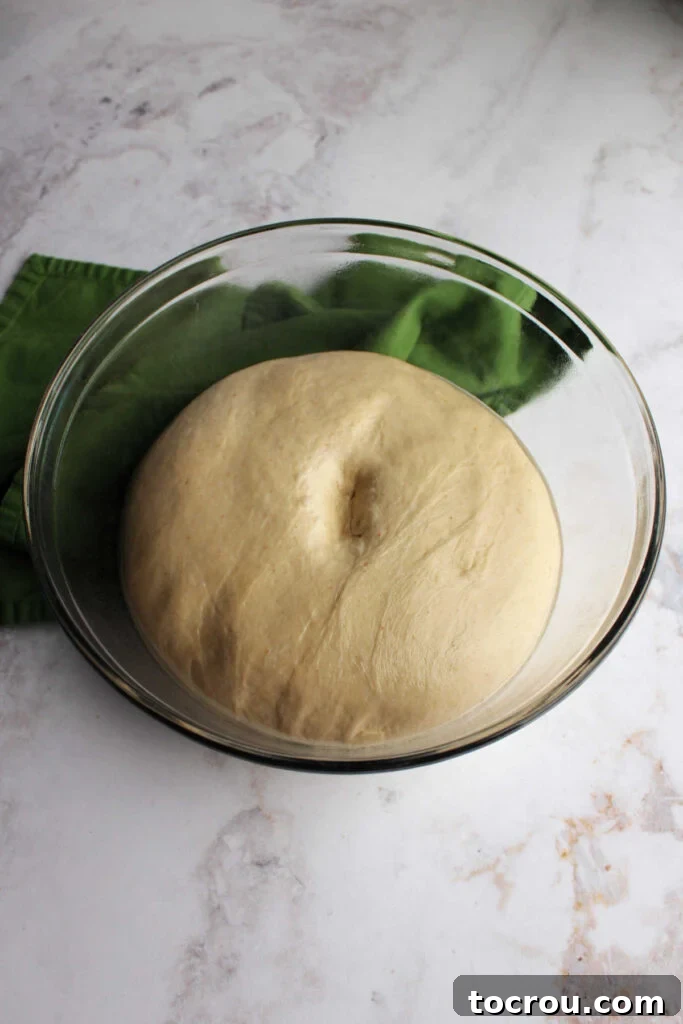
An incredibly easy and reliable method to test for proper dough proofing is known as the “knuckle test” or “poke test.” To perform this, gently press your floured knuckle or finger about half an inch into the risen dough. Observe carefully how the dough responds to this gentle pressure:
- If the indent springs back quickly and completely: This indicates that your dough is still under-proofed and requires a little more time to rise and develop.
- If the indent bounces back slowly and only partially, leaving a slight impression: Congratulations! Your dough is perfectly proved and is now ready to proceed to the next exciting step in the recipe.
- If the indent remains completely, or the dough visibly deflates: This unfortunately suggests that your dough might be over-proofed, which can sometimes lead to a less airy texture and a slightly reduced rise during baking.
Mastering this simple test is crucial for achieving that wonderfully light, airy, and tender texture that makes these sourdough crescent rolls so utterly irresistible. Paying close attention to these subtle cues will undoubtedly lead to consistently perfect results in your baking endeavors.
Can You Freeze Sourdough Crescent Dough? Absolutely, for Future Enjoyment!
Life’s demands often mean we don’t always need an entire batch of freshly baked rolls at once. The excellent news is that sourdough crescent dough freezes exceptionally well, offering incredible flexibility and convenience for future meals. This means you can easily enjoy warm, homemade rolls whenever the craving strikes, without starting from scratch every time. You have a couple of fantastic options for preparing and freezing this versatile dough:
Option 1: Freezing Unformed Dough for Later Shaping
To use this method, follow the recipe instructions through the first proofing stage, where the dough doubles in size. Once your dough is beautifully risen and ready to be divided, simply cut the ball of dough in half (or into your preferred smaller portions, if you’re making multiple small batches). Tightly wrap each portion meticulously in plastic wrap, ensuring that no air can penetrate and cause freezer burn. Then, place these tightly wrapped portions into a freezer-safe bag for an extra layer of protection. This unformed dough can be stored in the freezer for up to an impressive three months without any significant compromise to its quality or leavening power.
When you’re ready to bake, transfer the frozen dough from the freezer to your refrigerator and allow it to defrost slowly overnight. This gradual thawing process is crucial for maintaining the dough’s integrity. Once fully thawed, you can then proceed with the recipe instructions from the shaping step onwards, creating fresh, perfectly proofed, and baked rolls. This method is brilliant for efficient meal prepping and ensures that fresh, warm rolls are always just a few simple steps away on any given day.
Option 2: Freezing Pre-Formed Crescent Rolls for Quick Baking
For an even quicker turnaround on baking day, you have the option to form the crescent rolls completely before freezing them. After you’ve shaped all your beautiful crescent rolls, arrange them carefully on a sheet pan, making sure they do not touch each other. Place the entire sheet pan into the freezer until the rolls are completely frozen solid – typically a few hours. Once they are firm and frozen, you can transfer them to a freezer-safe bag, which helps to save valuable freezer space, and return them to the freezer for up to three months.
When the occasion calls for fresh rolls, simply retrieve the frozen, formed rolls from the freezer and place them back on a greased baking sheet. Cover them loosely with plastic wrap or a clean kitchen towel to protect them from drying out. Allow them to defrost gradually in the refrigerator overnight. After thawing, bring them to room temperature for their final proofing stage. Once they have gracefully doubled in size, bake them as directed in the recipe instructions below. This method is particularly ideal for managing busy holiday preparations or when entertaining guests, as it allows you to complete the majority of the prep work well in advance, leaving you with minimal effort on the day of serving. Imagine the convenience of fresh, homemade rolls with very little fuss!
Croissants vs. Crescent Rolls: Understanding the Delicious Distinction
While both croissants and crescent rolls share a visually appealing, iconic curved shape, it’s important to recognize that their textures, preparation methods, and overall flavor profiles are distinctly different. Understanding these key differences can significantly enhance your appreciation for each unique and delightful pastry.
- Croissants: These are a renowned flaky pastry, celebrated for their numerous, delicate, and paper-thin layers. Achieving this signature texture involves a meticulous and labor-intensive process known as lamination. During lamination, a block of butter is repeatedly folded into the dough, creating hundreds of distinct layers that separate and puff up dramatically during baking. The result is an incredibly airy, crispy, and often savory pastry, though sweet variations are also popular. Croissants are a true testament to the art of baking, cherished for their complex structure, rich butteriness, and satisfying shatter.
- Crescent Rolls: In delightful contrast, crescent rolls possess the comforting and familiar texture of classic bread. While they are also wonderfully buttery, the butter is typically either incorporated directly into the dough mixture or generously brushed onto the dough before it is skillfully rolled into its characteristic horn shape. Unlike croissants, there is no intricate lamination process involved in their creation. This simpler preparation results in a soft, pillowy, and tender crumb, rather than the distinct flaky layers found in croissants. Crescent rolls are generally sweeter than their croissant counterparts and are structurally more akin to a versatile dinner roll in both texture and typical application, making them a perfect and comforting accompaniment to a wide variety of meals. They are buttery and delicious in their own right, offering a more rustic, heartwarming, and authentically home-baked feel.
Optimal Storage for Your Sourdough Crescent Rolls
These delightful sourdough crescent rolls are, without a doubt, best enjoyed immediately after they emerge from the oven, when they are at their absolute peak of warmth, softness, and fresh flavor. However, if you find yourself with a surplus of rolls that won’t be consumed within a day or two of baking, proper storage is key to maintaining their delicious quality and extending their freshness.
To preserve their tender texture and rich taste, ensure the rolls are completely cooled before storing. Once cool, place any leftover rolls in an airtight container or a robust freezer-safe bag. You can then freeze them for an extended period, up to three months. When you’re ready to indulge again, simply thaw them at room temperature for an hour or two, or for an even more exquisite experience, gently reheat them in a warm oven for a few minutes until they are soft and warm throughout. This thoughtful storage method ensures you can savor that comforting, homemade taste long after the initial baking day.
Sourdough Crescent Rolls Recipe: Your Guide to Baking Perfection

Rating: 4.84 out of 5 stars from 37 ratings
Sourdough Crescent Rolls
Author: Carlee
Yields: 16 Servings
These sourdough crescent rolls are incredibly soft, subtly sweet, and boast a beautifully rounded sourdough flavor. They are the perfect, comforting accompaniment to your next family dinner!
Print Recipe | Pin Recipe
Prep time: 25 minutes
Cook time: 25 minutes
Additional Time (Rising): 2 hours
Total Time: 2 hours 50 minutes
Essential Equipment
- Bench Scrape
- KitchenAid 5-Qt. Stand Mixer (or similar stand mixer with dough hook)
Ingredients List
- 2¼ teaspoons dry active yeast (or 1 standard package)
- 1½ cups warm water (approximately 105-115°F or 40-46°C)
- 4½ cups all-purpose flour, plus a little extra for dusting surfaces
- 1 cup sourdough starter (active or discard)
- 2 Tablespoons melted unsalted butter
- 2 teaspoons fine sea salt
- ¼ cup granulated sugar
- ½ teaspoon baking soda
- 2 teaspoons neutral oil (e.g., vegetable, canola, or grapeseed)
- 2 Tablespoons additional melted butter (for brushing rolls before baking)
Step-by-Step Instructions
- Activate Yeast: In the bowl of your stand mixer, combine 1½ cups warm water and 2¼ teaspoons dry active yeast. Stir gently and let this mixture sit undisturbed for about 10 minutes. This allows the yeast to activate and become visibly foamy, indicating it’s ready.
- Combine Ingredients: To the activated yeast mixture, add 3 cups of the all-purpose flour, 1 cup sourdough starter, 2 Tablespoons melted butter, 2 teaspoons salt, ¼ cup granulated sugar, and ½ teaspoon baking soda. Mix on low speed with the dough hook (or by hand) until all the ingredients are just combined and a shaggy dough forms.
- Add Remaining Flour: Gradually incorporate the remaining 1½ cups of flour, a little at a time, continuing to mix. Adjust the flour amount as needed until you achieve a nice dough consistency. The dough should be ever so slightly tacky to the touch, but not overly wet or sticky, nor too dry and crumbly. The exact amount of flour will depend on the hydration level of your sourdough starter and the humidity in your kitchen.
- Knead the Dough: Increase the mixer speed to medium-low and knead the dough using the dough hook for about 7 minutes. Alternatively, knead the dough vigorously by hand on a lightly floured surface for the same duration. The dough should become smooth, elastic, and pass the windowpane test (a small piece can be stretched thin enough to see light through it without tearing).
- First Rise (Bulk Fermentation): Lightly coat a large clean bowl with 2 teaspoons of oil. Transfer the kneaded dough to the bowl, turning it once to ensure it’s fully coated in the oil. Cover the bowl snugly with plastic wrap or a clean kitchen towel. Place the bowl in a warm spot in your kitchen (around 75-80°F / 24-27°C is ideal) and let the dough rise until it has visibly doubled in size. This typically takes about 1 to 1.5 hours, depending on the warmth of your environment.
- Prepare for Shaping: While the dough is completing its first rise, generously grease two large baking sheets and set them aside. Once the dough has doubled, gently punch it down to release the accumulated gases. Transfer the dough to a lightly floured work surface. Divide the dough into 2 equal pieces. (If you prefer to make smaller crescent rolls, you can divide the dough into 3 equal pieces). Form each piece into a smooth, round ball. Cover the dough balls loosely with a clean towel and let them rest for about 10 minutes. This resting period allows the gluten to relax, making the dough easier to roll out.
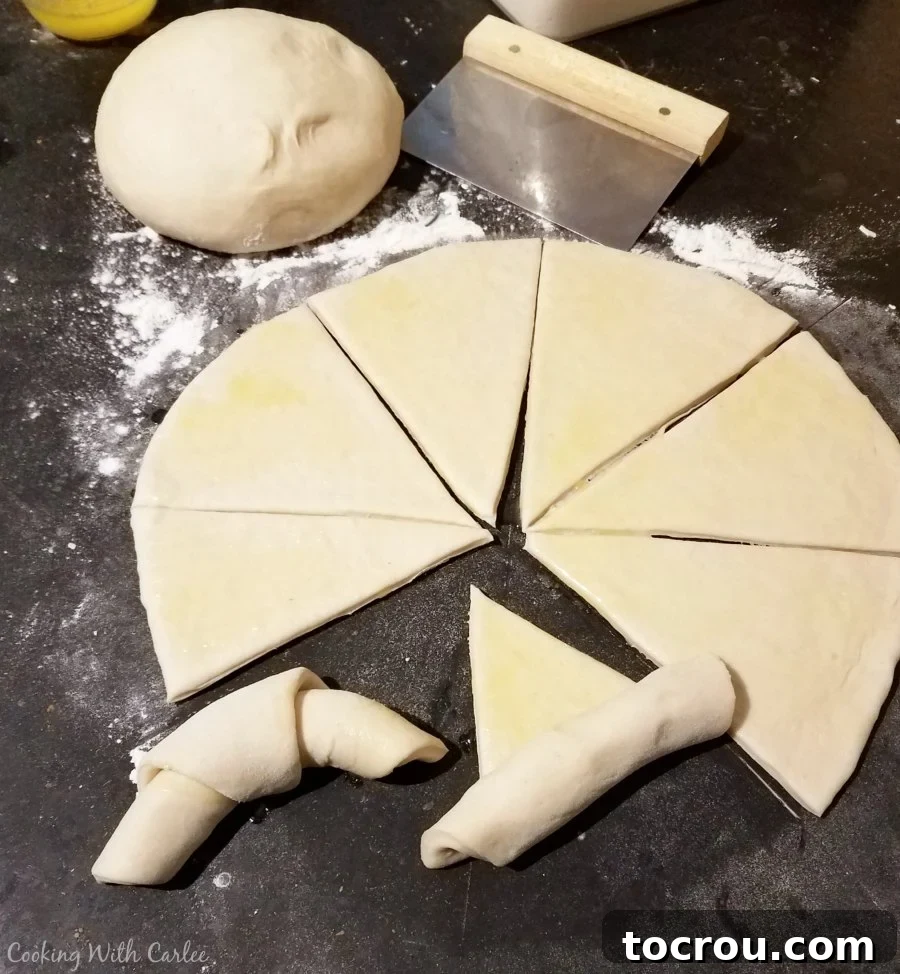
- Roll and Cut Dough: Take one ball of dough and place it on your lightly floured surface. Roll it out evenly into a large circular shape, aiming for a thickness of approximately ¼-inch. Using a pizza cutter or a sharp knife, carefully cut the circle into 8 equal wedges, much like slicing a pizza.
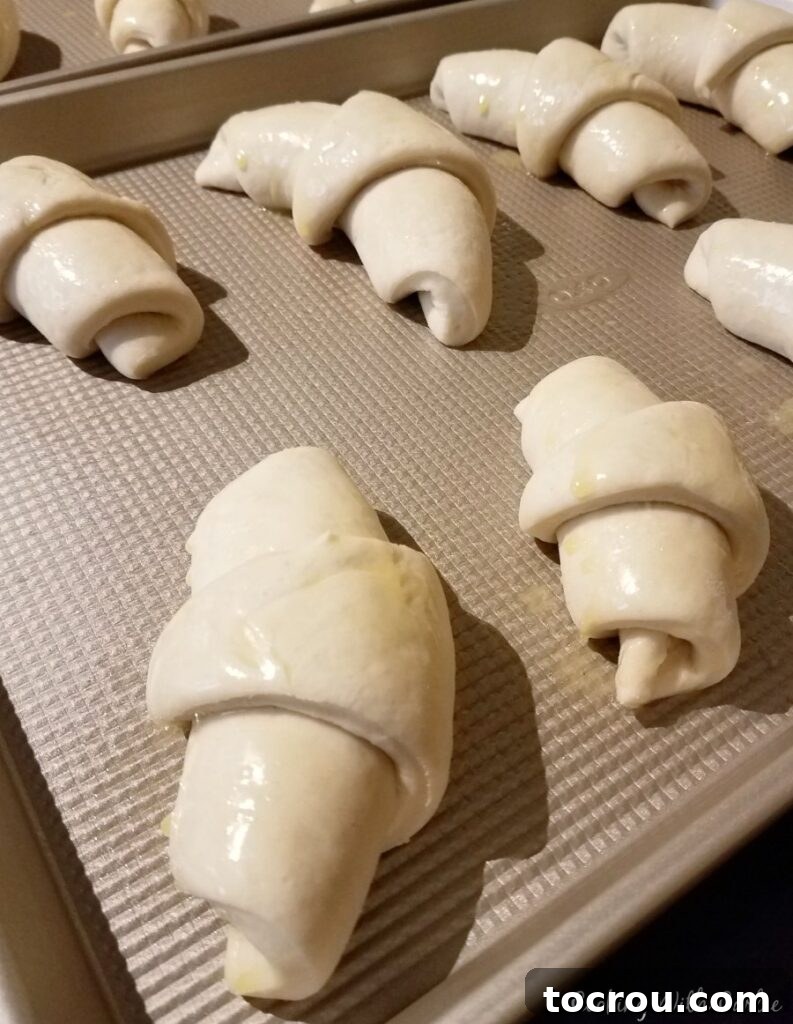
- Butter and Roll Crescents: Gently brush the surface of each dough wedge with 2 Tablespoons of the additional melted butter. Starting from the wide outer edge of each wedge, tightly roll it towards the pointed tip to create the classic crescent shape.
- Arrange and Second Rise (Proofing): Carefully place the formed crescent rolls onto your prepared greased baking sheets, ensuring you leave ample space between each roll. They will expand significantly during their second rise. Once all the crescents are shaped and arranged, cover the baking sheets loosely with clean kitchen towels or plastic wrap. Allow them to rise in a warm place until they have nearly doubled in size again, which typically takes another hour.
- Preheat Oven and Bake: While the rolls are completing their second rise, preheat your oven to 375°F (190°C). Once the rolls are proofed, gently brush their tops with a little extra melted butter (optional, but highly recommended for a beautiful golden-brown finish).
- Bake to Golden Perfection: Place the baking sheets in the preheated oven and bake for approximately 25 minutes, or until the rolls achieve a magnificent golden-brown color and are cooked through. For more even baking, it’s a good practice to rotate the trays halfway through the baking time, switching their positions from top to bottom and front to back.
- Serve Warm: Remove the baked sourdough crescent rolls from the oven and allow them to cool slightly on the baking sheets before transferring them to a wire rack. Serve them warm and savor every soft, buttery, and flavorful bite! Enjoy your homemade sourdough culinary triumph!
Video Tutorial: Watch How It’s Done!
For a visual guide to making these delicious sourdough crescent rolls, watch our helpful video tutorial:
Never Miss a Recipe: Get New Creations Delivered Directly to Your Inbox!
Want to receive this exact recipe link straight to your email? Plus, get exciting new recipes from our kitchen every single week! Just enter your email address below.
Estimated Nutrition Information
The following nutritional values are approximate for one serving (1 roll):
- Calories: 185 kcal
- Carbohydrates: 33g
- Protein: 4g
- Fat: 4g
- Saturated Fat: 2g
- Polyunsaturated Fat: 0.4g
- Monounsaturated Fat: 1g
- Trans Fat: 0.1g
- Cholesterol: 8mg
- Sodium: 349mg
- Potassium: 43mg
- Fiber: 1g
- Sugar: 3g
- Vitamin A: 87 IU
- Vitamin C: 0.001mg
- Calcium: 6mg
- Iron: 2mg
Disclaimer: As the author of “Cooking With Carlee,” I am a home cook and not a certified dietitian or nutritionist. Any nutritional information shared here is an estimate calculated using online tools and should be used for general guidance only. Nutritional values can vary quite a bit depending on the specific brands of ingredients used, cooking methods, and precise measurements. If calorie count, allergen information, or other specific nutritional values are critical for your dietary needs, we strongly recommend running the ingredients through a verified online nutritional calculator of your preference to obtain precise data.
Did You Try This Recipe? We’d Love to Hear From You!
We hope you thoroughly enjoyed baking and tasting these incredible sourdough crescent rolls! Don’t forget to leave a rating and comment below to share your experience and tips with our community. Your feedback is invaluable!
For more delicious recipes, baking inspiration, and culinary adventures, make sure to follow us on Pinterest and Instagram. Join our growing community of passionate home bakers!