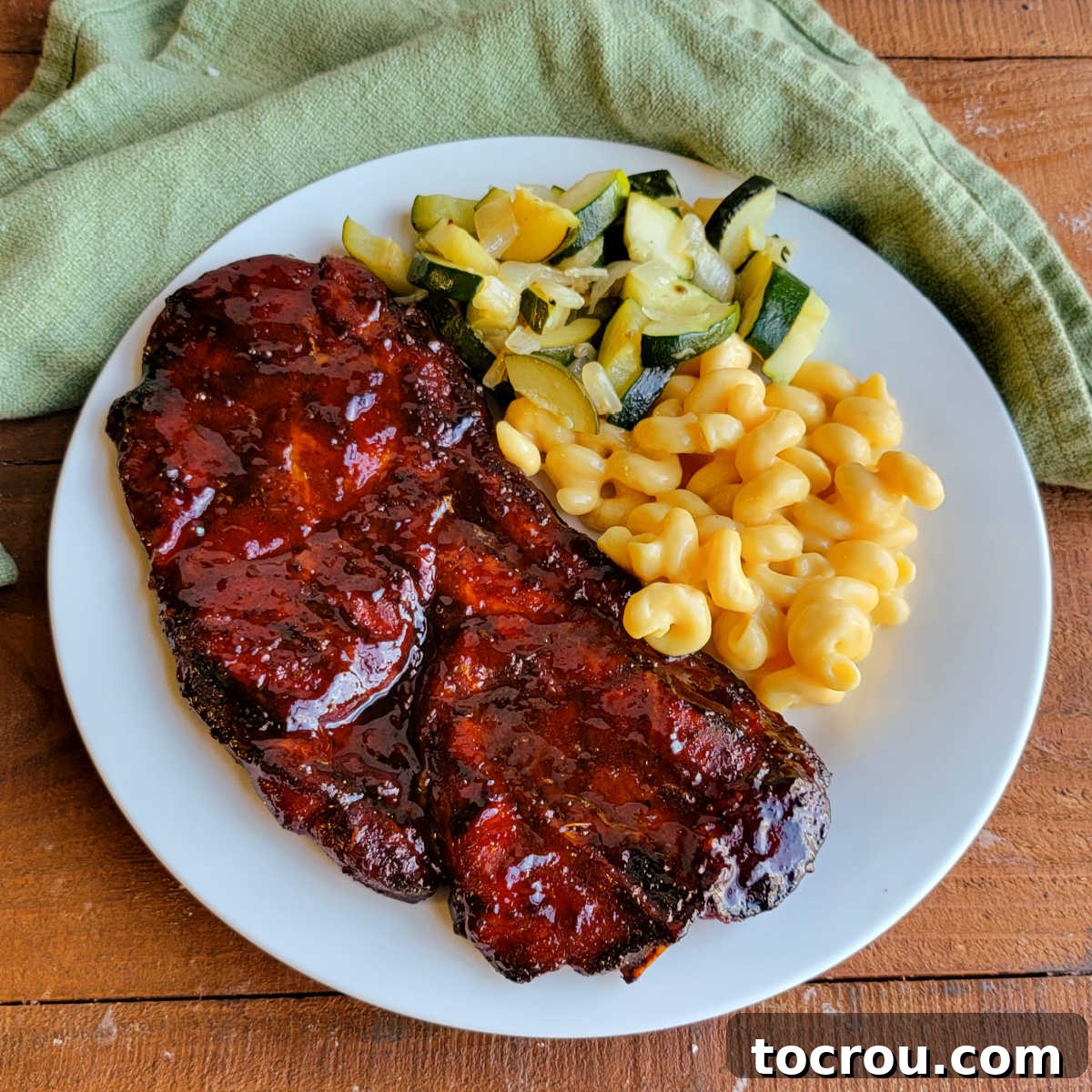
Prepare to elevate your barbecue game with a meal that’s truly a cut above the rest: BBQ pork steaks. These aren’t just any pork steaks; they are slowly smoked on a pellet grill, transforming a humble cut of meat into a tender, juicy, and incredibly flavorful masterpiece. Each bite offers a delightful combination of savory pork and sweet, caramelized barbecue sauce, promising a culinary experience that will have everyone asking for seconds. The consistent heat and smoky infusion from a pellet grill make this process surprisingly easy, allowing the meat to achieve a melt-in-your-mouth texture while developing a rich, smoky bark.
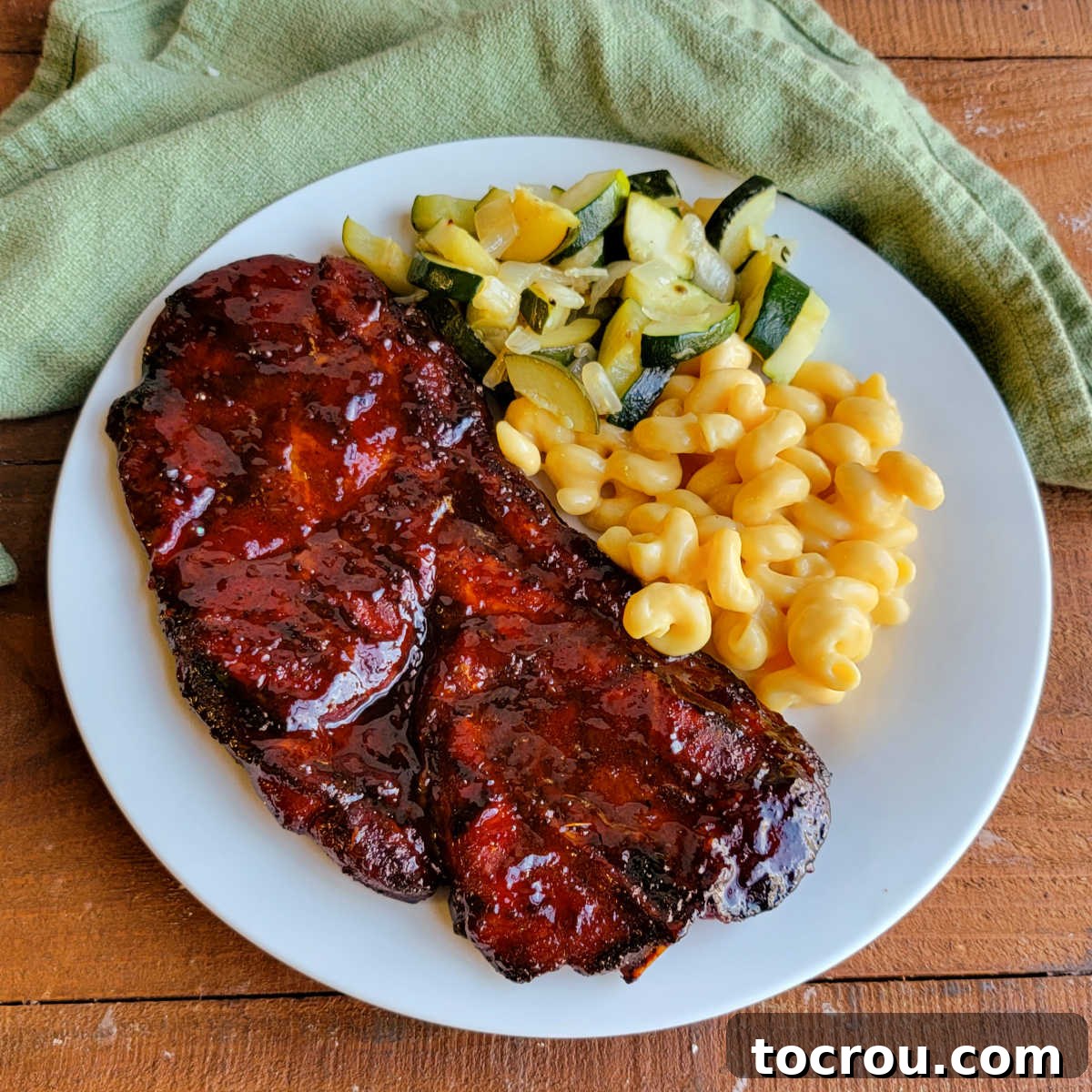
While pork chops often steal the spotlight, pork steaks hold a special place in the hearts of Midwestern barbecue enthusiasts, particularly around St. Louis. They represent a unique fusion, capturing the best qualities of both succulent pulled pork and a hearty pork chop. Imagine the rich, marbled tenderness of pork shoulder, but in a convenient, quicker-cooking steak format. If you haven’t yet experienced the joy of a perfectly cooked pork steak, you’re in for a treat. This article will guide you through the process, demonstrating why the pellet grill is the ideal tool for achieving smoky, tender perfection every time.
What Exactly is a Pork Steak?
A pork steak, also commonly known as a pork blade steak, pork shoulder steak, or pork butt steak, is a lesser-known but incredibly flavorful cut of meat. Unlike pork chops, which come from the loin, pork steaks are expertly sliced from the pork shoulder – the same part of the hog that yields the beloved Boston butt for pulled pork. This origin is key to their superior tenderness and flavor. The pork shoulder is naturally rich in connective tissue and marbling, which, when cooked low and slow, breaks down into gelatin, infusing the meat with moisture and a buttery texture.
Typically, these steaks are cut about one inch thick and weigh approximately a pound or less. This thickness makes them significantly faster to cook than a full 10-12 pound pork butt, making them an excellent choice for a weeknight meal or when you crave smoked barbecue without the all-day commitment. While they might bear a visual resemblance to pork chops, their culinary characteristics and preferred cooking methods are vastly different. Attempting to grill a pork steak like a chop over high heat will likely result in a dry, tough piece of meat due to the connective tissues. Instead, the magic happens with a low and slow approach, allowing those tough fibers to render into juicy tenderness.
The beauty of cooking pork steaks is in this dual-temperature technique. An initial slow cook at a lower temperature provides ample time for the connective tissue to tenderize. Following this, a brief period at a higher temperature helps to caramelize the barbecue sauce, creating a delicious, slightly crispy bark that seals in the juices and adds an irresistible depth of flavor. This method results in a supremely tender and profoundly flavorful piece of meat that’s also surprisingly economical. If your local grocery store doesn’t prominently feature pork steaks, don’t hesitate to ask your butcher. They can easily cut them from a pork butt, and requesting them about one inch thick ensures optimal cooking results.
Preparing Your Pork Steaks for Smoking
Proper preparation is the first step towards achieving outstanding BBQ pork steaks. While you can certainly apply your favorite BBQ rub directly to the meat, a common and highly recommended technique involves using a binder. Spreading a thin layer of yellow mustard over the surface of the pork steaks provides an ideal foundation for your dry rub to adhere to. Don’t worry about a strong mustard flavor dominating the final dish; the mustard simply acts as a binder, and its pungent notes dissipate during the smoking process, leaving behind only a subtle tang that complements the pork.
Before applying any binder or rub, ensure your pork steaks are as dry as possible. Patting them thoroughly with paper towels will remove any excess surface moisture, which helps the rub form a better “bark” – that flavorful, seasoned crust that is a hallmark of great barbecue. Once dried, liberally smear a generous amount of yellow mustard over all surfaces of each pork steak. There’s no need to be shy here; a good coating will ensure maximum rub adhesion.
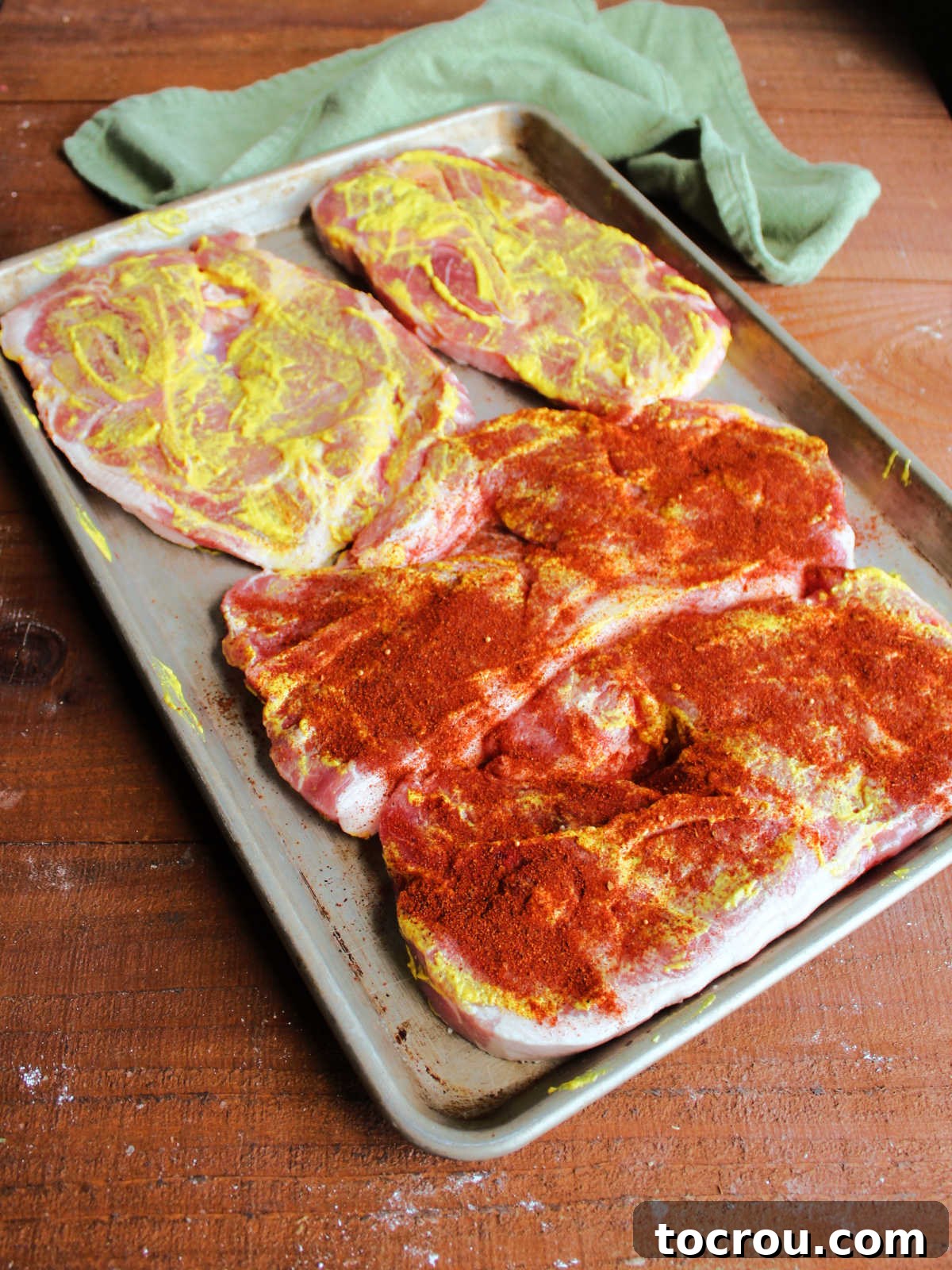
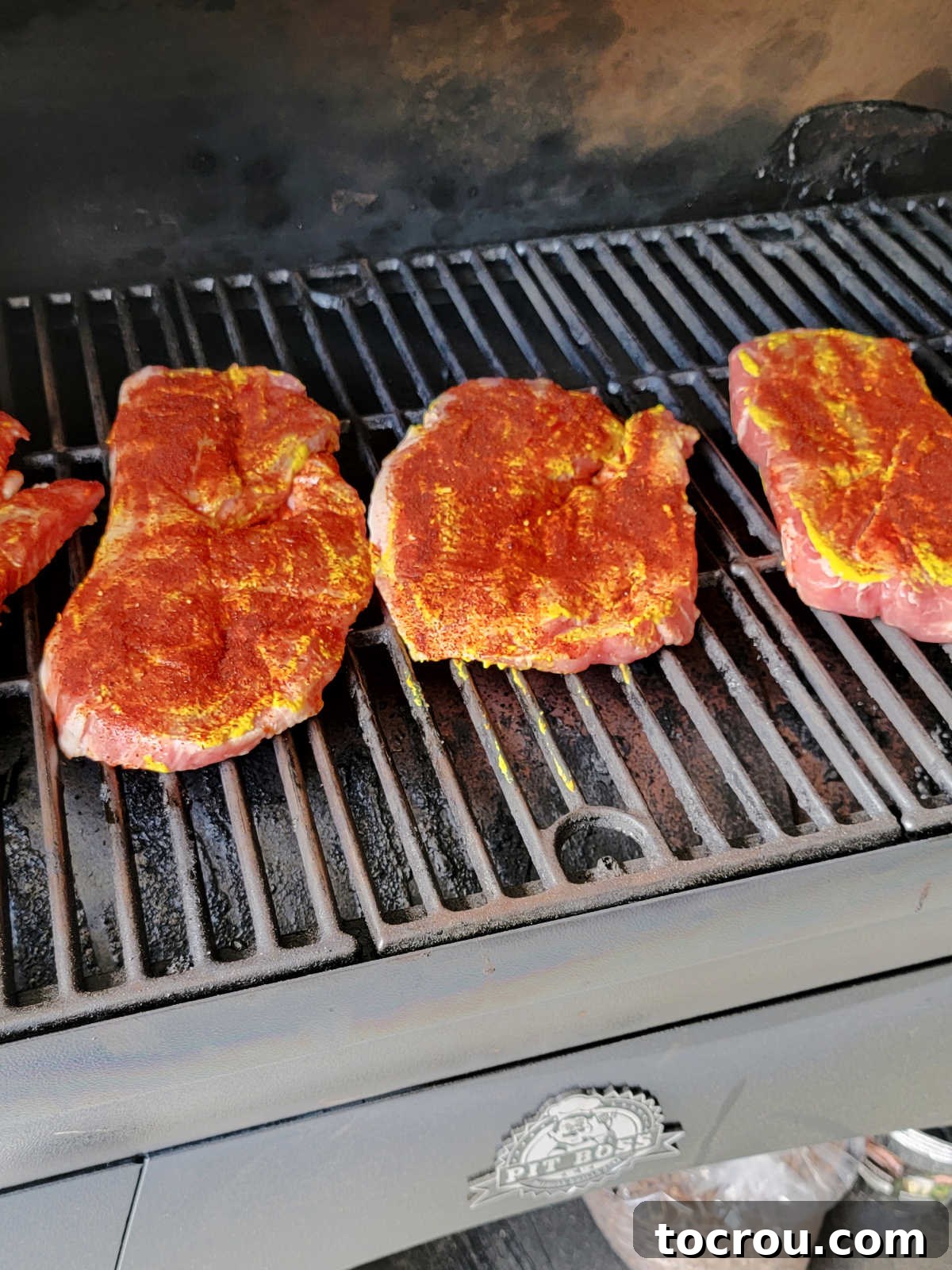
After the mustard, generously sprinkle your chosen dry rub over the coated steaks, ensuring an even layer on both sides. A good quality BBQ rub will contain a balanced mix of salt, sugar, and spices that will create a savory crust and enhance the natural flavors of the pork. Once seasoned, place the pork steaks back into the refrigerator. You can prepare them several hours in advance, or even overnight, which allows the dry rub to penetrate deeper into the meat, creating a more profound and complex flavor profile. This step is crucial for developing that rich, savory foundation that perfectly complements the smoky and sweet BBQ sauce.
The Art of Smoking Pork Steaks to Perfection
Smoking pork steaks on a pellet grill is a multi-stage process designed to achieve maximum tenderness, juiciness, and caramelized flavor. While it requires a bit of time, the hands-on work is minimal, making it an incredibly rewarding cooking method. The consistent temperature control and wood-fired smoke flavor of a pellet grill are perfectly suited for this cut, ensuring outstanding results every time.
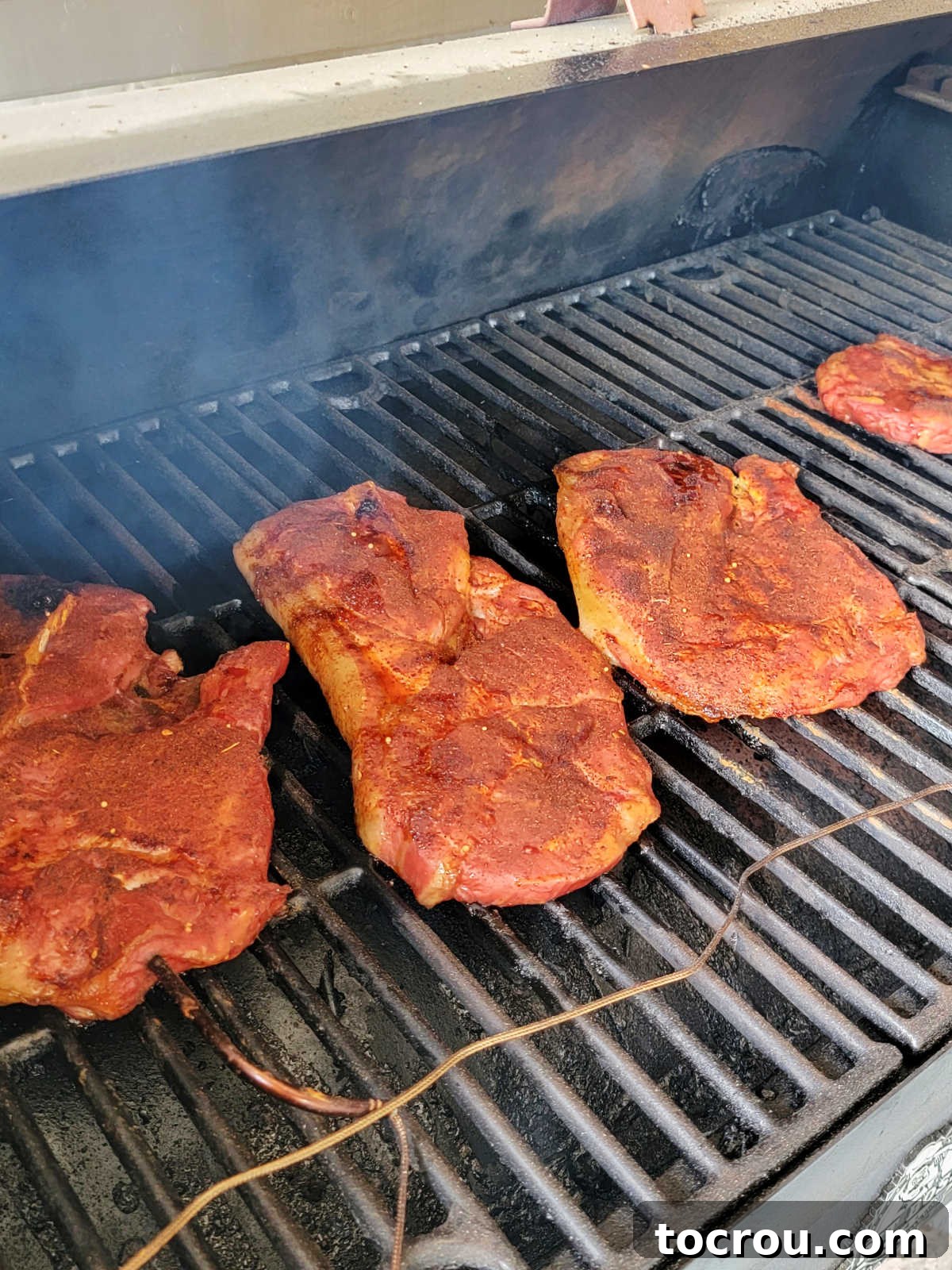
The first phase of cooking involves a low and slow smoke. Preheat your pellet grill to 200°F (93°C). Once preheated, carefully place the seasoned pork steaks directly on the grill grates, ensuring they are not touching. Close the lid and let them smoke undisturbed for two hours. During this initial phase, the low temperature allows the smoke to deeply penetrate the meat, imparting that signature smoky flavor, while gently beginning the tenderization process of the connective tissues.

After the initial two hours of smoking, it’s time for the “sauce bath.” Carefully transfer the partially smoked pork steaks into a sturdy aluminum pan. In a separate bowl, whisk together your favorite BBQ sauce with a thinning agent. We highly recommend thinning the sauce with a bit of apple juice, as its natural sweetness and acidity beautifully complement the pork and barbecue flavors. Alternatively, beer can add a wonderful malty depth, or a splash of water or broth will also work in a pinch. Coating each steak thoroughly with this thinned BBQ sauce mixture as you place them into the pan ensures every surface is bathed in flavor. Cover the pan tightly with aluminum foil.
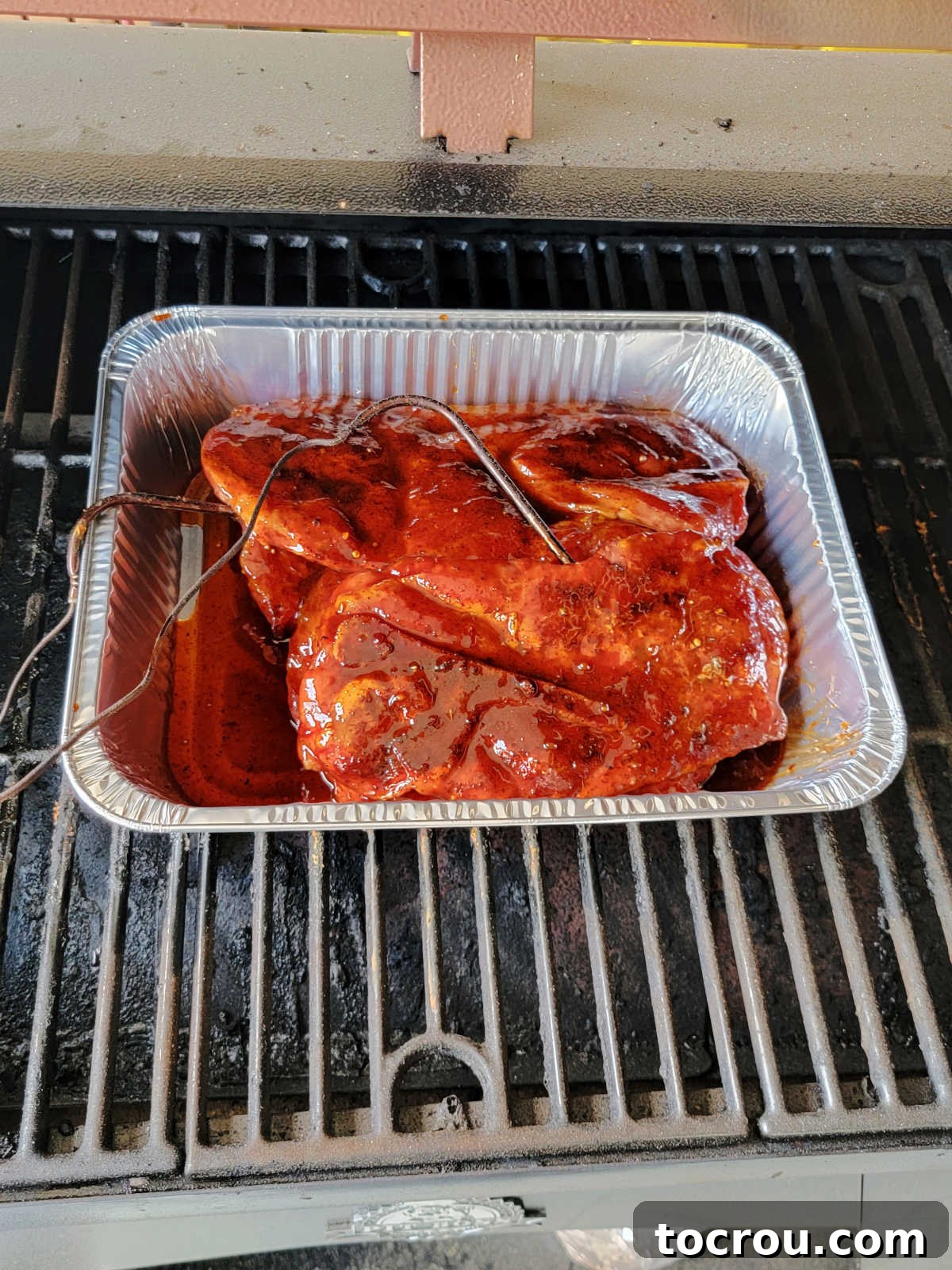
Returning the covered pan to the smoker, raise the grill temperature to 250°F (121°C). Allow the pork steaks to continue cooking in their flavorful sauce bath for approximately 1.5 to 2 hours. This crucial step serves multiple purposes: the moisture from the sauce prevents the steaks from drying out, particularly important for a cut without a thick fat cap, and it allows the meat to braise gently, further breaking down connective tissues until it reaches optimal tenderness. Monitor the internal temperature using a reliable meat thermometer; you’re aiming for around 195°F (91°C) at this stage.
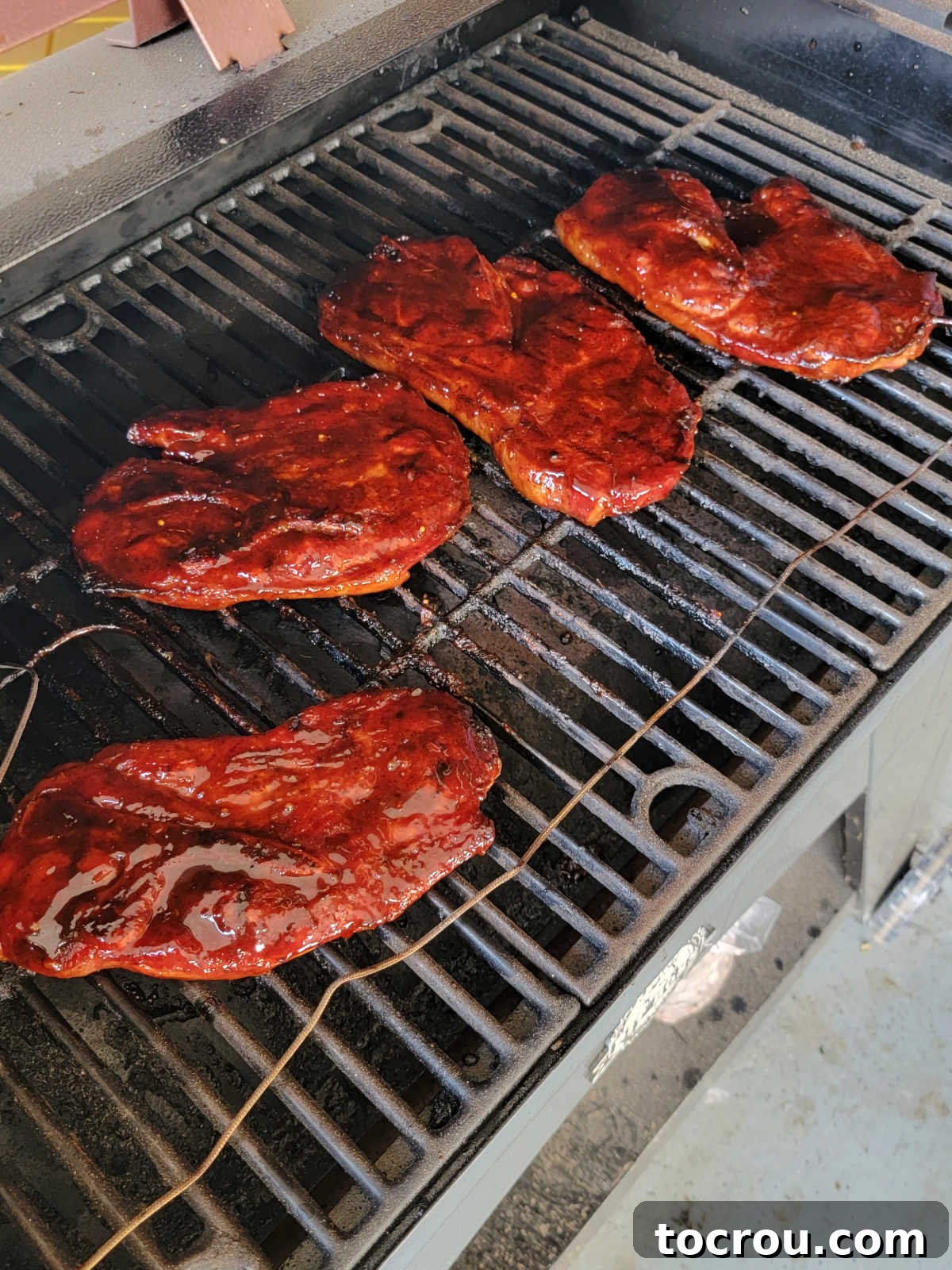
Once the pork steaks have achieved their desired tenderness and internal temperature, it’s time for the final, flavor-packed flourish. Increase the smoker temperature to 300°F (149°C). Carefully remove the steaks from the pan, letting any excess sauce drip off, and place them directly back onto the grill grates. Using a basting brush, liberally coat them with some of that delicious, warm BBQ sauce from the pan. This higher heat will work to caramelize the sugars in the sauce, creating that beautiful, glossy, and slightly charred bark that is characteristic of competition-level barbecue.

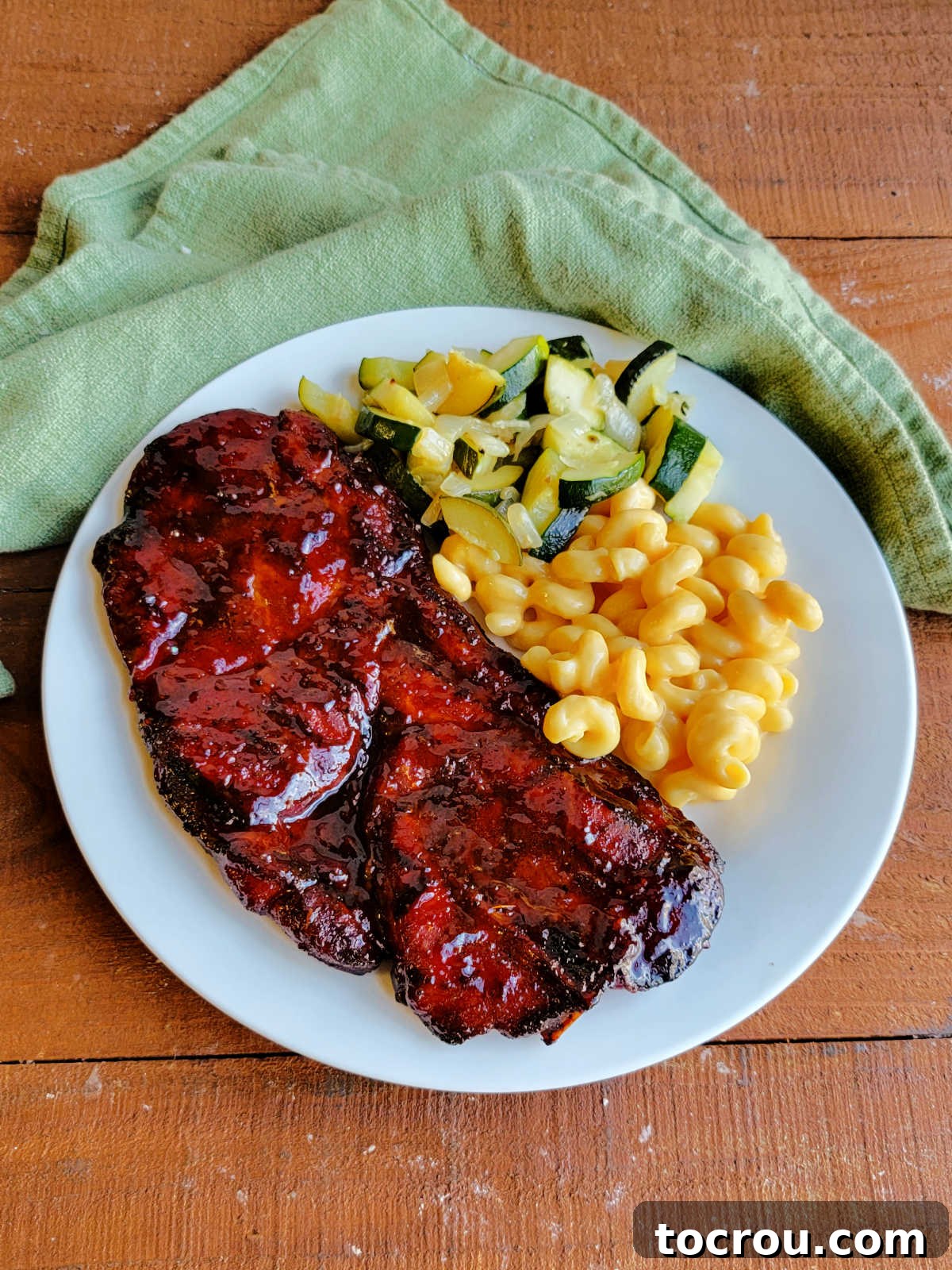
Continue to cook for about 10-15 minutes per side, flipping once and basting with more sauce to ensure an even, sticky coating. Watch closely for your desired level of caramelization and char. This final step not only develops incredible flavor and texture but also brings the internal temperature up to its serving sweet spot. Once the pork steaks are beautifully glazed and caramelized, remove them from the grill and let them rest for about 10 minutes before slicing and serving. This resting period allows the juices to redistribute throughout the meat, ensuring every slice is as moist and flavorful as possible. Get ready to enjoy a truly unforgettable meal!
Achieving Optimal Tenderness & Juiciness
For pork steaks, the ideal internal temperature for breaking down the tough connective tissue from the pork shoulder is around 195°F (91°C). Reaching this temperature allows the collagen to convert into gelatin, resulting in that desirable fall-apart tenderness. However, because pork steaks are a thinner cut compared to a full pork butt, it’s crucial not to significantly exceed this temperature. Overcooking, even by a few degrees, can cause the meat to dry out quickly, sacrificing its juiciness.
To ensure perfect results every time, use a high-quality, instant-read meat thermometer. Insert the thermometer into the thickest part of the steak, avoiding any bone if present. Monitor the temperature closely, especially during the final caramelization stage. Aim for that 195°F mark, and you’ll be rewarded with incredibly tender, moist, and flavorful BBQ pork steaks.
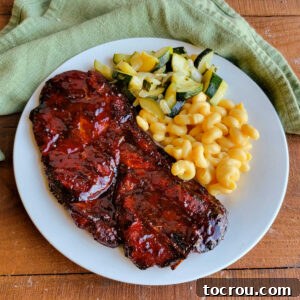
BBQ Pork Steaks on the Pellet Grill
Carlee
4
Servings
5 mins
4 hrs
10 mins
Equipment
-
Pit Boss Pellet Grill
-
Silicone Basting Brushes
-
Thermapen ONE Thermometer
Ingredients
- 4 pork steaks about 1-inch thick
- ¼ cup yellow mustard
- ¼ cup BBQ rub
- ¾ cup BBQ sauce
- ¼ cup apple juice
Instructions
-
Preheat smoker to 200℉ (93°C).
-
Coat 4 pork steaks in ¼ cup yellow mustard and sprinkle with ¼ cup BBQ rub.
-
Place seasoned pork steaks on the grill grates. Close the lid and smoke for 2 hours.
-
Stir together the ¼ cup apple juice and ¾ cup BBQ sauce.
-
Put pork steaks in an aluminum pan, coating each steak with the bbq sauce mixture as you put them in. Cover the pan with foil and put back on the smoker.
-
Raise the temperature to 250℉ (121°C) and cook for about 1½ hours. The internal temperature of the pork steaks should be around 195℉ (91°C).
-
Increase the smoker temperature to 300℉ (149°C) and put the pork steaks back on the grill grates. Brush with sauce from the pan and cook for 10-15 minutes on each side or until your desired level of caramelization is achieved.
-
Remove from the heat and rest for about 10 minutes before serving.
Notes
Nutrition Information
“Cooking With Carlee” is not a dietitian or nutritionist, and any nutritional information shared is an estimate. If calorie count and other nutritional values are important to you, we recommend running the ingredients through whichever online nutritional calculator you prefer. Calories and other nutritional values can vary quite a bit depending on which brands were used.
Did you try this recipe?
Don’t forget to leave a rating below and make sure to follow on Pinterest and Instagram for more!
What To Serve With Smoked Pork Steaks
Smoked BBQ pork steaks are a hearty and flavorful main dish that pairs wonderfully with a variety of classic barbecue sides. To complete your meal and create a truly memorable spread, consider these delicious accompaniments:
Creamy Coleslaw
A classic, refreshing side with a tangy-sweet dressing that cuts through the richness of the pork.
Macaroni and Cheese in the Instant Pot
Creamy, comforting macaroni and cheese is the ultimate comfort food pairing for smoky BBQ.
Cowboy Salad
A vibrant and hearty salad with corn, beans, and a zesty dressing, adding freshness and crunch.
Cheddar Bacon Ranch Potato Salad
A creamy and flavorful potato salad with savory bacon and cheese, providing a hearty complement.
No matter which sides you choose, these smoked BBQ pork steaks are sure to be the star of your meal. Their rich flavor and tender texture make them incredibly versatile, pairing well with everything from light salads to indulgent comfort foods. Enjoy experimenting with different combinations to find your perfect plate!