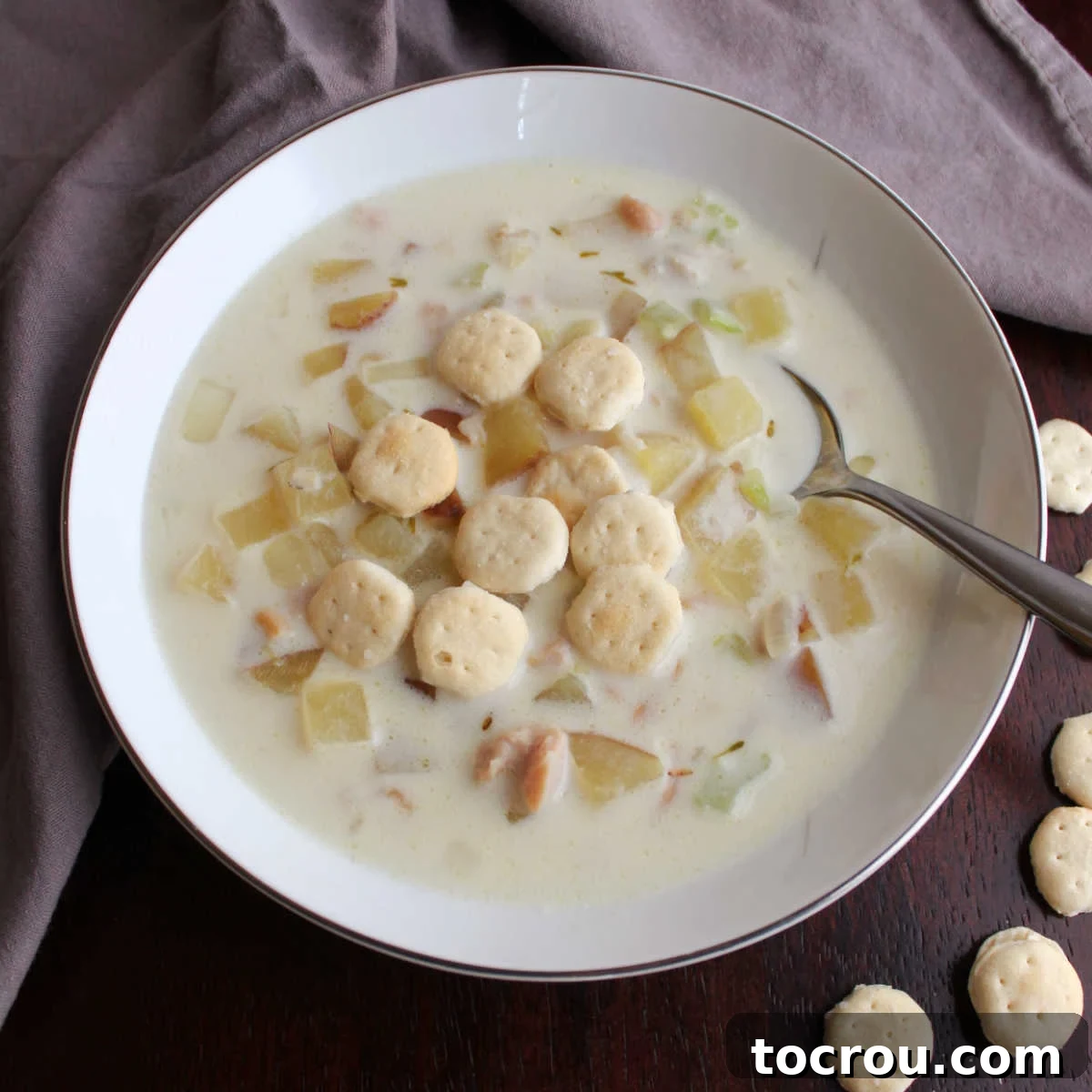
Easy Bacon-Free New England Clam Chowder: A Creamy Homemade Delight
There’s nothing quite like a steaming bowl of rich, creamy New England Clam Chowder to warm you from the inside out. This classic American comfort food, known for its hearty texture and delicate seafood flavor, has been a beloved staple for generations. While many traditional recipes call for bacon, this delightful version offers all the satisfying creaminess and flavor without it, making it a perfect choice for Lent, pescatarians, or anyone looking for a lighter yet equally delicious alternative. Best of all, this incredible homemade clam chowder is surprisingly easy to prepare, ready to be enjoyed in under an hour!
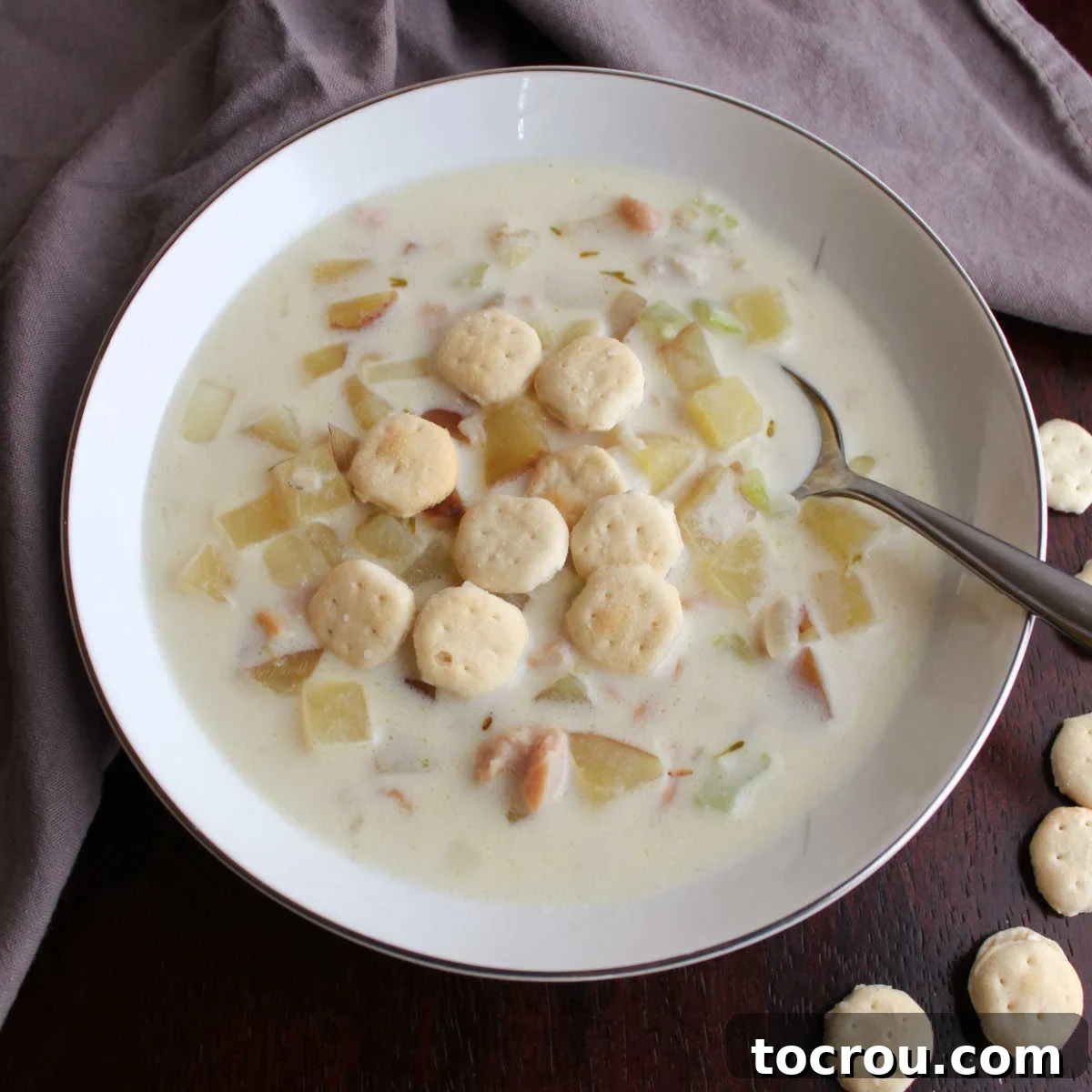
The Timeless Appeal of New England Clam Chowder
New England Clam Chowder holds a special place in American culinary history, particularly in the Northeastern states where it originated. This iconic soup embodies the cozy spirit of coastal living, bringing together the bounty of the sea with wholesome, comforting ingredients. Characterized by its thick, milk or cream-based broth, tender clams, and chunks of potato and onion, it’s a meal in itself – hearty enough to satisfy even the hungriest appetite.
Growing up, many of us first experienced clam chowder from a can, a convenient introduction to its unique flavor profile. However, the true magic of this dish truly shines when prepared from scratch. The depth of flavor, the perfect balance of creamy and savory, and the tender texture of the ingredients are unparalleled in a homemade bowl. You might be surprised to learn just how simple it is to recreate that restaurant-quality experience in your own kitchen.
Why Choose Bacon-Free? A Delicious Pescatarian Option
While bacon or salt pork often lends a smoky depth to traditional clam chowder, this particular recipe intentionally omits it. Our goal was to create a version that is deliciously Lent-friendly and pescatarian, ensuring everyone can enjoy this classic dish without compromise. The good news? You won’t miss the bacon one bit!
By focusing on fresh, quality ingredients and a robust flavor base built with butter, onions, celery, and garlic, this chowder achieves an incredible richness and savory character that stands on its own. The natural briny flavor of the clams, combined with aromatic vegetables and a creamy dairy blend, creates a harmonious symphony of tastes that will leave you completely satisfied. It’s a testament to how fantastic a simple, well-executed recipe can be, proving that sometimes, less is truly more.
Mastering Your Homemade Clam Chowder: Essential Tips & Tricks
Crafting the perfect New England Clam Chowder is simpler than you might imagine. Like many of our favorite easy soup recipes, this chowder relies on straightforward ingredients and techniques to deliver outstanding results. The key lies in understanding a few fundamental steps that elevate this dish from good to truly exceptional.
Ingredient Selection: The Foundation of Flavor
- Clams: For those of us not living directly on the coast, sourcing fresh clams can be a challenge. Canned chopped clams are a perfectly acceptable, and often preferred, choice for homemade chowder. They are readily available, convenient, and their natural liquor contributes significantly to the chowder’s overall flavor. Don’t drain the clam juice – it’s liquid gold for your soup! If you do have access to fresh clams, steaming them open and chopping the meat while reserving the cooking liquid can be a fantastic (though more labor-intensive) alternative.
- Potatoes: The type of potato you choose can impact the chowder’s texture. Waxy potatoes like red-skinned or Yukon Gold hold their shape well, providing distinct chunks. Starchier russet potatoes will break down slightly more, contributing to a thicker, creamier broth. Both work beautifully, so choose based on your preference for texture.
- Dairy: A blend of whole milk and half-and-half (or even heavy cream for extra decadence) is crucial for that signature creamy consistency. Avoid using low-fat milk, as it can result in a thinner, less luxurious chowder that may curdle if not handled carefully.
- Aromatics: Fresh celery, onion, and minced garlic create the aromatic backbone of the chowder, infusing it with savory notes from the very beginning.
- Stock: Vegetable or seafood stock will provide a complementary depth of flavor. If you’re not keeping the recipe strictly pescatarian, chicken broth also works wonderfully.
Precision Chopping for Perfect Texture
The most time-consuming part of this recipe is arguably the vegetable prep, but it’s a step worth doing right. Uniformity in your chopping, especially for the potatoes, is vital for even cooking and an enjoyable eating experience. Aim for approximately ½-inch to ¼-inch cubes for your potatoes. Smaller pieces cook more quickly and ensure every spoonful contains a delightful mix of ingredients.
Finely dicing your onion and thinly slicing your celery will allow them to soften and become translucent quickly, releasing their flavors without overpowering the chowder with large, raw chunks.
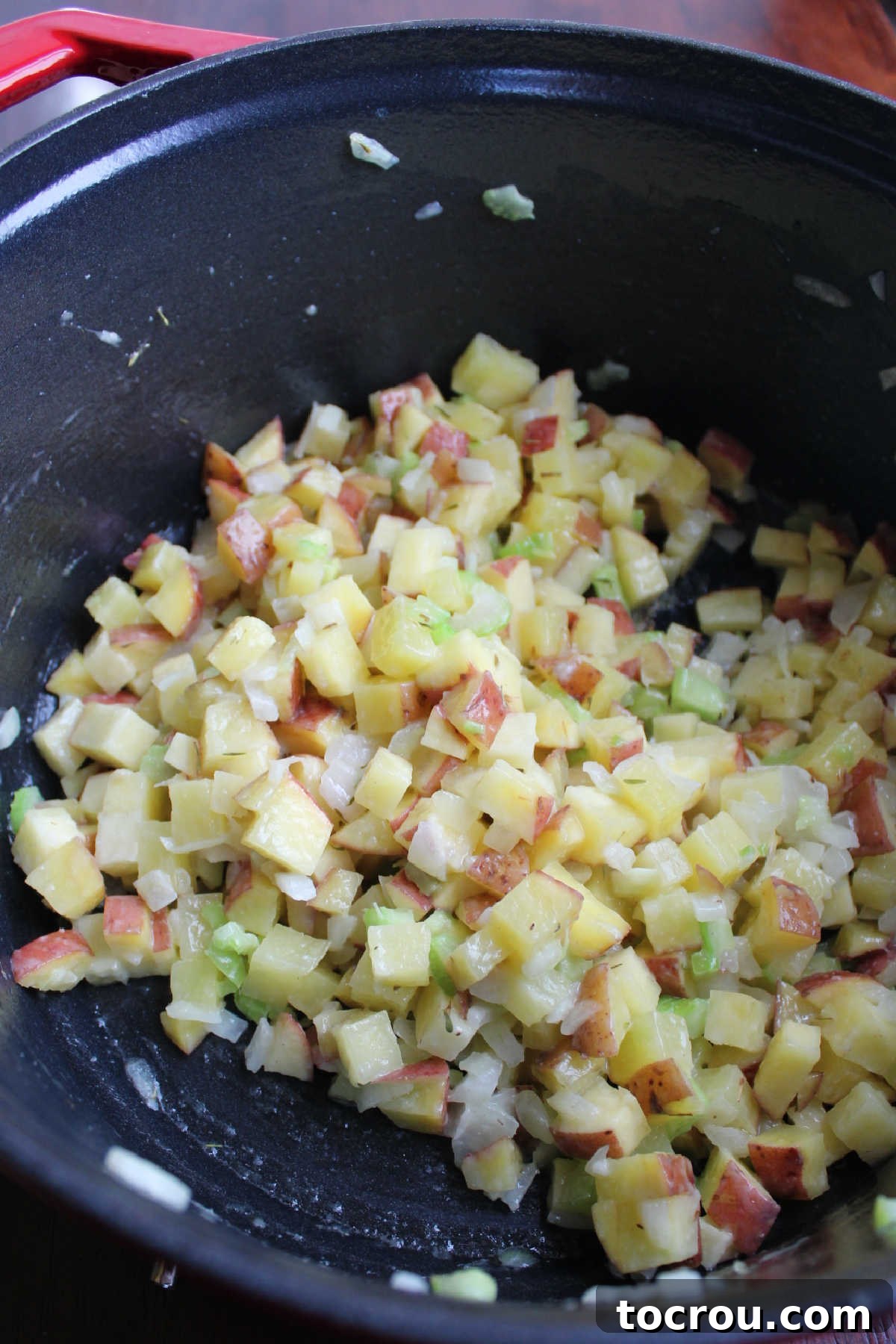
Building the Flavor Base: Sautéing & Thickening
The initial sauté of onions, celery, and potatoes in butter is crucial. This step not only softens the vegetables but also coaxes out their natural sweetness and savory notes, building a foundational layer of flavor for the entire soup. As the vegetables cook, they release moisture and caramelize slightly, contributing to the depth of the chowder.
After the vegetables are tender, garlic and thyme are added, followed by flour. This flour, combined with the butter and vegetable drippings, creates a roux – a classic thickening agent that gives the chowder its rich, velvety texture. Cooking the flour for a minute or two helps to eliminate any raw flour taste, ensuring a smooth and perfectly thickened broth.
The Art of Simmering to Perfection
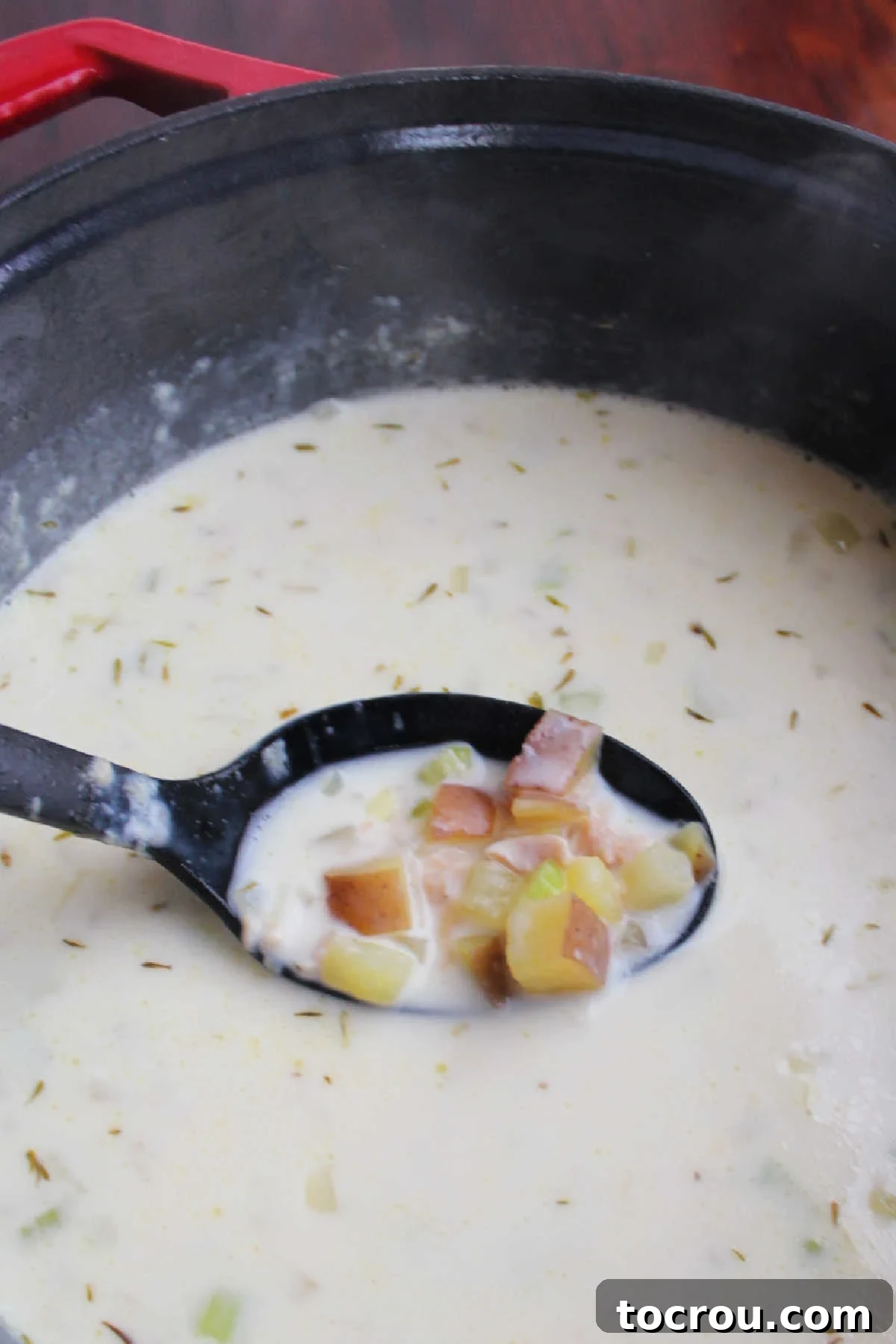
Once the stock, milk, bay leaf, and clams (along with their flavorful liquor) are added, the chowder needs to be brought to a gentle simmer. Avoid a rolling boil, which can toughen the clams and potentially curdle the dairy. A slow, gentle simmer allows all the flavors to meld together beautifully and ensures the potatoes cook through to a tender, but not mushy, consistency. The bay leaf, a humble herb, infuses the chowder with a subtle, aromatic background note that is characteristic of traditional recipes.
Step-by-Step Guide to Your Best Clam Chowder
Creamy New England Clam Chowder (Bacon-Free)
Author: Carlee
Servings: 8
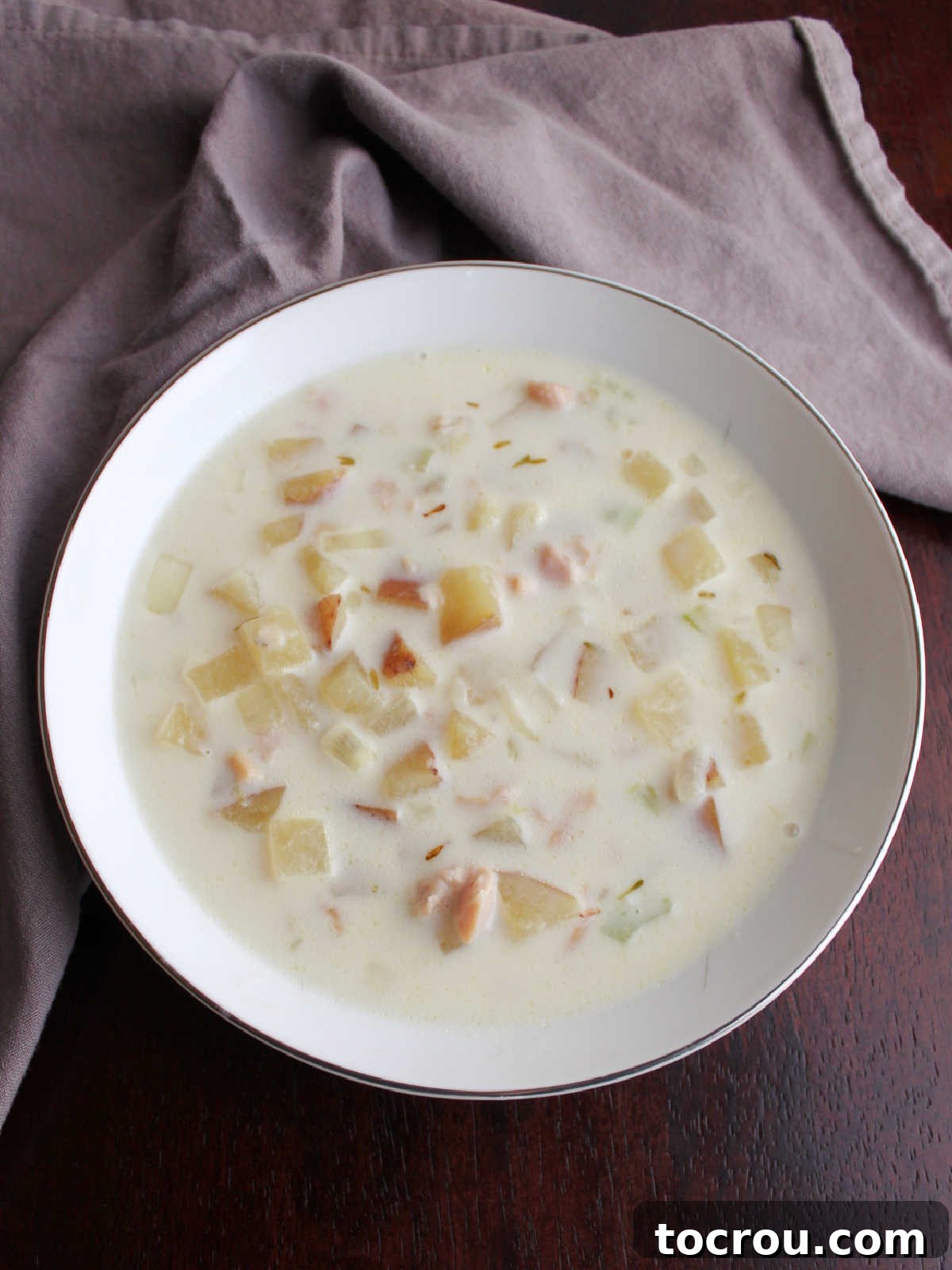
A bowl of creamy soup is a filling and wonderful way to warm up. This easy clam chowder recipe is lent friendly and super delicious. There are plenty of chunks to fill you up and the flavor is fabulous. You’ll be surprised how easy it is to make!
Prep Time: 10 mins
Cook Time: 30 mins
Total Time: 40 mins
Equipment
- Le Creuset Dutch Oven, 7.25 qt., Deep Teal (or any large pot/Dutch oven)
Ingredients
- 3 Tablespoons butter
- 2 stalks celery, thinly sliced
- 1 medium onion, finely diced
- 3 medium potatoes*, cut into approximately ½-¼ inch cubes
- 2 cloves garlic, minced
- ½ teaspoon dried thyme
- 4 Tablespoons all-purpose flour
- 2 cups vegetable or seafood stock*
- 1 cup whole milk
- 1 bay leaf
- 19.5 ounces canned chopped clams (3 x 6.5 oz cans), undrained
- 1½ cups half and half
- Salt and black pepper to taste
- Optional: oyster crackers or lemon wedges for serving
Instructions
- Prepare Vegetables: Thinly slice the celery. Finely dice the onion and cut the potato into approximately ½-¼ inch cubes. (Ingredients: celery, onion, potatoes)
- Sauté Aromatics: In a large pot or Dutch oven, melt the butter over medium heat. Add the onions, celery, and potatoes along with a quarter teaspoon each of salt and pepper. Cook, stirring occasionally, until the onions are translucent and the vegetables begin to soften, about 8-10 minutes. (Ingredient: butter)
- Build the Roux: Add the minced garlic, dried thyme, and all-purpose flour to the pot. Stir well to coat all the vegetables evenly with the flour. Cook for 1-2 minutes, stirring frequently, allowing the flour to cook out its raw taste. (Ingredients: garlic, thyme, flour)
- Deglaze with Stock: Slowly pour in the vegetable or seafood stock, continuously stirring and scraping up any browned bits from the bottom of the pan. This adds immense flavor to the broth. (Ingredient: stock)
- Add Dairy & Clams: Stir in the whole milk, bay leaf, and the canned chopped clams with all their natural juice. (Ingredients: milk, bay leaf, clams)
- Simmer: Bring the chowder to a gentle simmer over medium heat until it just begins to bubble. Reduce the heat to medium-low and continue to simmer for about 10 minutes, allowing the potatoes to become tender and the flavors to meld. Stir occasionally to prevent sticking.
- Finish with Half & Half: Remove the bay leaf. Stir in the half and half and heat until warmed through, but do not boil. Taste and adjust the seasoning with additional salt and black pepper to your liking. (Ingredient: half and half)
- Adjust Thickness (Optional): If you prefer a thinner chowder, add a splash more milk or stock. For an extra thick chowder, you can simmer it for a few more minutes, or if you need it thicker quickly, create a slurry with a tablespoon of flour or cornstarch mixed with a little cold water and stir it into the simmering chowder until desired thickness is reached.
- Serve: Ladle the delicious, creamy clam chowder into bowls. Enjoy!
Notes
*I like using red-skinned or Yukon Gold potatoes in this chowder, but russet potatoes also work well for a slightly different texture.
Chicken broth is also delicious in this chowder if you aren’t trying to keep it Lent friendly or pescatarian.
You can use half whole milk and half heavy cream in place of the half and half if desired for an even richer chowder.
Video
Serving Suggestions & Creative Garnishes
A bowl of New England Clam Chowder is satisfying on its own, but a few simple additions can elevate the experience:
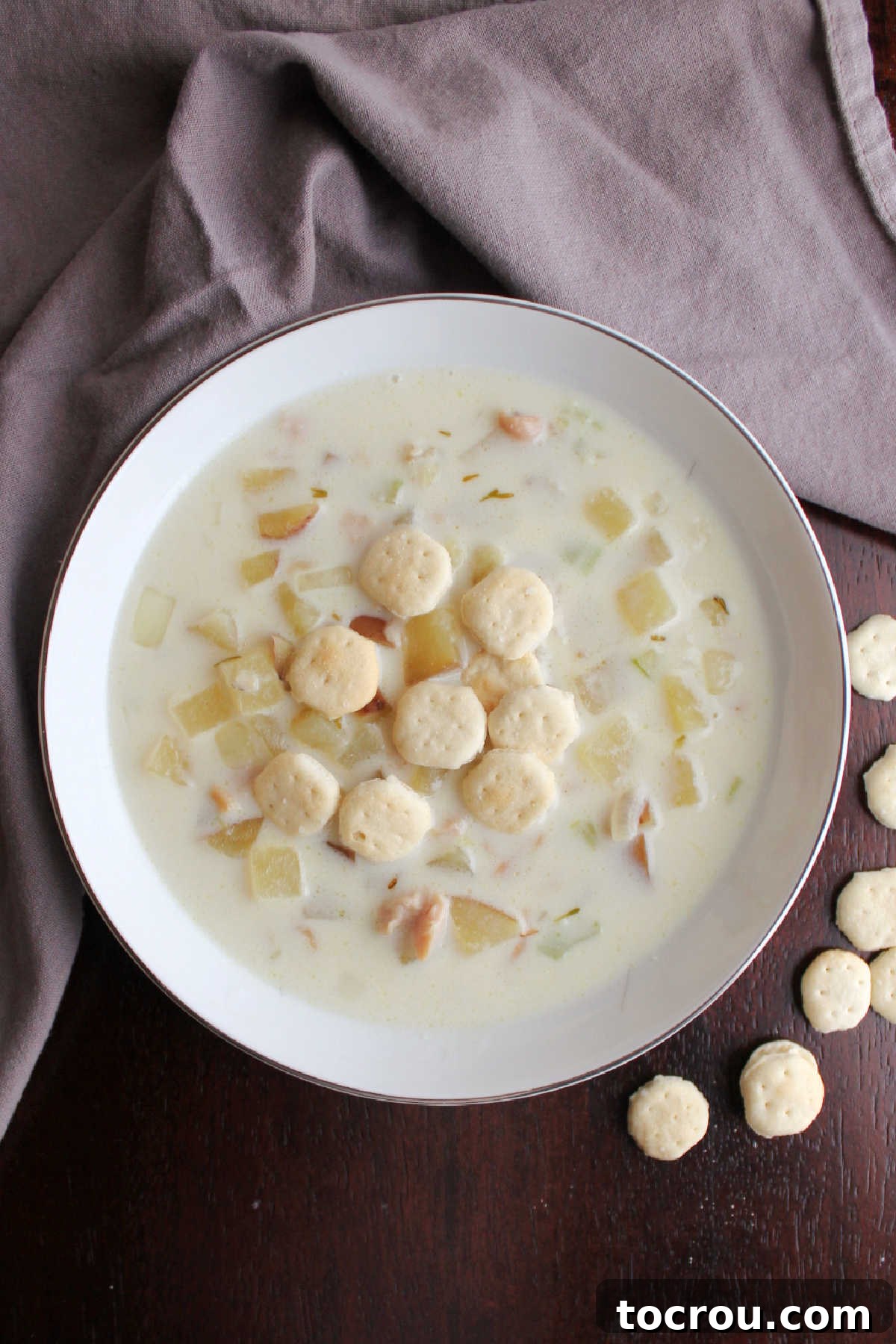
- Oyster Crackers: This is arguably the most classic accompaniment. Their light, crispy texture and subtle saltiness provide a perfect contrast to the creamy chowder.
- Fresh Herbs: A sprinkle of fresh chopped parsley or chives adds a touch of color and a fresh, herbaceous note.
- Lemon Wedge: A squeeze of fresh lemon juice just before serving can brighten the flavors and cut through the richness of the cream, adding a delightful tang.
- Hot Sauce: For those who enjoy a little kick, a dash of your favorite hot sauce can add a subtle warmth without overpowering the clam flavor.
- Crusty Bread: A slice of warm, crusty bread is perfect for soaking up every last drop of the delicious broth.
No matter how you choose to top it, you’ll be thrilled with the results of your homemade endeavor!
Frequently Asked Questions About Clam Chowder
What makes a soup a chowder?
The term “chowder” typically refers to a thick, hearty soup or stew, often made with seafood or corn, potatoes, onions, and a milk or cream base. The defining characteristics usually include its substantial texture, chunky ingredients, and a rich, creamy consistency. Our New England Clam Chowder fits this definition perfectly with its creamy broth, tender clams, and generous chunks of potato and onion.
New England vs. Manhattan Clam Chowder: A Culinary Showdown
The main difference between these two famous clam chowders lies in their broth base:
- New England Clam Chowder: As featured in this recipe, it boasts a thick, creamy, white broth made with milk or cream. This version is beloved for its rich, velvety texture and mild, savory flavor.
- Manhattan Clam Chowder: This variety is distinctly red in color, featuring a clear, tomato-based broth. While it also contains clams, potatoes, and other vegetables, its flavor profile is tangier and lighter due to the absence of dairy. Both are delicious in their own right, but cater to different taste preferences!
Can I make this chowder ahead of time?
Yes, clam chowder often tastes even better the next day as the flavors have more time to meld. Prepare the chowder according to the instructions, then allow it to cool completely before transferring it to an airtight container. Store in the refrigerator for up to 3-4 days. When reheating, do so gently over low heat, stirring frequently to prevent the dairy from separating or scorching. You may need to add a splash of milk or stock to restore its original consistency.
Can I freeze clam chowder?
Freezing clam chowder, particularly those with a significant dairy content, can be tricky. Dairy-based soups tend to separate and become grainy upon thawing and reheating. If you wish to freeze it, we recommend omitting the half-and-half (or heavy cream) until after thawing. You can prepare the chowder up to the point of adding the half-and-half, then freeze this base. Once thawed, reheat the base and stir in the fresh half-and-half to finish. This method helps preserve the creamy texture.
How can I adjust the thickness?
If your chowder is too thick, simply whisk in a little more milk or stock until it reaches your desired consistency. If it’s too thin, you have a couple of options:
- Simmer Longer: Allow the chowder to simmer gently for a few more minutes, uncovered, to allow some of the liquid to evaporate.
- Flour or Cornstarch Slurry: For a quicker fix, mix 1 tablespoon of flour or cornstarch with 2 tablespoons of cold water to create a smooth slurry. Gradually whisk this into the simmering chowder and cook for a few minutes until it thickens.
What type of potatoes are best?
For a creamy New England Clam Chowder, a balance between starchy and waxy potatoes often works best. Waxy potatoes like red-skinned or Yukon Gold hold their shape well and provide good textural contrast. Russet potatoes, being starchier, break down slightly more, which contributes to the chowder’s thickness and creamy mouthfeel. A combination of both can also be excellent!
Beyond the Bowl: More Delicious Clam Recipes
Love the flavor of clams? While you’re in the canned seafood aisle picking up clams for this chowder, consider grabbing an extra can or two. Clams are incredibly versatile and can be used in a variety of other delectable dishes. Why not try whipping up our family’s favorite creamy clam dip? It’s rich, savory, and absolutely perfect served with potato chips or fresh vegetables for an easy appetizer. Or explore other clam-based recipes like pasta with clam sauce or fried clam strips for a taste of the sea in different forms.
Concluding Thoughts
This bacon-free New England Clam Chowder recipe proves that you don’t need complicated ingredients or techniques to create a truly spectacular meal. With its comforting creaminess, tender chunks of potatoes and clams, and savory aroma, it’s a dish that brings warmth and satisfaction to any table. Whether you’re observing Lent, prefer a pescatarian diet, or simply want to enjoy a delicious, easy-to-make soup, this recipe is sure to become a cherished favorite. Give it a try, gather your loved ones around, and savor the simple pleasure of a homemade classic.
Did you try this recipe?
We’d love to hear your thoughts! Don’t forget to leave a rating and review below and make sure to follow us on Pinterest and Instagram for more delicious recipes!
Nutrition Information (Estimated)
Serving: 1 Serving | Calories: 260kcal | Carbohydrates: 29g | Protein: 12g | Fat: 11g | Saturated Fat: 7g | Polyunsaturated Fat: 4g | Cholesterol: 49mg | Sodium: 388mg | Fiber: 3g | Sugar: 5g
“Cooking With Carlee” is not a dietitian or nutritionist, and any nutritional information shared is an estimate. If calorie count and other nutritional values are important to you, we recommend running the ingredients through whichever online nutritional calculator you prefer. Calories and other nutritional values can vary quite a bit depending on which brands were used.