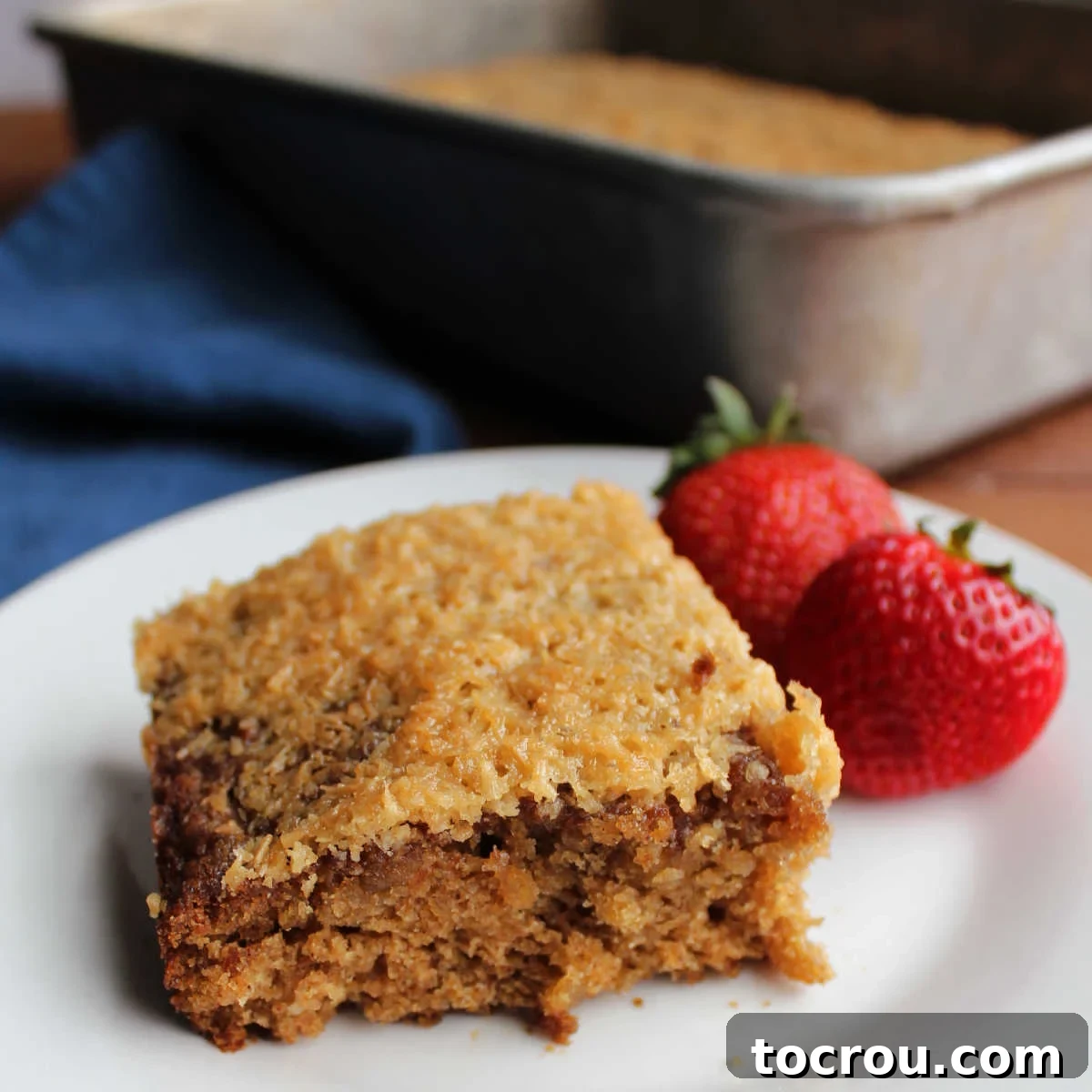
Step into a world of timeless culinary delight with this exceptional old-fashioned oatmeal cake recipe. More than just a dessert, this is a heartwarming journey back to simpler times, a taste of comfort that generations have cherished. Featuring wholesome rolled oats and crowned with a glorious, broiled coconut topping, this cake embodies a classic charm that simply never goes out of style. Its enduring popularity is no mystery: every moist, tender bite delivers a symphony of flavors that will leave you craving more.
Discovering the Magic of Grandma’s Oatmeal Cake
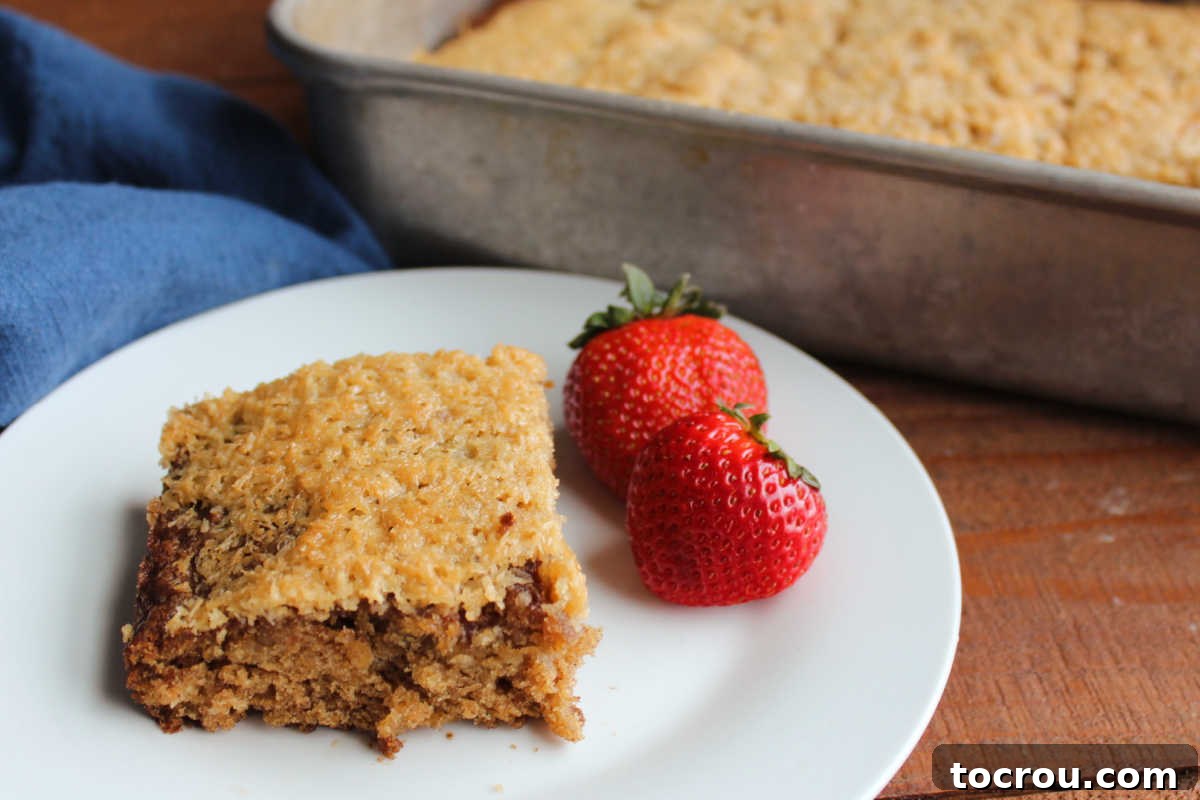
This isn’t just any oatmeal cake; it’s a treasured family heirloom, passed down from my husband’s grandma. Her recipes are legendary, and this one holds a special place in our hearts. With a subtle hint of cinnamon baked into its soft, inviting crumb, the flavor profile is wonderfully reminiscent of those beloved oatmeal cream pie bars, but elevated into a more elegant cake form. It’s a nostalgic nod to classic American baking, offering a homemade taste that commercial treats simply cannot replicate.
Grandma graciously shared this recipe with me years ago, alongside her equally delightful applesauce cake. These recipes are more than just instructions; they are stories, traditions, and a testament to the simple, yet profound, joy of baking from scratch. The beauty of such old-fashioned recipes lies in their straightforward ingredients and techniques, yielding results that are consistently delicious and deeply satisfying.
Understanding Old-Fashioned Ingredients: The “Oleo” Legacy
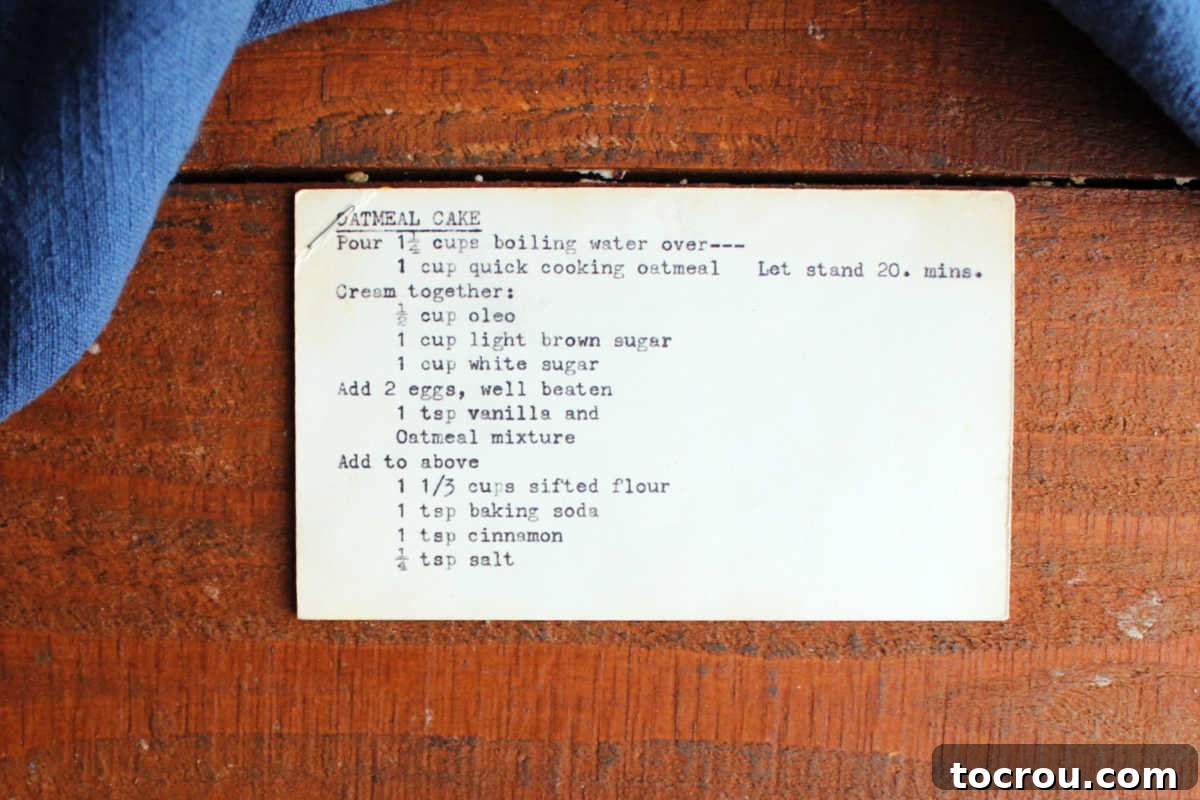
As is common with many recipes from its era, Grandma’s original called for “oleo” in both the cake batter and the topping. For those unfamiliar, “oleo” is simply an old-fashioned term for oleomargarine, which we now commonly know as margarine. This ingredient choice often sparks curiosity about the evolution of cooking fats and why the name shifted over time to drop the “oleo” prefix.
However, fear not if margarine isn’t a staple in your pantry, as it rarely is in mine. I primarily use butter for most of my baking endeavors, and shortening for specific applications like crafting the perfect crusting buttercream. The good news is that both butter and shortening serve as excellent substitutes for margarine in this recipe. Feel free to use whichever you prefer or have readily available; the cake will turn out wonderfully moist and flavorful regardless. Butter imparts a richer, creamier taste, while shortening can sometimes yield a slightly lighter texture, offering a subtle variation to this classic treat.
The Distinctive Broiled Coconut Topping
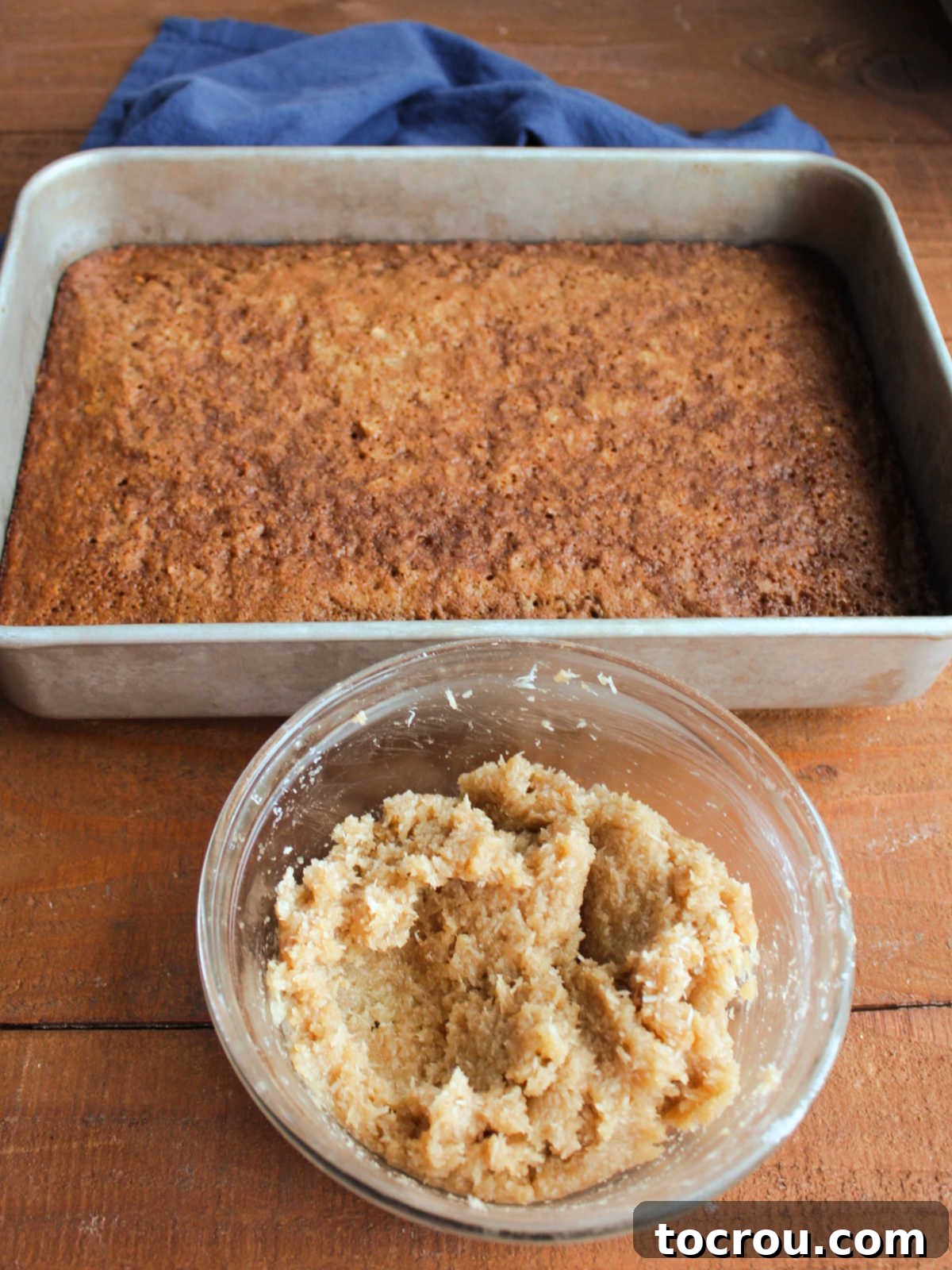
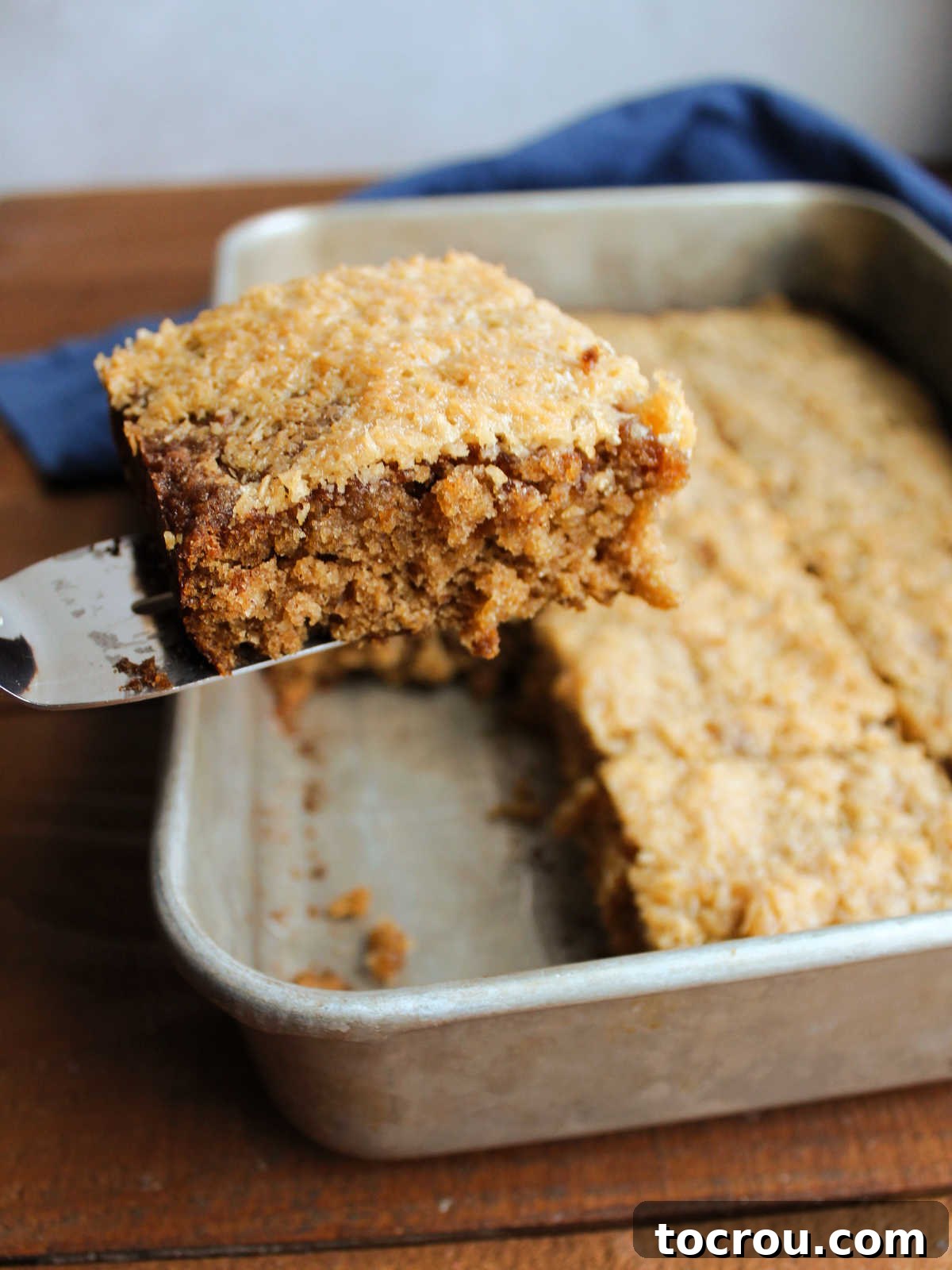
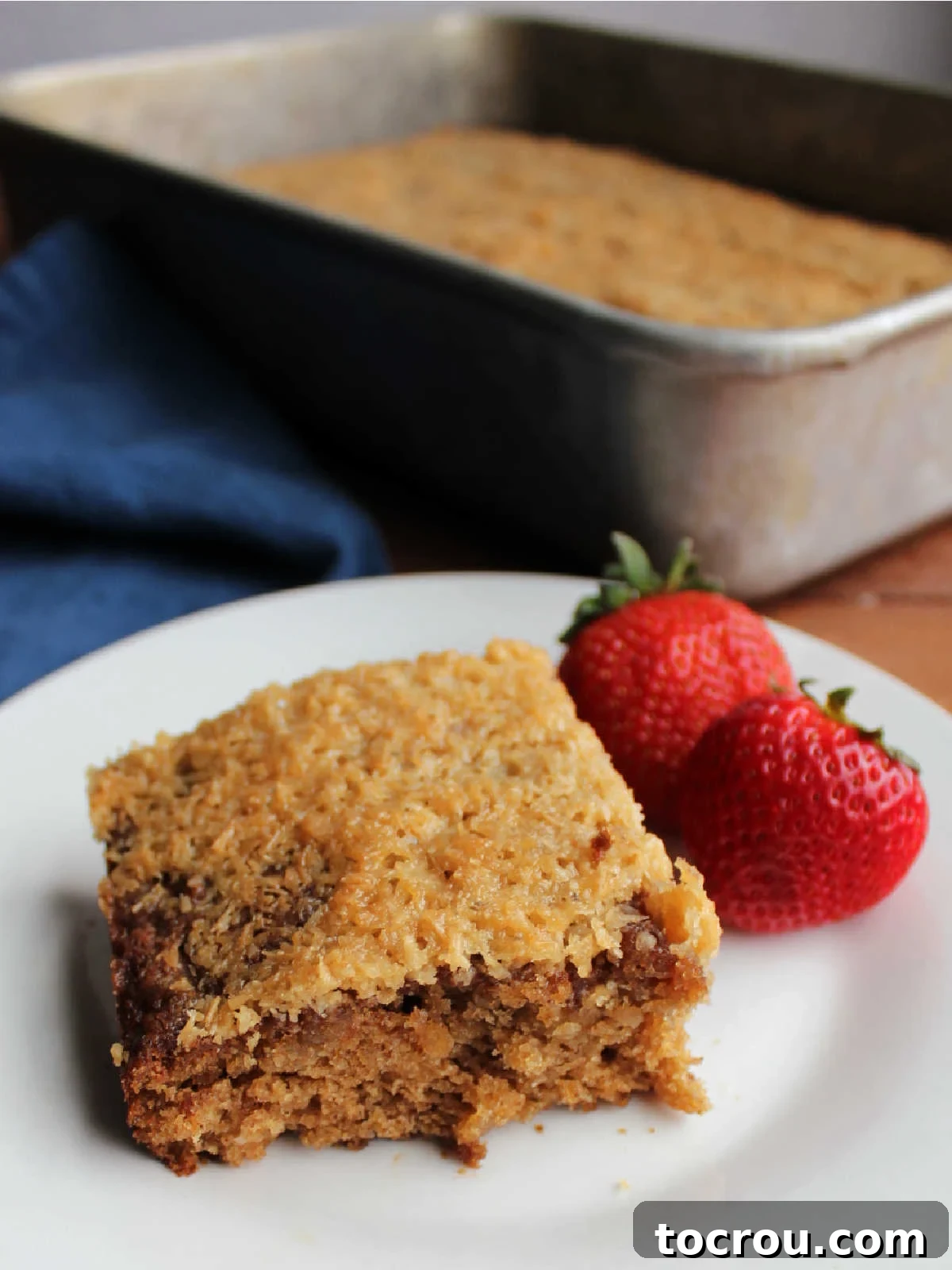
What truly sets this oatmeal cake apart is its signature broiled coconut topping. Instead of a traditional frosting, this recipe calls for a luscious mixture of brown sugar, melted butter, evaporated milk, and shredded coconut, which is spread over the warm, freshly baked cake. The magic happens next: a brief stint under the broiler. This quick but crucial step transforms the topping, allowing some of its sweet goodness to melt and soak into the top layer of the cake, while the coconut crisps up to a beautiful golden brown.
This method creates an incredibly delightful contrast of textures and flavors – a soft, moist cake beneath a chewy, caramelized, and slightly crunchy topping. It’s a stroke of genius that reminds me fondly of my great-grandma’s German chocolate cake with its own broiled coconut topping, a testament to the wisdom and innovation of these kitchen matriarchs. The toasted coconut adds an aromatic depth and a satisfying bite that elevates the entire dessert experience, making it far more interesting than a simple layer of frosting.
Enhancing the Topping & Why Old Recipes Shine
For those who crave an extra layer of texture and nutty flavor, feel free to experiment with adding slivered almonds or finely chopped walnuts to the coconut topping mixture before broiling. While these additions would certainly be delicious, we often find ourselves preferring the simple, unadulterated pleasure of the pure coconut topping. It’s perfect as is, allowing the distinct flavor of the toasted coconut and the moist cake to truly shine.
These grandmas, with their handwritten recipes and intuitive understanding of ingredients, truly knew the art of baking. That’s precisely why I hold such a deep affection for these old-fashioned recipes. They represent a legacy of culinary wisdom, passed down through generations, offering a glimpse into a time when food was made with love, patience, and a touch of ingenious simplicity. Each recipe tells a story, and this Oatmeal Cake is one of the most delicious tales.
Storage & Make-Ahead Tips
One of the many magical qualities of this oatmeal cake is that it can absolutely be made ahead of time. In fact, it’s one of those rare confections that often tastes even better a day or two after it’s baked! This allows the flavors to meld and deepen, resulting in an even more satisfying dessert. To keep it at its best, simply store the cake tightly covered at room temperature. It will maintain its wonderful texture and flavor for several days, making it perfect for entertaining or enjoying throughout the week. For longer storage, you can also freeze individual slices or the entire cake (without the broiled topping, adding it fresh before serving after thawing) for up to a month, ensuring you always have a taste of homemade goodness on hand.
Grandma’s Oatmeal Cake
Carlee
12
servings
25
mins
35
mins
1
hr
Ingredients
Oatmeal Cake
- 1½ cups boiling water
- 1 cup rolled oats
- ½ cup butter or shortening
- 1 cup light brown sugar packed
- 1 cup granulated sugar
- 2 large eggs
- 1 teaspoon vanilla extract
- 1⅓ cups all-purpose flour
- 1 teaspoon baking soda
- 1 teaspoon ground cinnamon
- ¼ teaspoon salt
Coconut Topping
- 6 Tablespoons butter melted
- ½ cup light brown sugar packed
- ¼ cup evaporated milk or heavy cream
- ½ teaspoon vanilla extract
- 1 cup shredded coconut
Instructions
-
Preheat your oven to 350℉ (175°C) and generously grease a 9×13-inch baking pan.
-
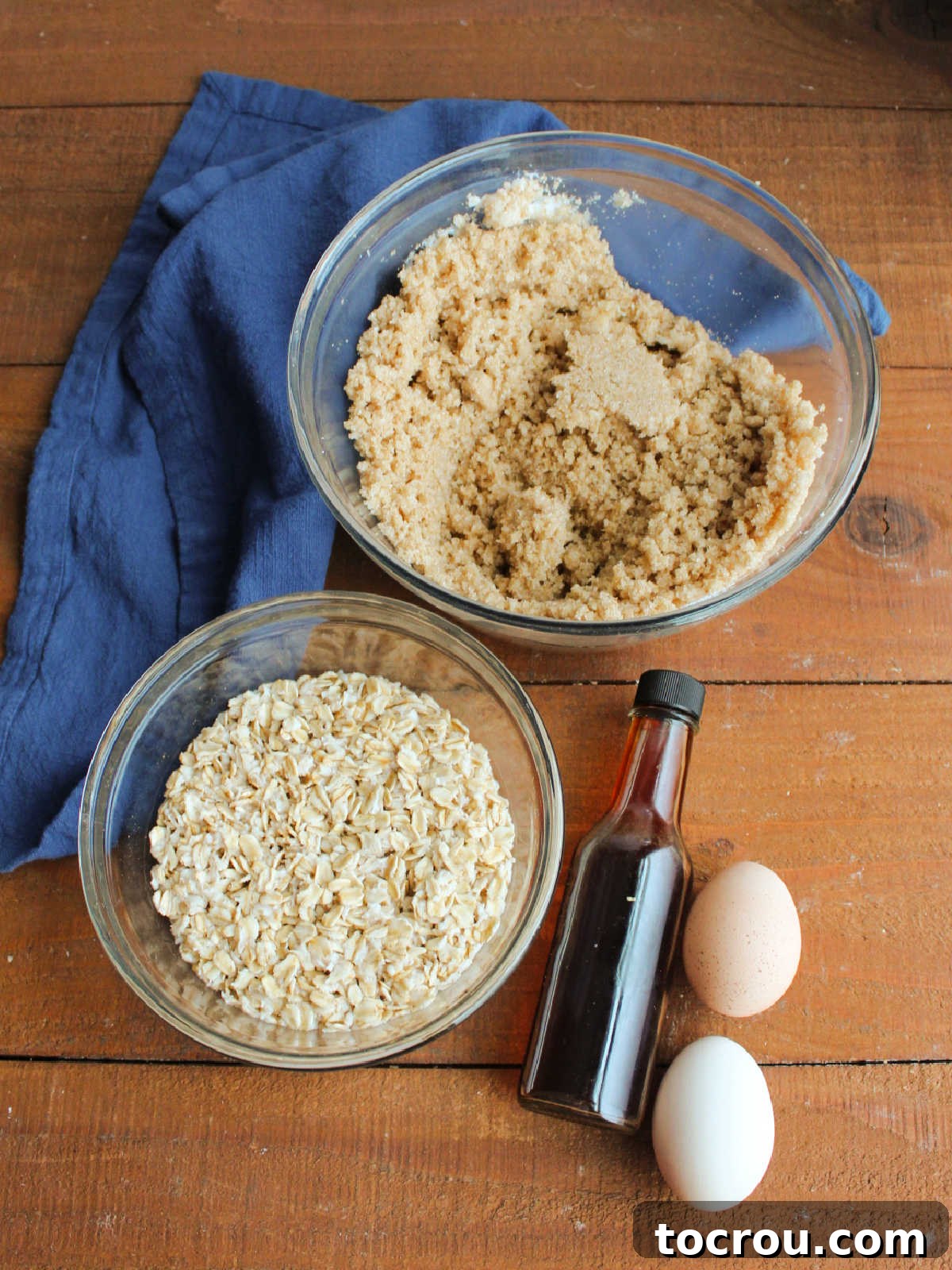
In a medium bowl, combine the rolled oats and boiling water. Stir well and let it sit for about 20 minutes to allow the oats to soften and absorb the liquid.1½ cups boiling water, 1 cup oats
-
While the oats are soaking, in a large mixing bowl, cream together the butter (or shortening), light brown sugar, and granulated sugar until the mixture is light and fluffy.½ cup butter or shortening, 1 cup light brown sugar, 1 cup granulated sugar
-
Beat in the eggs, one at a time, ensuring each is fully incorporated before adding the next.2 large eggs
-
Stir in the vanilla extract and the prepared oatmeal mixture into the wet ingredients.1 teaspoon vanilla extract
-
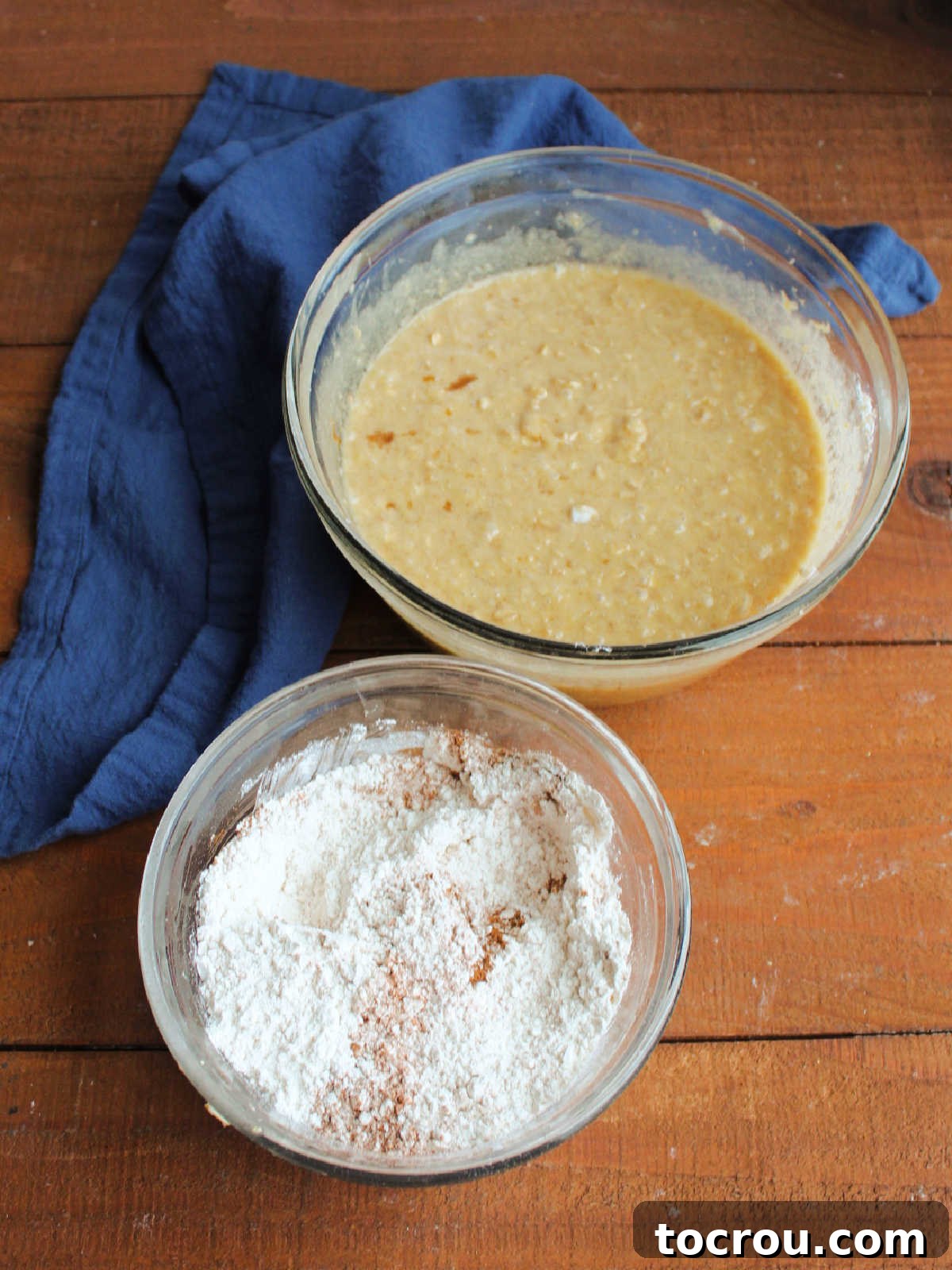
In a separate small bowl, whisk together the all-purpose flour, baking soda, ground cinnamon, and salt.1⅓ cups all-purpose flour, 1 teaspoon baking soda, 1 teaspoon ground cinnamon, ¼ teaspoon salt
-
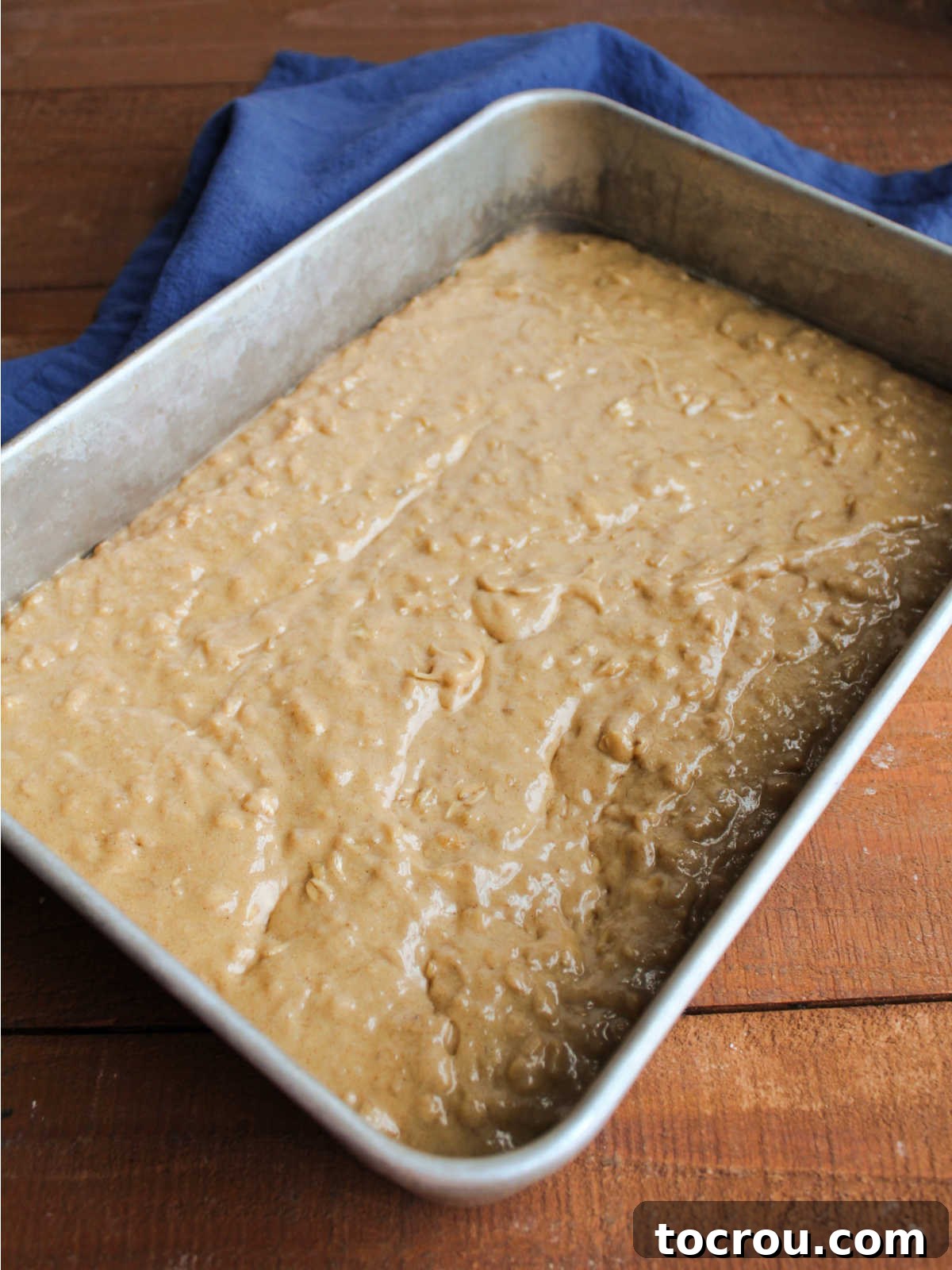
Gradually add the dry ingredients to the wet ingredients, mixing only until just combined. Be careful not to overmix. Spread the batter evenly into your prepared 9×13-inch pan.
-
Bake for 30 to 35 minutes, or until a wooden toothpick inserted into the center of the cake comes out mostly clean, with a few moist crumbs attached.
-
While the cake is still warm, prepare the coconut topping. In a small bowl, stir together the melted butter, brown sugar, evaporated milk (or heavy cream), vanilla extract, and shredded coconut. Mix thoroughly until all ingredients are well combined. Spread this mixture evenly over the warm cake.6 Tablespoons butter, ½ cup light brown sugar, ¼ cup evaporated milk, ½ teaspoon vanilla extract, 1 cup shredded coconut
-
Carefully place the cake under the broiler for 1 to 2 minutes, watching it closely to prevent burning. Broil until the coconut topping is beautifully golden brown and caramelized.
-
Allow the cake to cool completely before slicing and serving. Store any leftovers covered at room temperature.
Nutrition Information
Calories: 428kcal |
Carbohydrates: 63g |
Protein: 4g |
Fat: 19g |
Saturated Fat: 9g |
Polyunsaturated Fat: 3g |
Monounsaturated Fat: 6g |
Trans Fat: 1g |
Cholesterol: 44mg |
Sodium: 229mg |
Potassium: 131mg |
Fiber: 1g |
Sugar: 47g |
Vitamin A: 228IU |
Vitamin C: 0.2mg |
Calcium: 51mg |
Iron: 1mg
“Cooking With Carlee” is not a dietitian or nutritionist, and any nutritional information shared is an estimate. If calorie count and other nutritional values are important to you, we recommend running the ingredients through whichever online nutritional calculator you prefer. Calories and other nutritional values can vary quite a bit depending on which brands were used.
Did you try this recipe?
Don’t forget to leave a rating below and make sure to follow on Pinterest and Instagram for more!