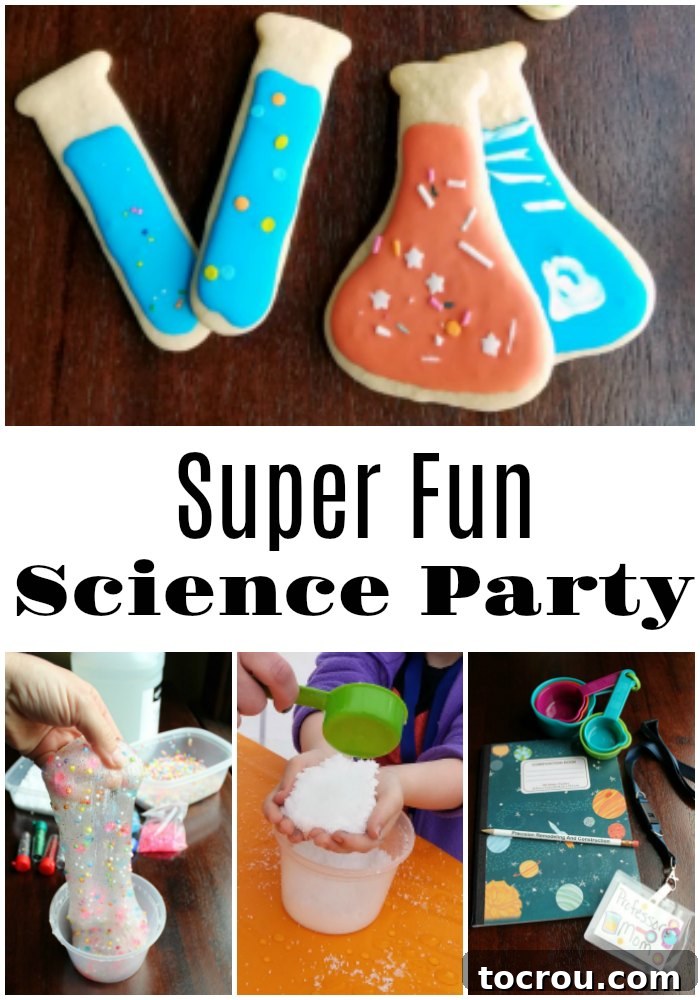
Welcome to the ultimate guide for throwing an unforgettable DIY science birthday party! Get ready to ignite curiosity and create lasting memories with exciting, hands-on experiments perfect for preschoolers and elementary-aged kids. This comprehensive guide will show you how to host a party filled with wonder, learning, and plenty of laughs, all from the comfort of your home. We’ll dive into thrilling experiments, delicious science-themed treats, and invaluable tips to ensure your celebration is a resounding success.
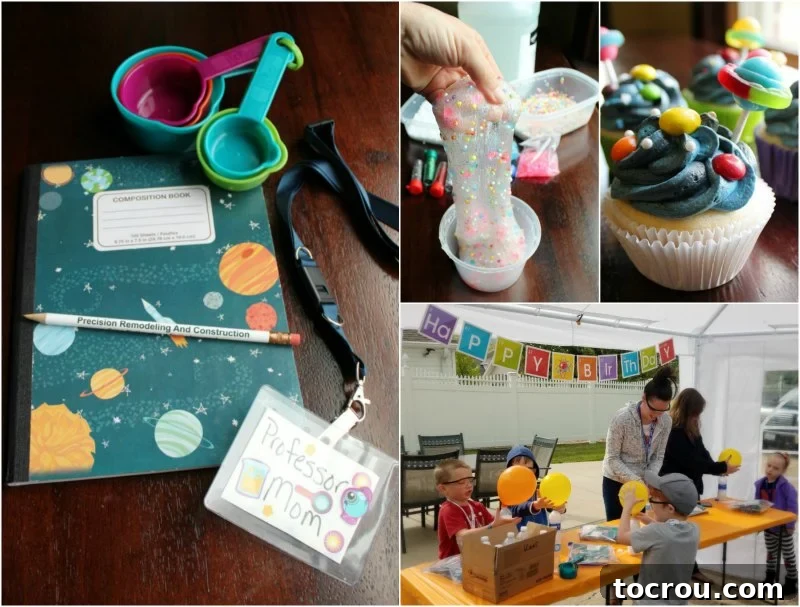
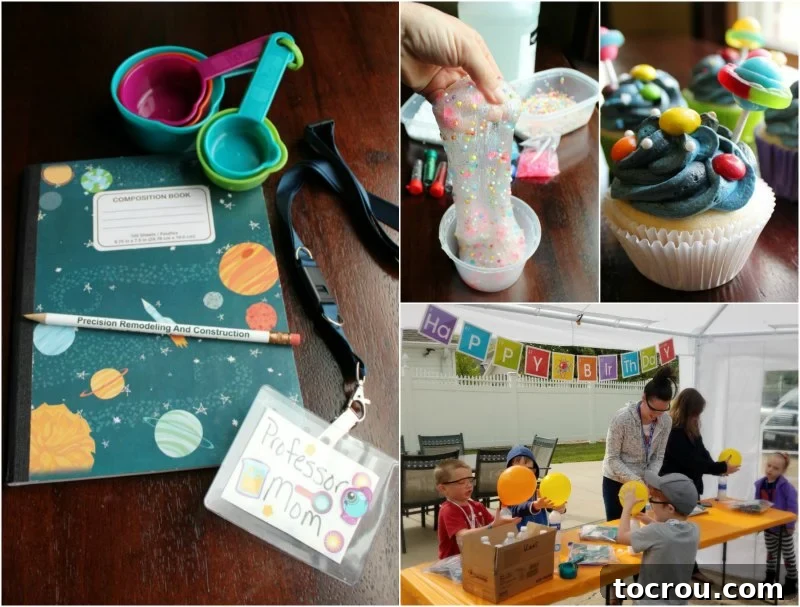
Planning a science-themed party is an incredibly engaging way to entertain children while subtly introducing them to fundamental scientific principles. With a multitude of hands-on activities, our recent celebration was a whirlwind of delightful messes and countless joyful moments. These versatile experiments aren’t just for birthdays; they’re also fantastic for classroom parties, educational field days, or simply a fun afternoon activity.
Sparking Curiosity: The Joy of Themed Parties
It’s truly hard to believe how quickly time flies; my son, affectionately known as Little Dude, just turned six! As many of you know, I adore throwing him unique, themed parties for his birthday each year. It’s a tradition that brings so much joy and anticipation to our home.
Last year, for instance, we celebrated with a vibrant Dr. Seuss-themed party, complete with an array of whimsical Dr. Seuss-inspired dishes. The culinary highlight was undoubtedly a magnificent Grinch cupcake pull-apart cake that delighted everyone.
Prior to that, we embarked on a thrilling train-themed adventure, and before that, a swashbuckling pirate party. We find immense pleasure in immersing ourselves in these themes, transforming our home into a new world for a day.
This year, as my son wanted to invite his friends, I initially thought about an outing to a bowling alley or an art center. However, he was adamant about one thing: “What will the theme be?”
Apparently, a bowling theme at a bowling alley wasn’t imaginative enough! Even my offer to create a bowling ball cake and bowling pin cupcake cake didn’t sway him. It seems my little visionary had grander plans in mind.
| We ordered these vibrant science-themed invitations from Amazon here. |
So, we enthusiastically settled on a science-themed party right at home. I must confess, I’m incredibly glad this was his choice. The journey of planning and executing the party together was truly special and rewarding.
Involving him so deeply in the planning process is a delightful challenge. It’s wonderful to witness his excitement build as his ideas come to life, even if his vision occasionally steers my initial plans in unexpected directions. Ultimately, a child’s birthday party should reflect their dreams, and I strive my best to make those dreams a reality!
Together, we had a blast selecting various experiments and meticulously testing them to ensure they would perform as expected. We ended up assembling quite an impressive collection of materials, both of us bubbling with anticipation to share these scientific wonders with his friends.
Equipping Young Scientists: The DIY Science Kits
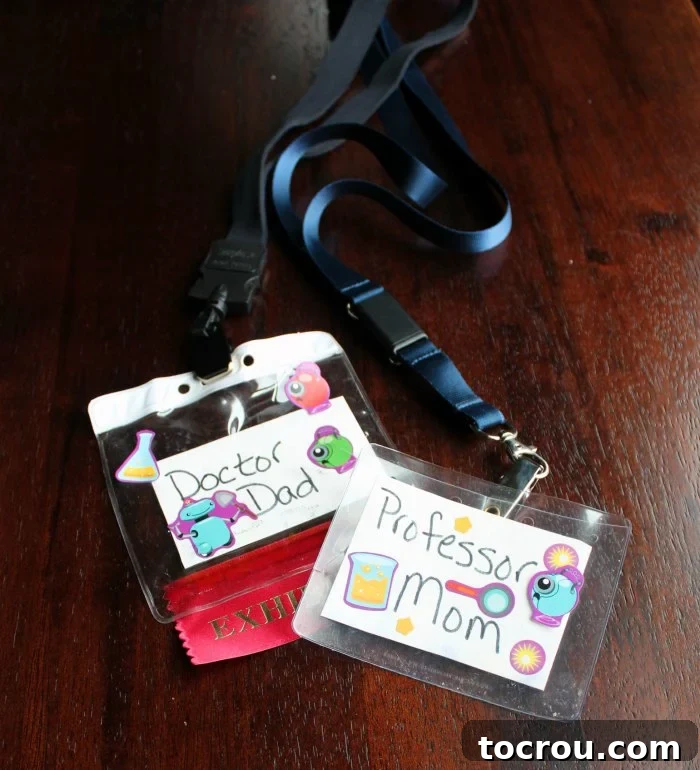
To kick off our scientific adventure, we started by distributing special science kits to each of our budding scientists. I happened to have a surplus of lanyards from previous conferences, which proved perfect for this purpose. We crafted personalized name tags for each guest, designating them as honorary “Doctors” and “Professors.”
These name tags were adorned with playful science-themed stickers, making them feel incredibly official and adding to the immersive experience. Of course, Mom and Dad proudly wore their own name tags, joining in on the scientific fun!
Little Dude thoroughly enjoyed helping to apply the stickers to the tags, his excitement for the party growing with each finished piece. Naturally, his own tag received a few extra special decorations to mark his big day.
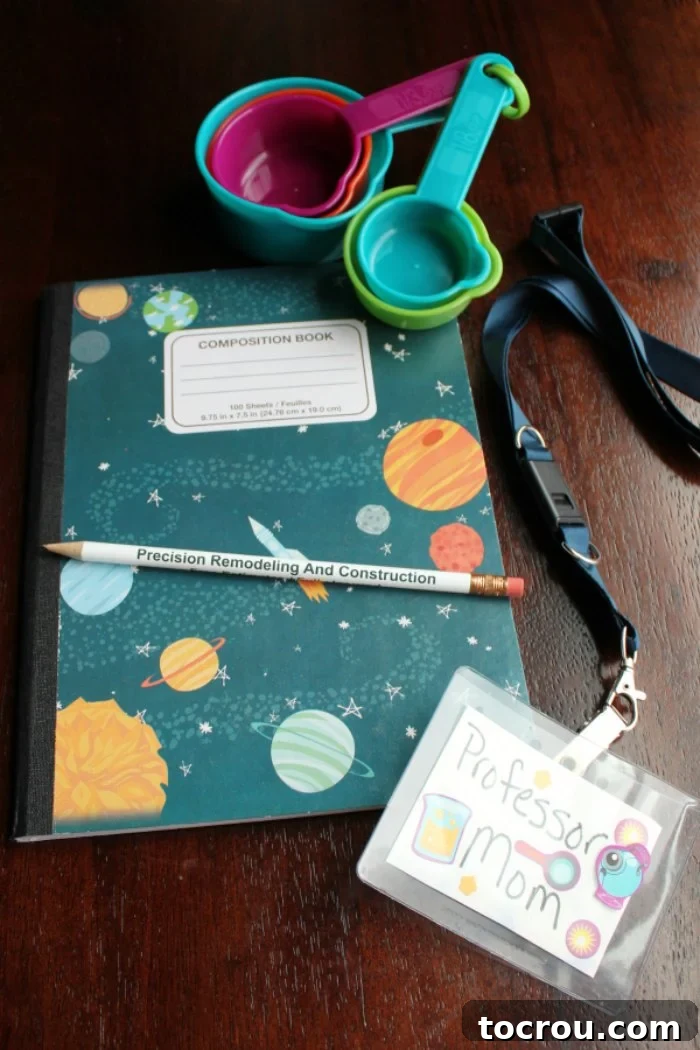
As the time approached to begin the experiments, the birthday boy proudly handed out a carefully assembled science kit to each of his friends. We organized these kits within gallon-sized zipper bags, each personalized with names and even more fun stickers.
Each young scientist received a composition notebook, ready for them to jot down observations, hypotheses, and any future scientific discoveries they might make. A trusty pencil was also included, an essential tool for documenting their findings. To facilitate our measuring-based experiments, every scientist was equipped with their own set of measuring cups. While not captured in the photograph, each kit also thoughtfully contained a pair of safety glasses, emphasizing the importance of lab safety from the start.
Unforgettable Science Experiments for Kids
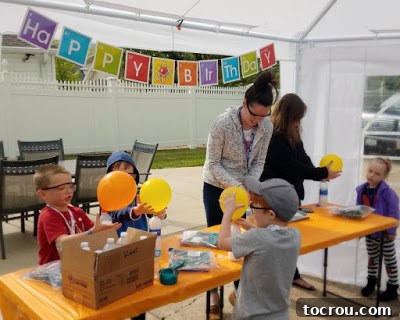 |
| You can get the chemistry happy birthday banner from Amazon HERE |
The Inflating Balloon Challenge
After distributing the science kits, I playfully informed the children that I hadn’t quite finished all the party decorations and needed their help to inflate some balloons. The exciting twist? We wouldn’t be using our mouths, but rather a fascinating chemical reaction!
I had prepared a box filled with water bottles, each about one-third full of vinegar. Additionally, I had pre-filled several balloons with approximately a tablespoon of baking soda. (Using small funnels makes both of these prep steps significantly easier and less messy!).
The instructions were simple: each child carefully stretched the neck of a baking soda-filled balloon over the opening of a vinegar bottle. Then, with a gentle tip, they allowed the baking soda to fall into the vinegar. Almost instantly, a captivating fizzing began, and before their very eyes, the balloons inflated! This classic acid-base reaction (baking soda is a base, vinegar an acid) produces carbon dioxide gas, which fills and expands the balloon. It’s a fantastic visual demonstration of a gas being produced. We had enough supplies for everyone to inflate at least two balloons, observing the magic multiple times. Remember, for each balloon, you’ll need a fresh bottle of vinegar to ensure a strong reaction.
Magical Instant Snow Creation
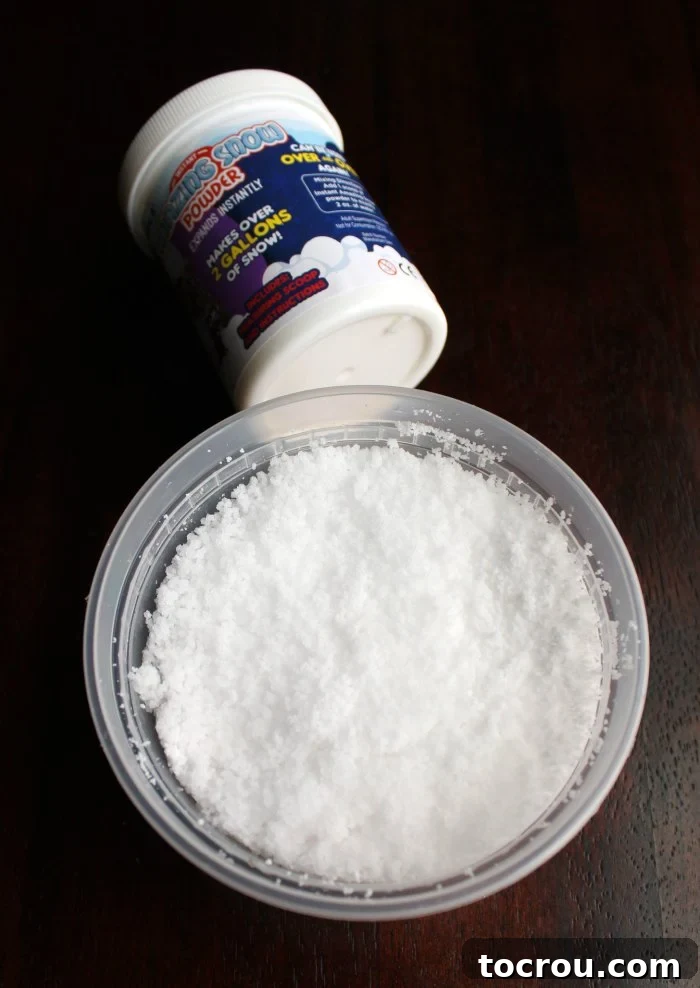
Our next exciting experiment delved into the world of polymers. This instant snow powder was an absolute hit, captivating everyone with its transformative properties.
It starts as an incredibly fine, bright white powder, unassuming in its appearance. However, it’s a superabsorbent polymer with an incredible affinity for water. The children were given about a teaspoon of the powder in the palm of their hands, then instructed to slowly pour approximately 1/4 cup of water over it.
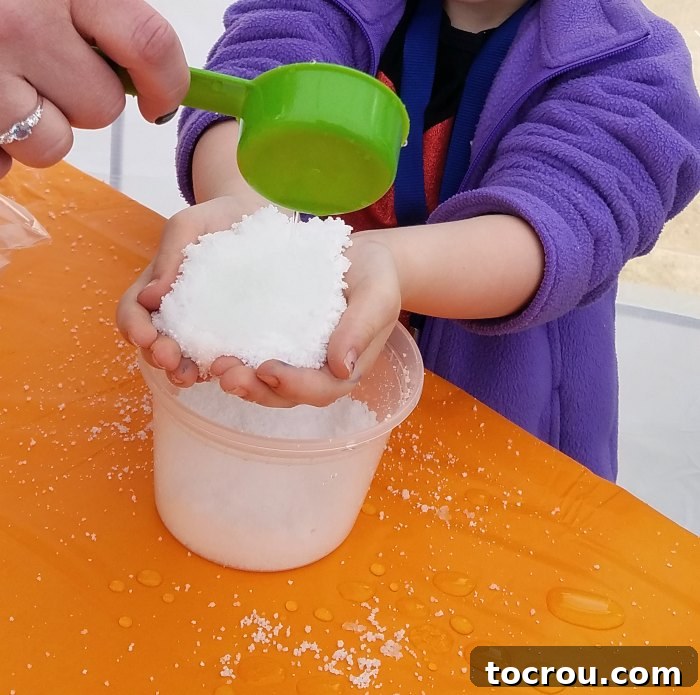
The transformation was instantaneous and mesmerizing! The powder rapidly soaked up all the water, expanding dramatically to create a fluffy, cool substance that felt remarkably like real snow – but without the freezing temperatures! Each child had the opportunity to perform this magical conversion two or three times, marveling at the polymer’s ability to absorb many times its weight in liquid.
To ensure they could continue the fun at home, we provided each child with a small plastic tub for their snow. A fantastic feature of this polymer is that if you spread it out and allow it to dehydrate over time, it will return to its powder form, ready to be “re-snowed” again and again, offering extended play and learning!
Crafting the Perfect Slime
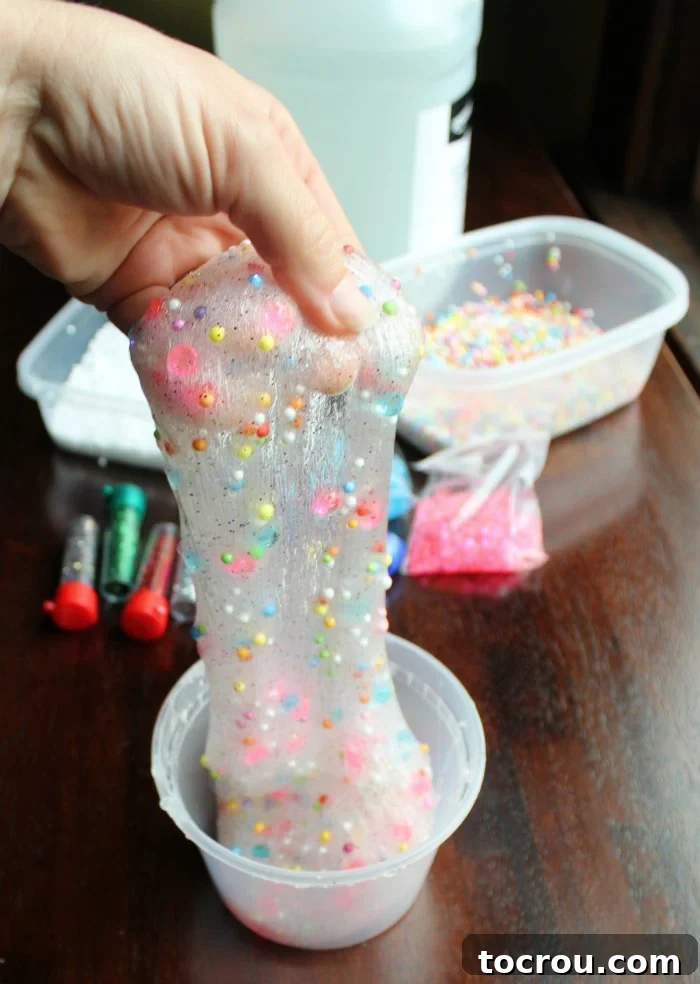
No science party is truly complete without a generous dose of everyone’s favorite gooey creation: slime! This activity always brings out huge smiles and endless fascination.
We began by distributing another round of take-home containers. The 16-ounce size proved to be absolutely perfect for accommodating a single batch of slime along with some exciting mix-ins. Our young scientists started by adding 1/2 teaspoon of baking soda to their containers, followed by 1/2 cup of water. After stirring these together until well combined, we incorporated 1/2 cup of clear glue.
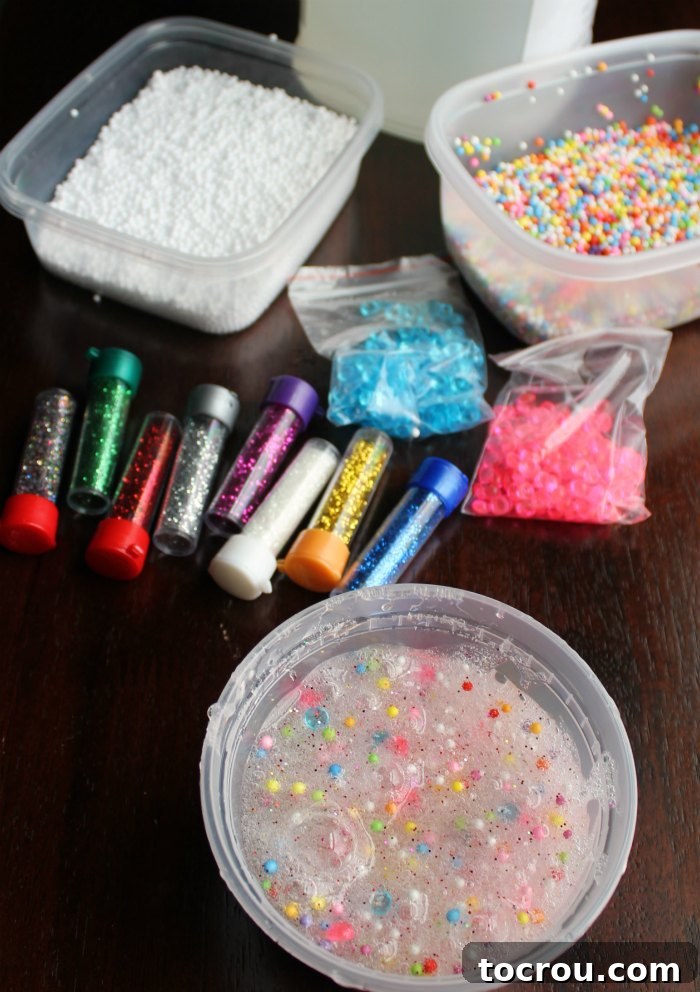
I may have been a tad overzealous and ordered a full gallon of clear glue. Even after making a test batch, several batches for the party, and four more with a friend the next day, we still have over half a gallon left! Unless you’re hosting an enormous gathering, a smaller quantity will certainly suffice.
The real fun began with the add-ins. We had a fantastic selection of Styrofoam balls, an abundance of glitter, and colorful beads to mix into our glue concoction. Adding these elements at this stage makes them much easier to incorporate evenly. The children had a blast customizing their slime with their favorite sparkling and textured additions.
Finally, to activate the slime, we stirred in approximately 1 tablespoon of contact lens solution. We started with this amount, and if the slime still felt too sticky, we’d add a tiny bit more, drop by drop, mixing thoroughly. The more they played with it, stretching and kneading, the more the slime came together into a perfect, pliable consistency. Their personalized slime creations were all incredibly unique and provided hours of entertainment!
The Grand Mentos and Coke Geyser
We intentionally saved the biggest, most exciting, and potentially messiest experiment for last. While you can certainly execute this without excessive mess, predicting the outcome with a group of six to eight-year-old boys is a different story!
However, if you’re a parent of boys in that age range, you’re likely well-accustomed to a bit of chaos, so this shouldn’t come as too much of a surprise. That’s right—we went all out with the classic Mentos and diet soda geyser experiment! It was an absolute riot, generating gasps and giggles.
To enhance the experience and ensure some control over the eruption, we invested in some specialized geyser tubes.
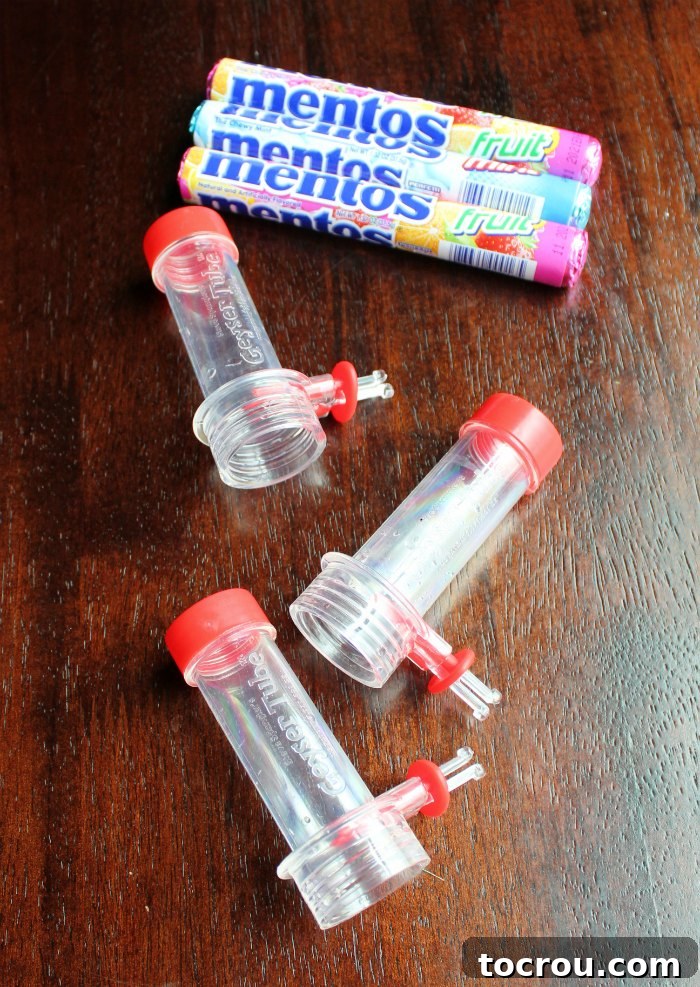
These tubes worked exceptionally well, allowing us to safely set up the experiment while still giving the children the thrilling moment of “pulling the trigger.” The process involves loading the tubes with Mentos candies, then securely screwing them onto the top of a two-liter bottle of diet soda. Once everything is set, a quick pull of a tab releases the Mentos into the soda, triggering an impressive geyser!
This clever design gives you a crucial few seconds to step back from the immediate vicinity before the soda fountain erupts, ensuring everyone stays mostly dry. Of course, the boys couldn’t resist trying to catch some of the fizz in their mouths, jumping on the bottles, and generally embracing the full “boy” experience. It was absolutely hilarious to watch their unadulterated joy and excitement. While a little stickiness was inevitable, we hope no parents were too upset over their children’s sweet, fizzy souvenirs!
Deliciously Scientific Party Food Ideas
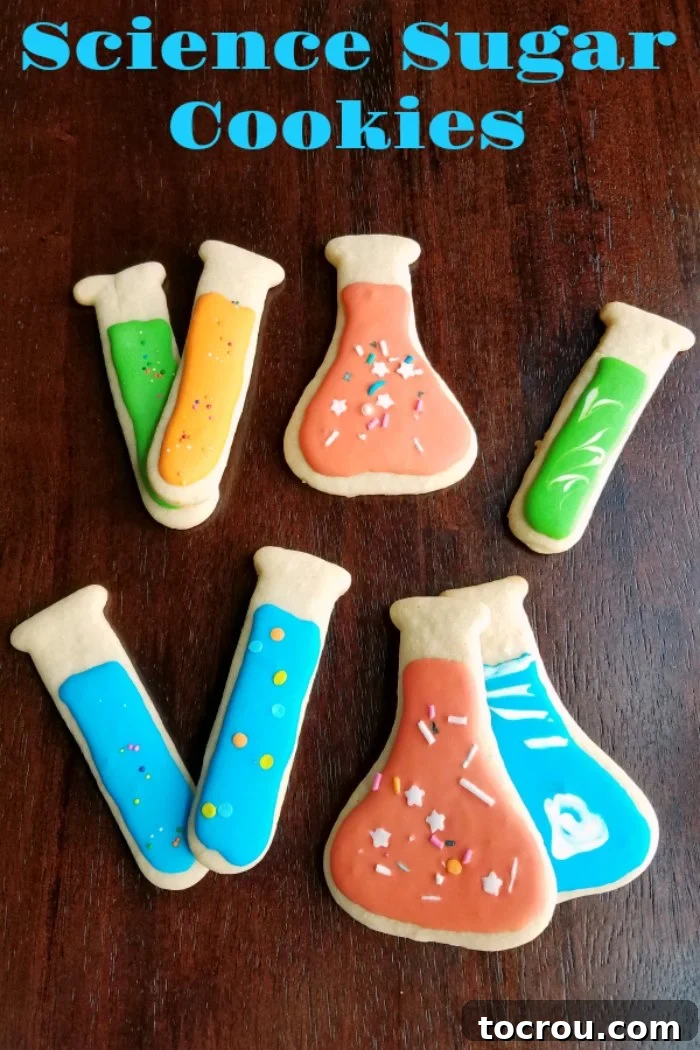
No party is complete without themed treats, and a science party offers a fantastic opportunity for creative culinary concoctions! A couple of days before the party, we embarked on a delightful baking project: crafting and decorating science-themed sugar cookies. Fortunately, I already owned charming test tube and Erlenmeyer flask cookie cutters (you can find similar ones from Amazon here).
We used my trusted go-to rolled sugar cookie dough recipe, with one notable exception: the flavoring. Little Dude insisted on choosing, and his adventurous pick was maple! We initially worried he might have been a bit heavy-handed with the maple extract, but to our pleasant surprise, they turned out incredibly tasty and unique!
Of course, we decorated them with my reliable royal icing. We kept the designs fairly simple, as we had to churn out a large batch on a weeknight, but I think they looked absolutely adorable nonetheless, perfectly complementing our scientific theme.
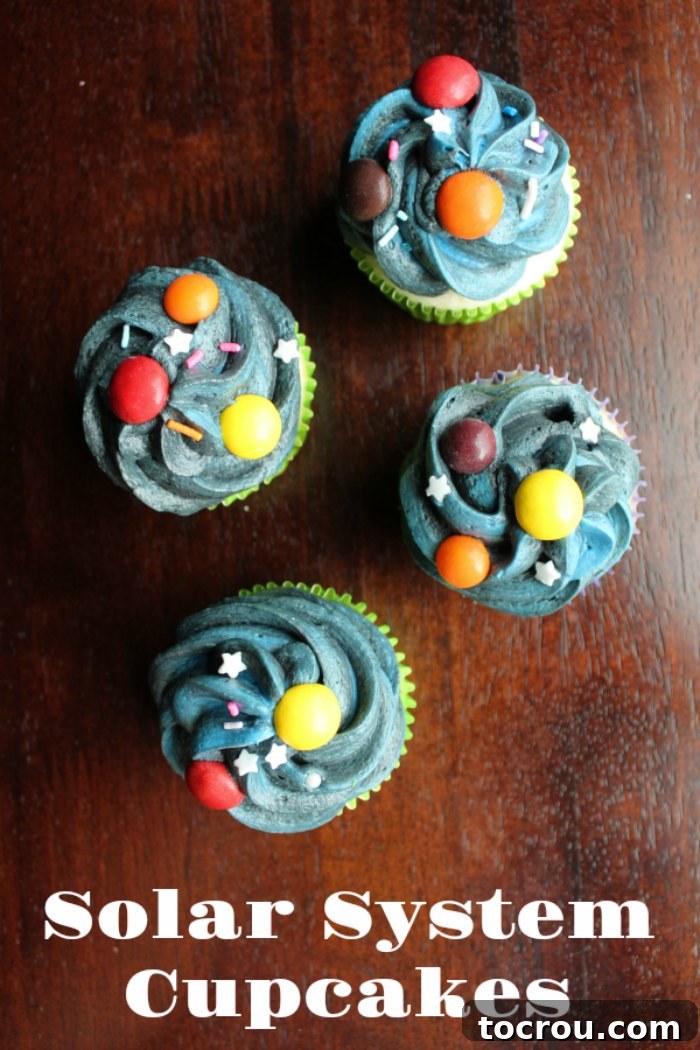
Our dessert plans took a last-minute turn! We had initially envisioned an impressive Erlenmeyer flask cupcake cake, but in the final week, Little Dude made a pivotal decision: he wanted solar system cupcakes! This unexpected request stemmed from a charming solar system mobile we happened to discover at the dollar store, which he had proudly colored and was eager to hang above his cupcakes.
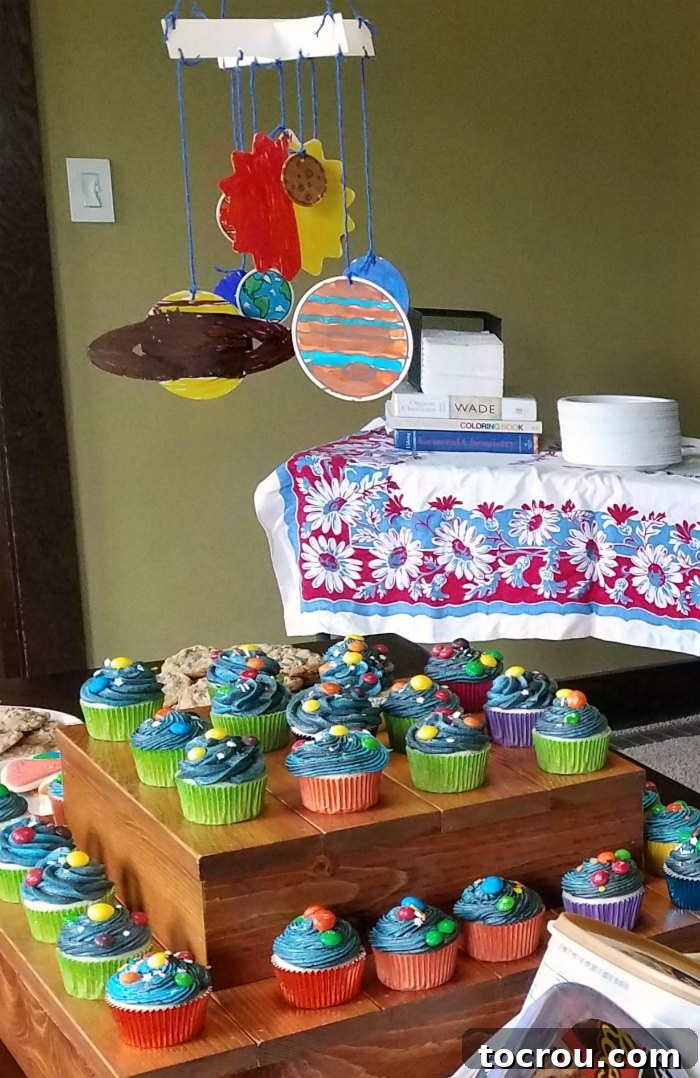
We baked a batch of our favorite semi-homemade white cupcakes and prepared a generous quantity of luscious buttercream frosting. To achieve our celestial look, we dyed half of the frosting a vibrant blue and the other half a rich, dark gray, mimicking the depths of space. After piping the “space” onto our cupcakes, we meticulously decorated them with peanut butter M&M’s and Skittles to represent colorful planets. My son, ever the storyteller, was busy narrating tales about his solar systems and their unique planets as he adorned each one.
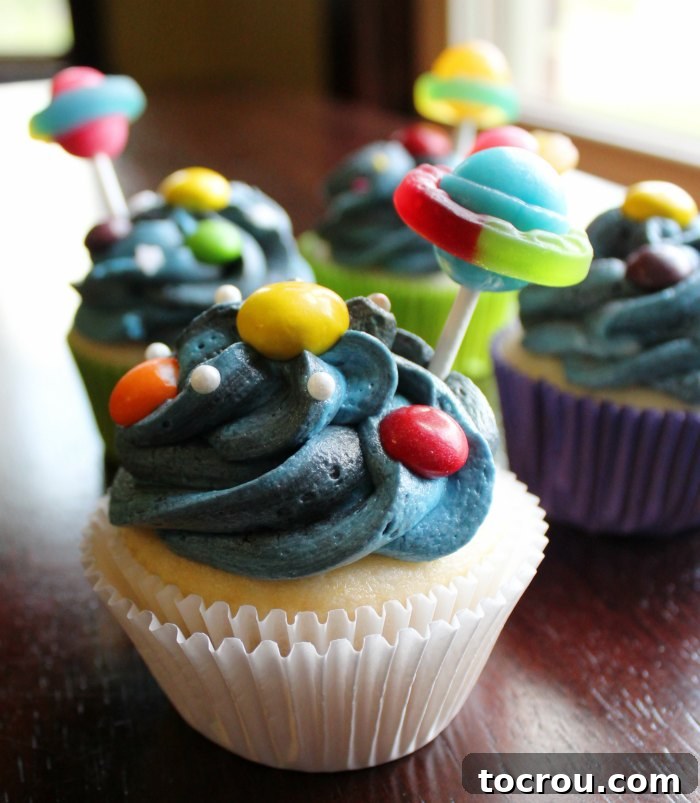
To add an extra touch of sparkle, we sprinkled them generously with star-shaped sprinkles. Inspired by some captivating images on Pinterest, we also attempted to create miniature Saturn-like planets using Dum-Dums lollipops and gummy Lifesavers for the rings. However, I highly recommend you save yourself the potential frustration! Despite our best efforts and numerous attempts, those stubborn gummies simply refused to stay attached to the lollipops. Sometimes, simplicity is indeed the best approach!
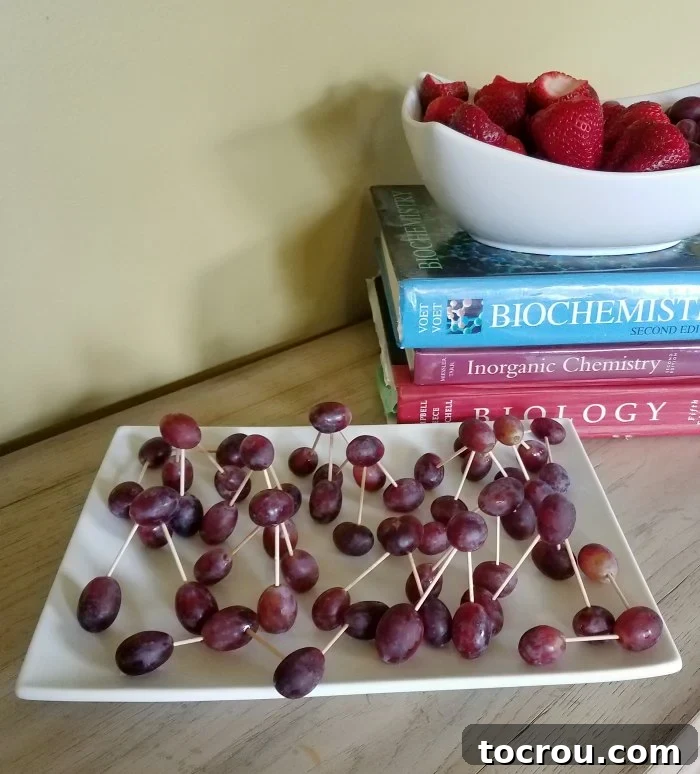
For a refreshing and educational snack, I created some “molecular compounds” using grapes. My original plan included both grapes and strawberries, but to my dismay, all the strawberries at the grocery store were absolutely enormous, making them unsuitable for our small-scale molecular models!
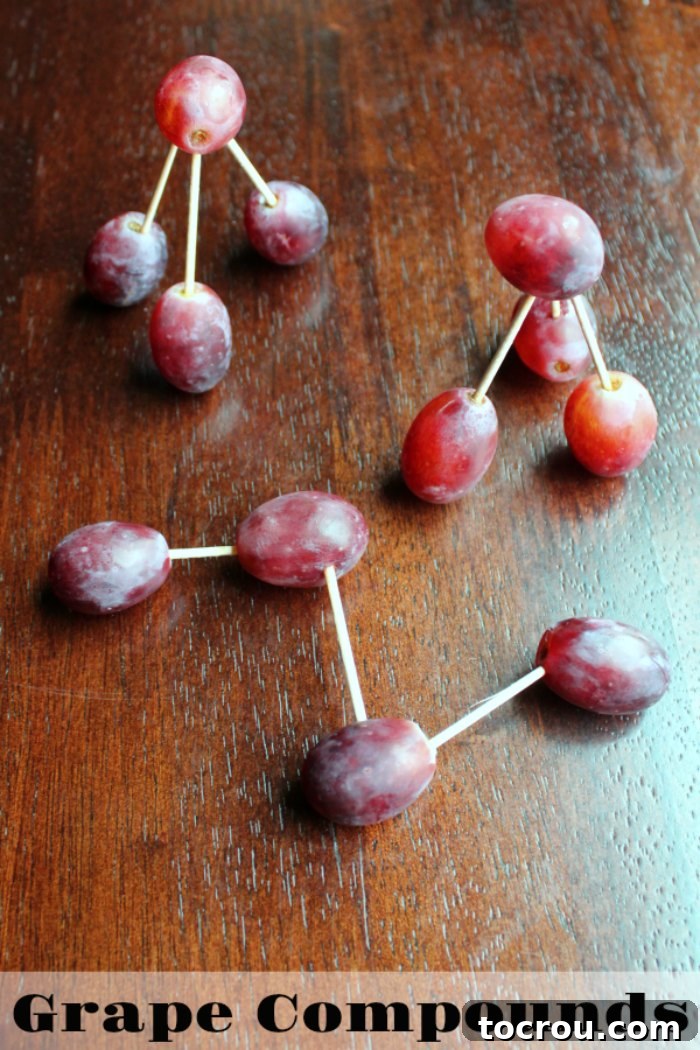
So, I opted for a simple bowl of fresh strawberries alongside various grape compound configurations. Toothpicks proved to be an incredibly easy and effective way to join my grape “elements” together, allowing us to build different molecular structures. This activity not only offered a healthy snack but also served as a simple, tangible way to introduce the concept of atoms and molecules.
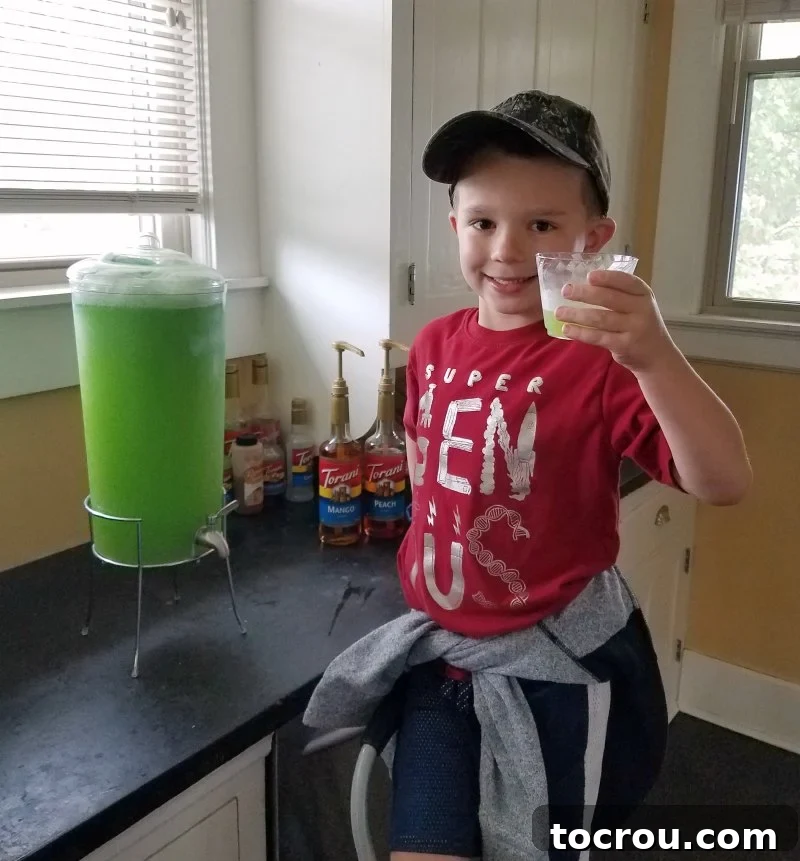
Every lively party needs a special beverage, so we whipped up a batch of our famous green slime punch. This exciting concoction is a playful twist on our favorite sherbet punch recipe, and its vibrant hue made it look almost as if it could glow in the dark! It was the perfect, eye-catching drink to complement our scientific feast.
Pro Tips for a Stellar Science Party
To ensure your DIY science birthday party runs smoothly and is as stress-free as possible, here are a few additional tips:
- Preparation is Key: Gather all your materials for each experiment well in advance. Label containers, pre-measure ingredients where possible, and set up “experiment stations” to keep things organized.
- Designate Experiment Stations: Create separate areas or tables for each experiment. This prevents overcrowding, makes transitions smoother, and allows children to move at their own pace.
- Safety First: Always emphasize safety. Ensure safety glasses are worn for any experiment involving liquids, powders, or potential splashes. Have adult supervisors at each station.
- Embrace the Mess: Science can be messy, and that’s part of the fun! Lay down old tablecloths, newspaper, or tarps. Have paper towels, sponges, and a designated “mess zone” ready for easy cleanup.
- Balance Structured Activities with Free Play: While experiments are the main event, allow for some unstructured time. Kids might want to revisit a favorite experiment or simply play with their slime.
- Educational Takeaways: Briefly explain the “why” behind each experiment in simple, kid-friendly terms. This adds an educational layer without making it feel like a classroom.
- Party Favors That Last: The science kits, slime, and instant snow tubs double as fantastic party favors, extending the fun long after the party ends.
Hosting a DIY science birthday party is an incredibly rewarding experience that combines education, excitement, and creativity. From bubbling potions to erupting geysers and edible molecular structures, these activities are designed to spark curiosity and create lasting memories. It’s an opportunity to watch young minds light up with discovery and to celebrate in a truly unique way. We hope these ideas inspire you to plan your own extraordinary scientific celebration!