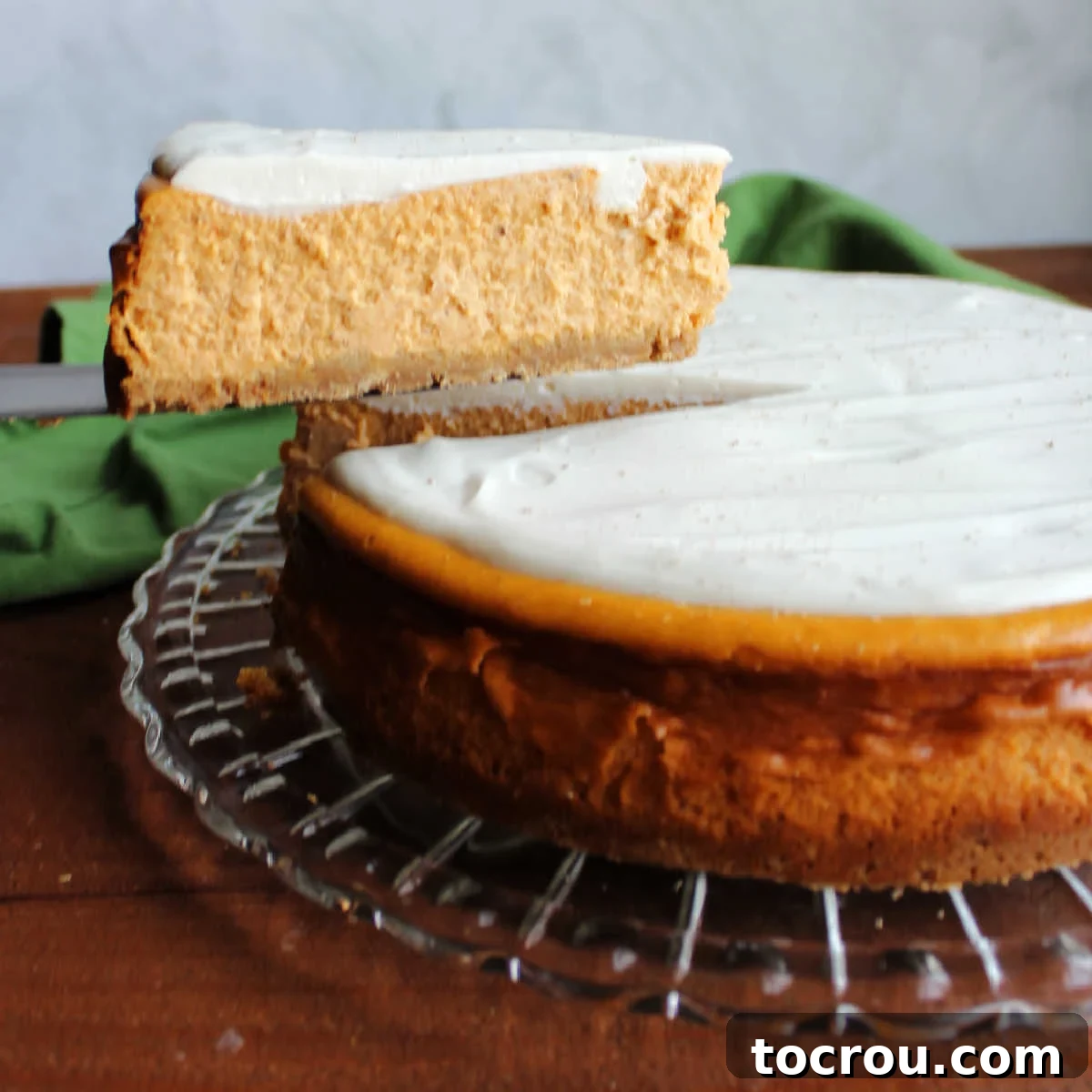
Easy & Creamy Pumpkin Cheesecake: Your Go-To Fall Dessert with Sweetened Condensed Milk
Welcome to the ultimate guide for crafting the perfect creamy pumpkin cheesecake. If you’ve been searching for a dessert that effortlessly combines rich flavor with an unbelievably smooth texture, you’ve found it. This recipe is designed to be straightforward to assemble, and it delivers a show-stopping result without the fuss of a water bath. Plus, the optional, yet highly recommended, sour cream topping adds an exquisite layer of tang and creaminess that elevates every bite.
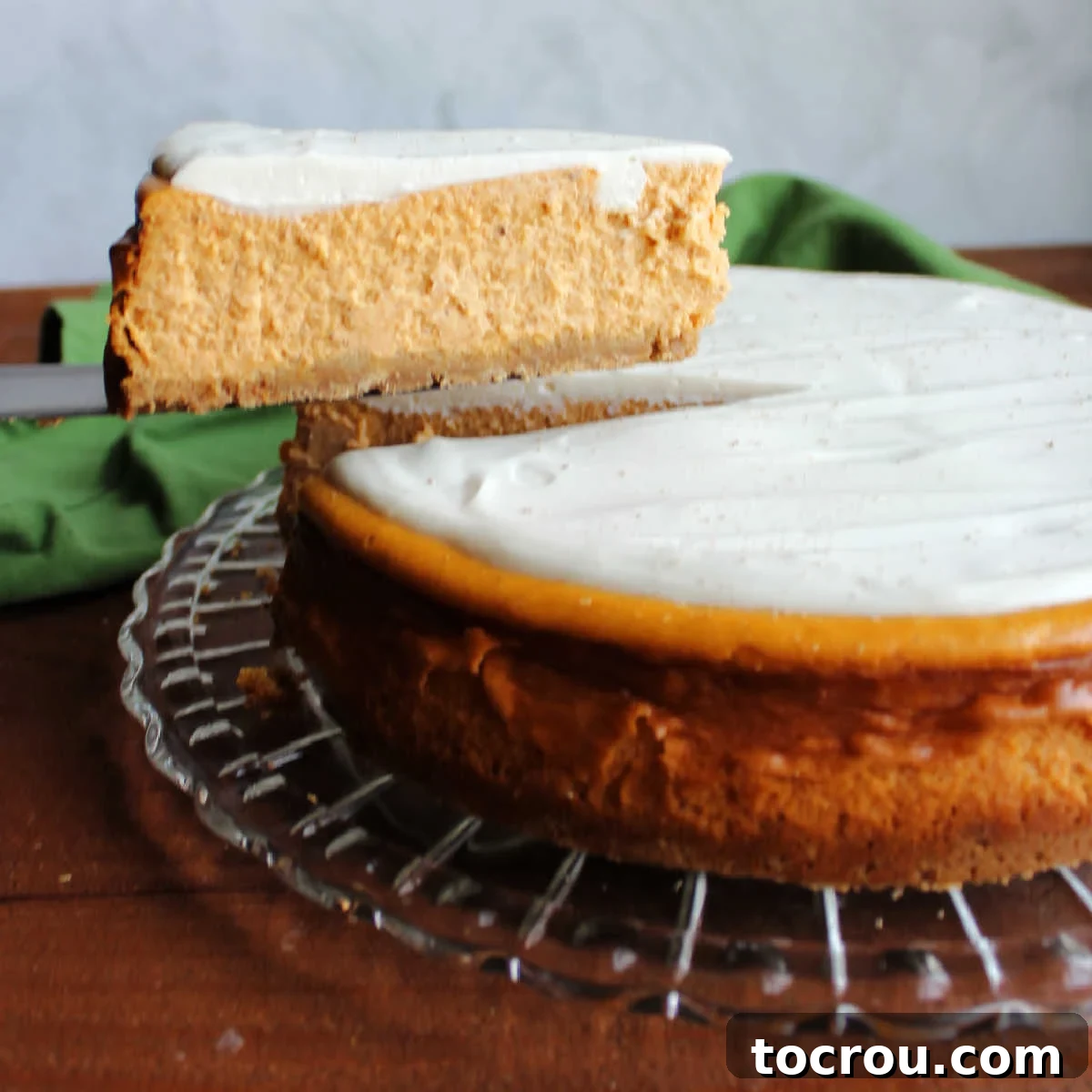
What makes this pumpkin cheesecake truly exceptional is its perfect baked texture, achieved effortlessly without the traditional water bath method. This technique ensures a beautifully even bake and a consistently delightful consistency. The secret ingredient behind its unparalleled richness and velvety smooth creaminess? Sweetened condensed milk. This magical ingredient not only simplifies the recipe but also imparts a depth of flavor and a lusciousness that is simply hard to surpass.
We’ve carefully balanced the blend of spices, ensuring just enough warmth and aroma to complement the sweet pumpkin, creating a truly irresistible fall dessert. Whether you’re baking it for a casual gathering or a festive occasion, this cheesecake is sure to impress. We highly recommend making one now for a delightful practice run, and then another to proudly feature on your Thanksgiving dessert spread.
The Magic of Sweetened Condensed Milk in Cheesecake
Our family has been making cheesecake with condensed milk for decades, with the classic vanilla version holding a special place in our hearts. The simplicity of assembly, coupled with the consistently amazing texture it yields, made us fall in love with this method. Over the years, we’ve experimented extensively, creating beloved variations like chocolate cheesecake and even a unique peanut butter cheesecake, all built on the same no-fail condensed milk base.
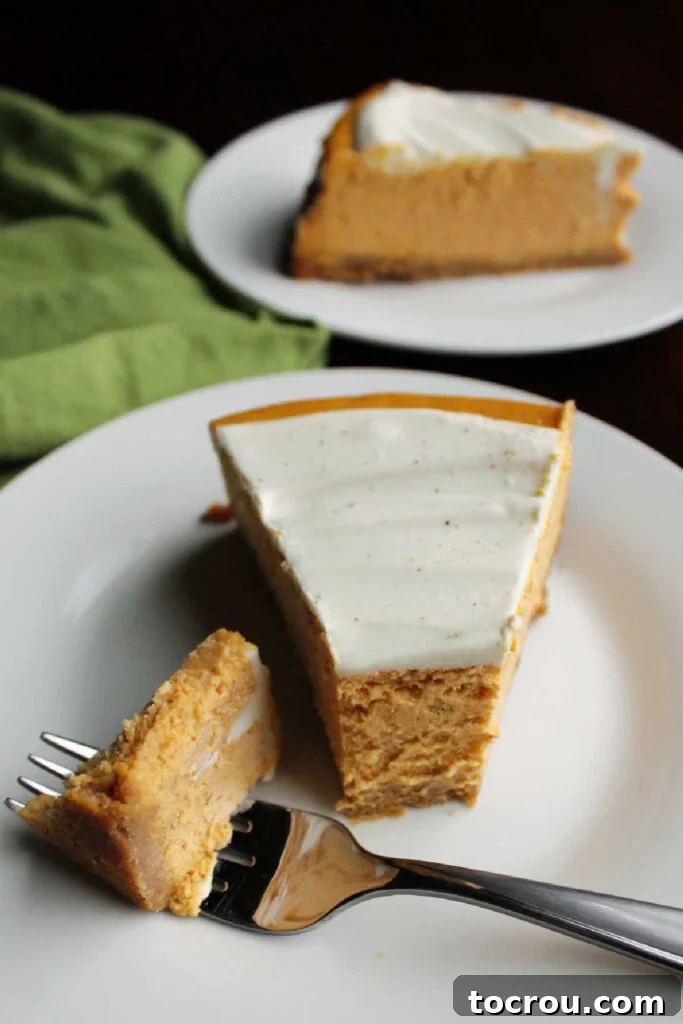
After successfully introducing delightful apple butter cheesecake and pecan pie cheesecake last year, it became clear that we needed to complete our fall dessert repertoire with a quintessential pumpkin version. And we couldn’t be happier with the results! This pumpkin cheesecake embodies all the warm, comforting flavors of autumn, making it an instant classic.
While we might be tempted to fill our entire Thanksgiving dessert table with an assortment of these incredible cheesecakes, we understand that some dedicated pumpkin pie purists might feel a little left out. So, to ensure everyone’s holiday cravings are satisfied, we’ll simply make sure to have plenty of both amazing pies and decadent cheesecakes!
Expert Tips for a Perfectly Creamy Cheesecake Filling
Achieving that coveted silky-smooth cheesecake texture doesn’t have to be a mystery. Follow these essential tips to ensure your filling is flawlessly creamy every time:
Beat Cream Cheese Thoroughly at Room Temperature
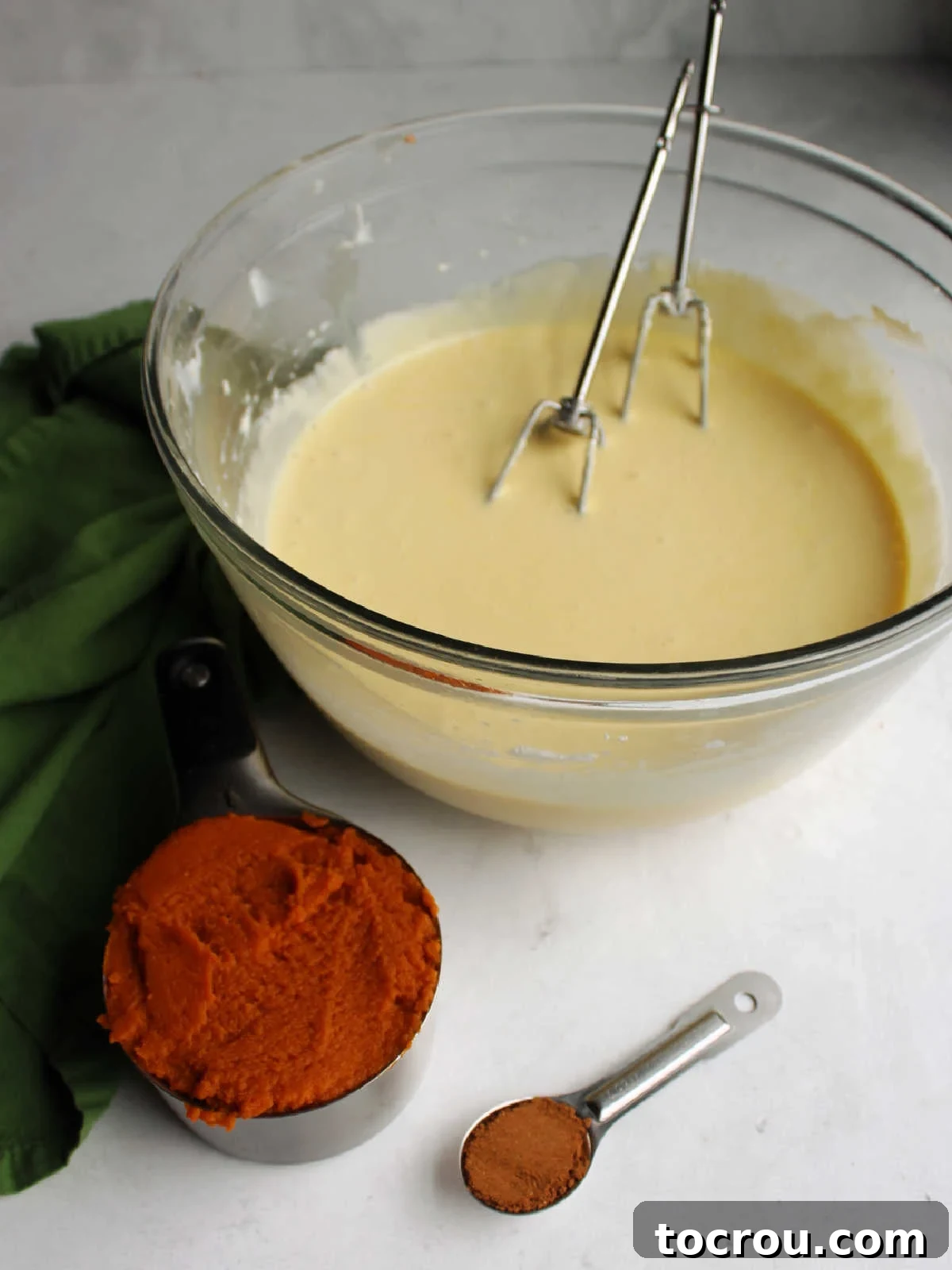
The single most crucial step for a lump-free cheesecake is starting with properly softened cream cheese. It needs to be at true room temperature, not just slightly cool. Beat the room temperature cream cheese really well, often for several minutes, before adding any other ingredients. This is your prime opportunity to eliminate any lumps and create a perfectly smooth base. Once you introduce more liquid ingredients, it becomes significantly harder to break down cream cheese chunks. So, be diligent: ensure it’s fully softened, beat it until incredibly smooth, and don’t forget to scrape down the sides of your mixing bowl a few times to incorporate everything evenly before moving on.
Incorporate Ingredients Gradually and Gently
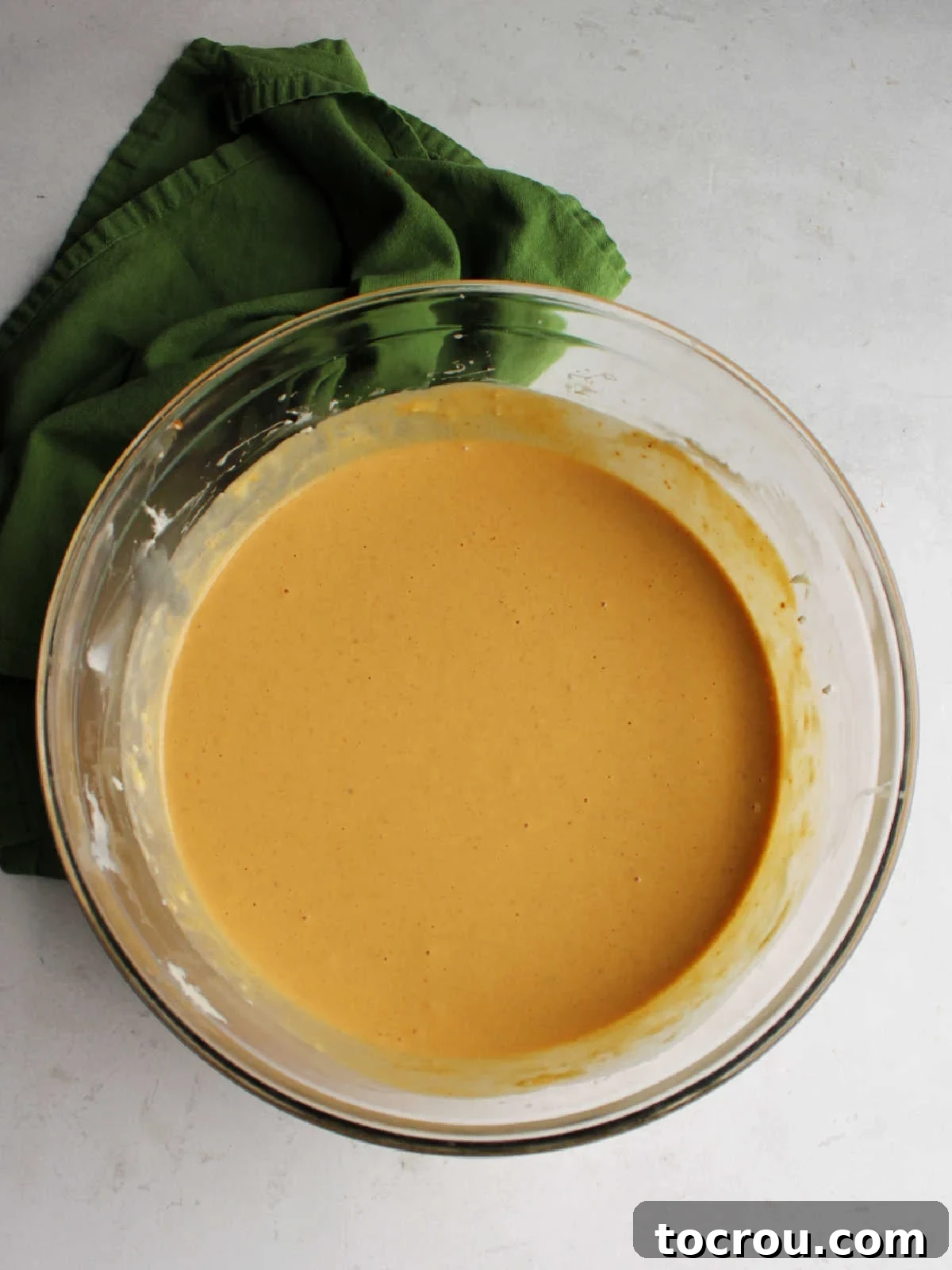
Once your cream cheese base is smooth, add the remaining ingredients a bit at a time. This methodical approach ensures everything is well incorporated without overmixing. It might take an extra couple of minutes, but this small effort is well worth it for the superior texture you’ll achieve. For instance, pour in the sweetened condensed milk slowly, mixing until just combined before adding the vanilla.
Avoid Overmixing Eggs
When it’s time to add the eggs, switch your mixer to a low speed. Overmixing the eggs can incorporate too much air into the batter, which can lead to a puffy cheesecake that cracks as it cools. Mix just until the eggs are fully blended into the mixture, no more. The goal is to emulsify, not aerate.
Remove Air Bubbles Before Baking
Before placing your cheesecake in the oven, give the springform pan a couple of firm taps on the counter. This simple action helps to release any large air bubbles that might be trapped in the batter. Eliminating these bubbles contributes to a denser, creamier texture and further helps prevent unsightly cracks on the surface.
How to Achieve a Crack-Free Cheesecake Without a Water Bath
A common concern with cheesecakes is surface cracks. Our recipe proudly sidesteps the traditional water bath by relying on specific baking and cooling techniques for a smooth, unblemished top. The key principles are baking low and slow, followed by an equally slow and gentle cooling process.
Bake Low and Slow
Baking your cheesecake at a lower temperature for a longer duration allows it to cook through evenly and gently. This gradual heating prevents the outside edges from setting too quickly while the center remains undercooked, which is a primary cause of cracks. An even bake throughout the cheesecake also contributes significantly to its luxurious, consistent texture.
Cool Gradually for a Flawless Finish
Rapid cooling is another major culprit behind cheesecake cracks. Once your cheesecake is perfectly set (more on that below!), resist the urge to pull it out of the oven immediately. Instead, turn off the oven and simply crack the door open, leaving the cheesecake inside. This allows the cheesecake to cool down very slowly, gradually adjusting to the change in temperature and preventing thermal shock. After about ten to fifteen minutes, carefully remove the cheesecake from the oven and transfer it to the counter to cool completely to room temperature. Only then should it be moved to the refrigerator to chill thoroughly. This step-by-step gradual cooling process makes an enormous difference in preventing cracks and ensuring a beautiful presentation.
How to Tell When Your Cheesecake is Perfectly Done
Knowing precisely when a cheesecake is ready to come out of the oven is crucial for achieving the ideal texture and avoiding cracks. The best method is the “jiggle test,” which tells a clear story about its doneness.
To perform the jiggle test, gently give the cheesecake a slight shake. The edges of the cheesecake should appear firm and set, showing no movement. However, a small circle in the very center, about 1-2 inches in diameter, should still have a slight, delicate wobble. This subtle jiggle indicates that the center is still custardy and will finish cooking perfectly as it cools.
Once you observe this slight wobble in the center, it’s time to turn off the oven and crack the door. Let the cheesecake cool slowly inside the oven as described above. The residual heat will continue to gently cook the center, allowing it to firm up to the perfect consistency as the entire cheesecake slowly works its way down to room temperature.
The Delightful Sour Cream Topping
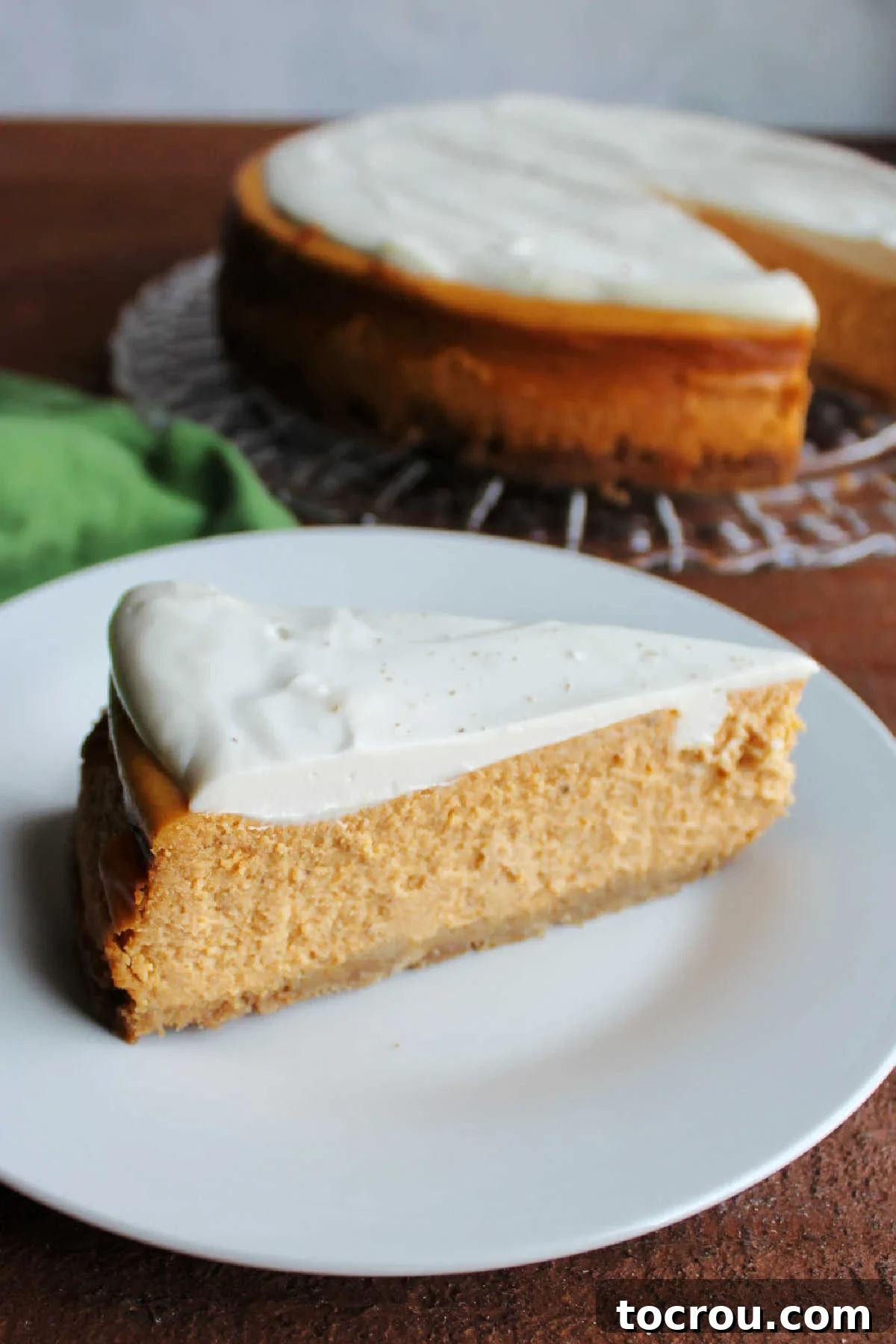
While this sour cream topping is entirely optional, we wholeheartedly recommend it! It’s an incredibly easy way to introduce an additional layer of flavor, texture, and visual appeal that truly takes this pumpkin cheesecake to the next level.
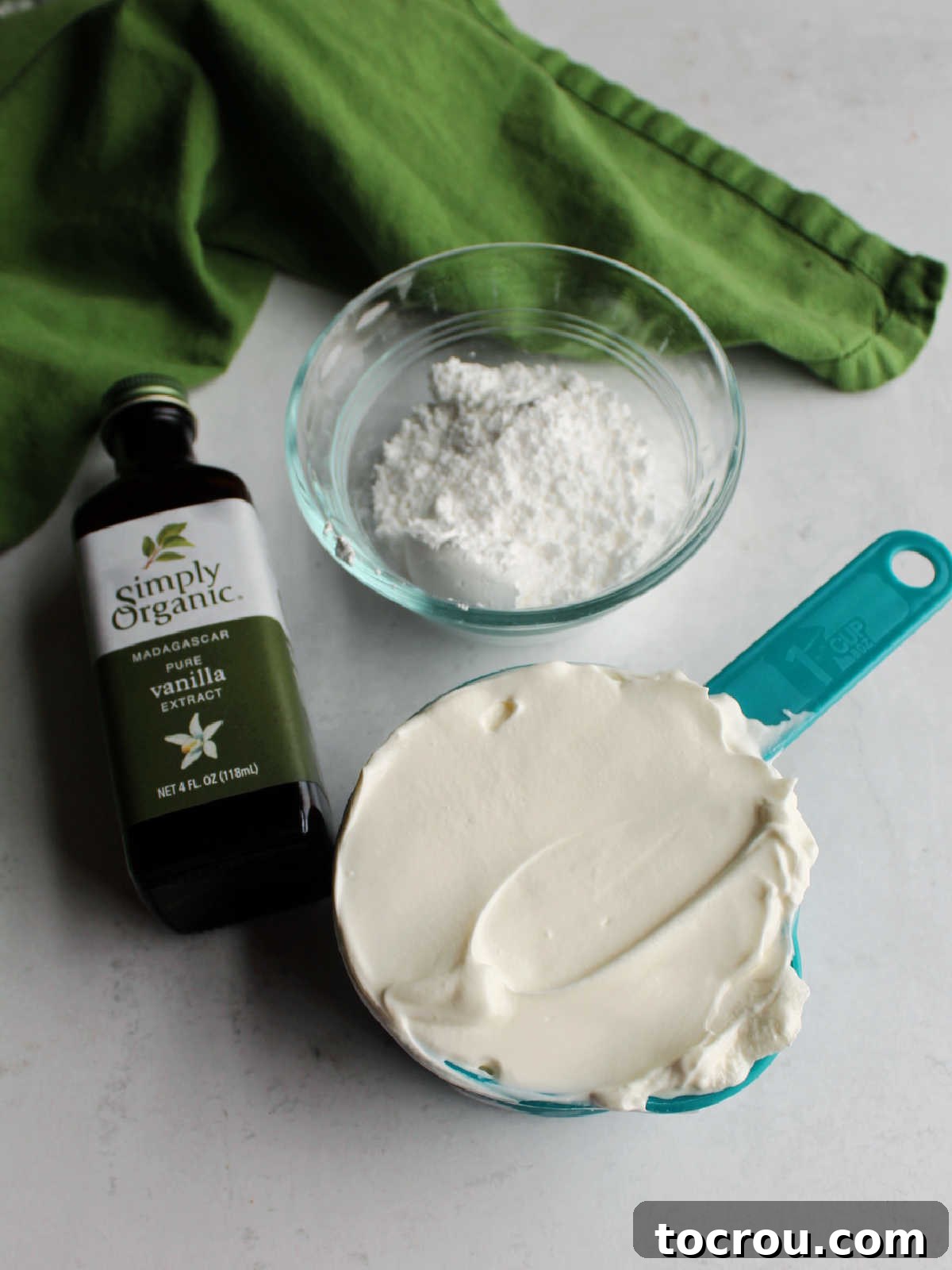
Crafting this simple topping couldn’t be easier. All you need to do is gently stir together a cup of sour cream, a few tablespoons of powdered sugar, and a teaspoon of vanilla extract until the mixture is smooth and well combined. Once your baked cheesecake has completely cooled to room temperature and then chilled for at least an hour in the refrigerator, carefully spread this luscious topping evenly over its surface. Return the cheesecake to the refrigerator for at least another hour (or preferably longer) to allow the topping to set beautifully.
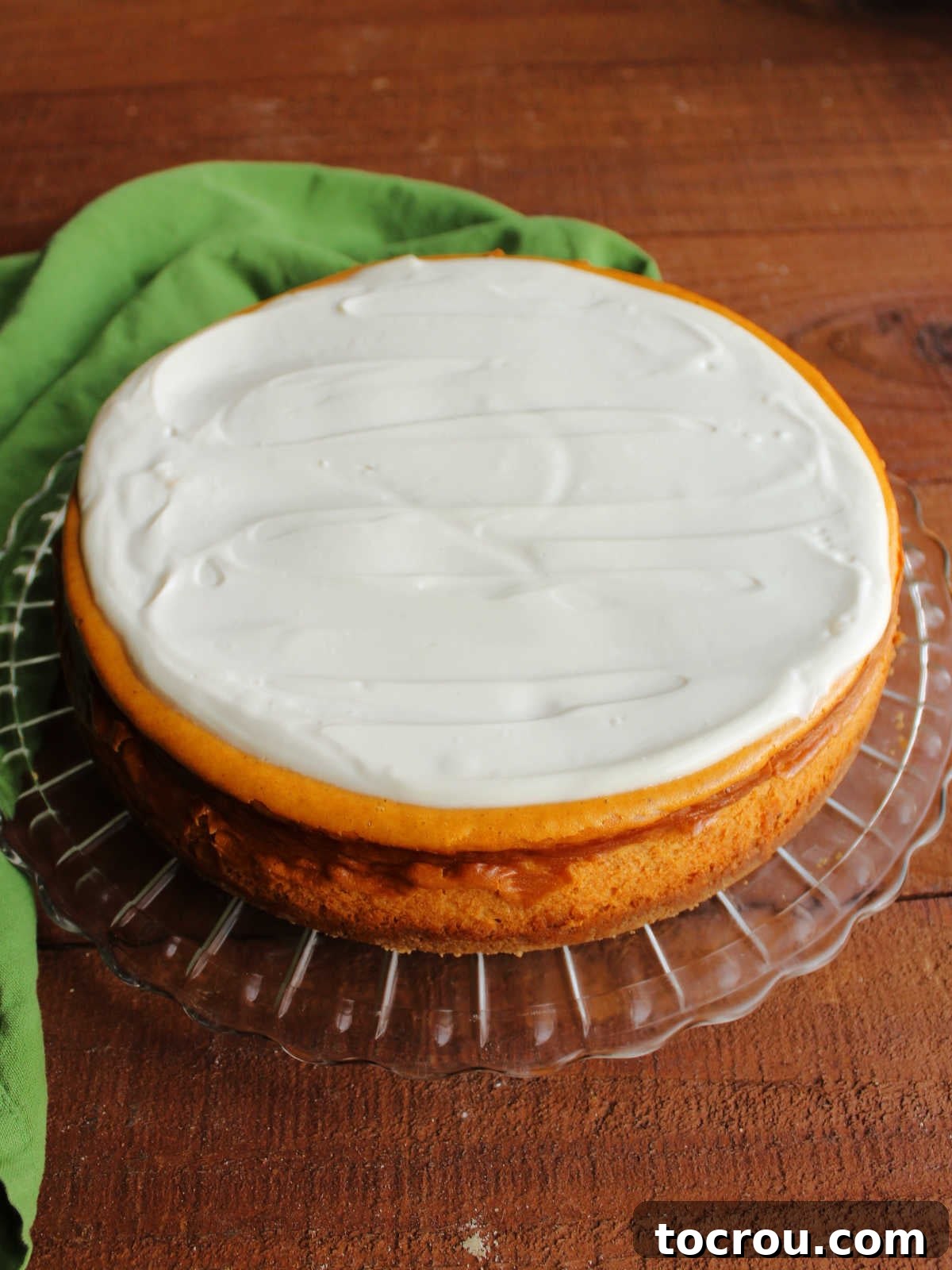
Beyond its striking bright white contrast against the warm orange of the pumpkin, this topping offers a wonderful balance of slight tanginess and extra creaminess. It beautifully cuts through the richness of the cheesecake, making each bite even more satisfying. From a practical standpoint, it’s also a fantastic choice if you’re transporting the cheesecake, as it’s far more stable than a delicate whipped cream topping.
For an extra touch of elegance or flavor, you can certainly get creative with garnishes. A delicate sprinkle of freshly grated nutmeg can enhance the autumnal spice profile, or a generous scattering of chopped honeyed pecans can add a delightful crunch. Alternatively, the bright white, simple beauty of the sour cream topping shines perfectly on its own, providing a clean, inviting look.
Storage & Make-Ahead Tips
This pumpkin cheesecake is an excellent make-ahead dessert, perfect for holiday planning or busy weeks. Proper storage ensures its creamy texture and delicious flavor remain intact.
Refrigerator Storage
Once cooled and chilled, your cheesecake should be stored loosely covered in the refrigerator. A springform pan cover or foil tent works well. It will maintain its fresh taste and texture for up to 5 days. For the best flavor, allow chilled slices to sit at room temperature for about 15-20 minutes before serving.
Freezer Storage for Longer Enjoyment
For extended storage, cheesecake freezes beautifully. You can freeze the entire cake or individual slices, which is incredibly convenient for portion control. To freeze, ensure the cheesecake is completely chilled and firm. Wrap it tightly in several layers of plastic wrap, then an additional layer of aluminum foil. This double-layer protection prevents freezer burn and helps maintain its quality. Frozen cheesecake can be stored for up to 1-2 months.
Thawing Frozen Cheesecake
To enjoy frozen cheesecake, allow it to defrost slowly in the refrigerator overnight. This gradual thawing process helps preserve its creamy texture and prevents condensation from forming excessively on the surface. Once thawed, it’s ready to serve and enjoy as if it were freshly baked.
Crust Variations: Beyond Graham Crackers
While a classic graham cracker crust provides a wonderful base for this pumpkin cheesecake, don’t hesitate to experiment with other options to customize its flavor profile:
- Ginger Snaps: For a spicier, more aromatic crust that perfectly complements the pumpkin and fall spices, crushed ginger snaps are an excellent choice. Their crisp texture and warming ginger notes add a fantastic dimension.
- Nilla Wafers: If you prefer a milder, more vanilla-centric flavor that lets the pumpkin shine, Nilla Wafers make a delightful and easy-to-prepare crust.
- Golden Oreos: For a richer, buttery, and slightly sweeter crust, Golden Oreos are a fantastic alternative. Their cream filling contributes to a decadent base.
- Add More Spice: Enhance your traditional graham cracker crust by stirring in an extra ½ teaspoon of pumpkin pie spice along with the crumbs and butter. This subtle addition boosts the overall autumnal flavor of the finished dessert.
Looking for more fall-inspired treats? Explore my full collection of pumpkin recipes for an abundance of tasty inspiration.
Easy Pumpkin Cheesecake
Equipment
-
9-inch Nonstick Springform Pan
Ingredients
Crust
- ▢ 1½ cups graham cracker crumbs about 1 sleeve graham crackers
- ▢ 4 Tablespoons butter
Pumpkin Cheesecake
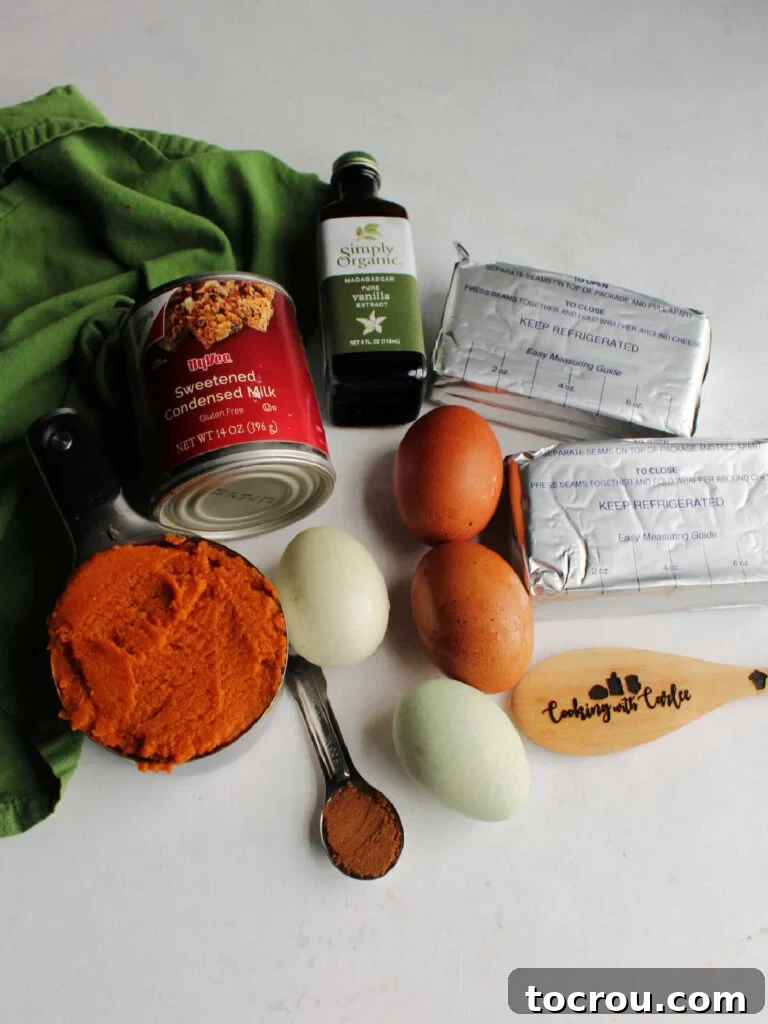
- ▢ 16 ounces cream cheese softened
- ▢ 14 ounces sweetened condensed milk
- ▢ 2 teaspoons vanilla extract
- ▢ 4 large eggs at room temperature
- ▢ 1 cup pumpkin puree
- ▢ 1 teaspoon pumpkin pie spice
Sour Cream Topping
- ▢ 1 cup sour cream
- ▢ 3 Tablespoons powdered sugar
- ▢ 1 teaspoon vanilla extract
Instructions
-
Preheat oven to 300°F
-
Place the 1½ cups graham cracker crumbs in the bottom of a 9 inch springform pan, add melted 4 Tablespoons butter. Mix together and press into the bottom of the pan. Bake for about 10 minutes. Set aside to cool.
-
Make sure the cream cheese is really softened. In a large bowl, whip the 16 ounces cream cheese until completely smooth, being sure the scrape the sides of your bowl a couple of times. Stir in the 14 ounces sweetened condensed milk and 2 teaspoons vanilla extract until smooth.
-
Add the 4 large eggs, one at a time mixing until just combined. You don’t want to whip air into the mixture at this point.
-
Stir in the 1 cup pumpkin puree and 1 teaspoon pumpkin pie spice.
-
Pour onto the crust. Thump it on the counter a couple of times to get out any big air bubbles.
-
Bake until the middle just barely jiggles, about 1 hour.
-
Crack the oven door and allow the cheesecake to cool slowly.
-
Mix together 1 cup sour cream, 3 Tablespoons powdered sugar, and 1 teaspoon vanilla extract until smooth. Spread over cooled cheesecake.
-
Chill at least a couple of hours, preferably overnight.
Notes
Gingersnap crumbs would make a delicious crust in place of the graham crackers.
The sour cream topping is optional, but it adds a layer of flavor and visual appeal.
Nutrition Information
“Cooking With Carlee” is not a dietitian or nutritionist, and any nutritional information shared is an estimate. If calorie count and other nutritional values are important to you, we recommend running the ingredients through whichever online nutritional calculator you prefer. Calories and other nutritional values can vary quite a bit depending on which brands were used.
Did you try this recipe?
Don’t forget to leave a rating below and make sure to follow on Pinterest and Instagram for more!