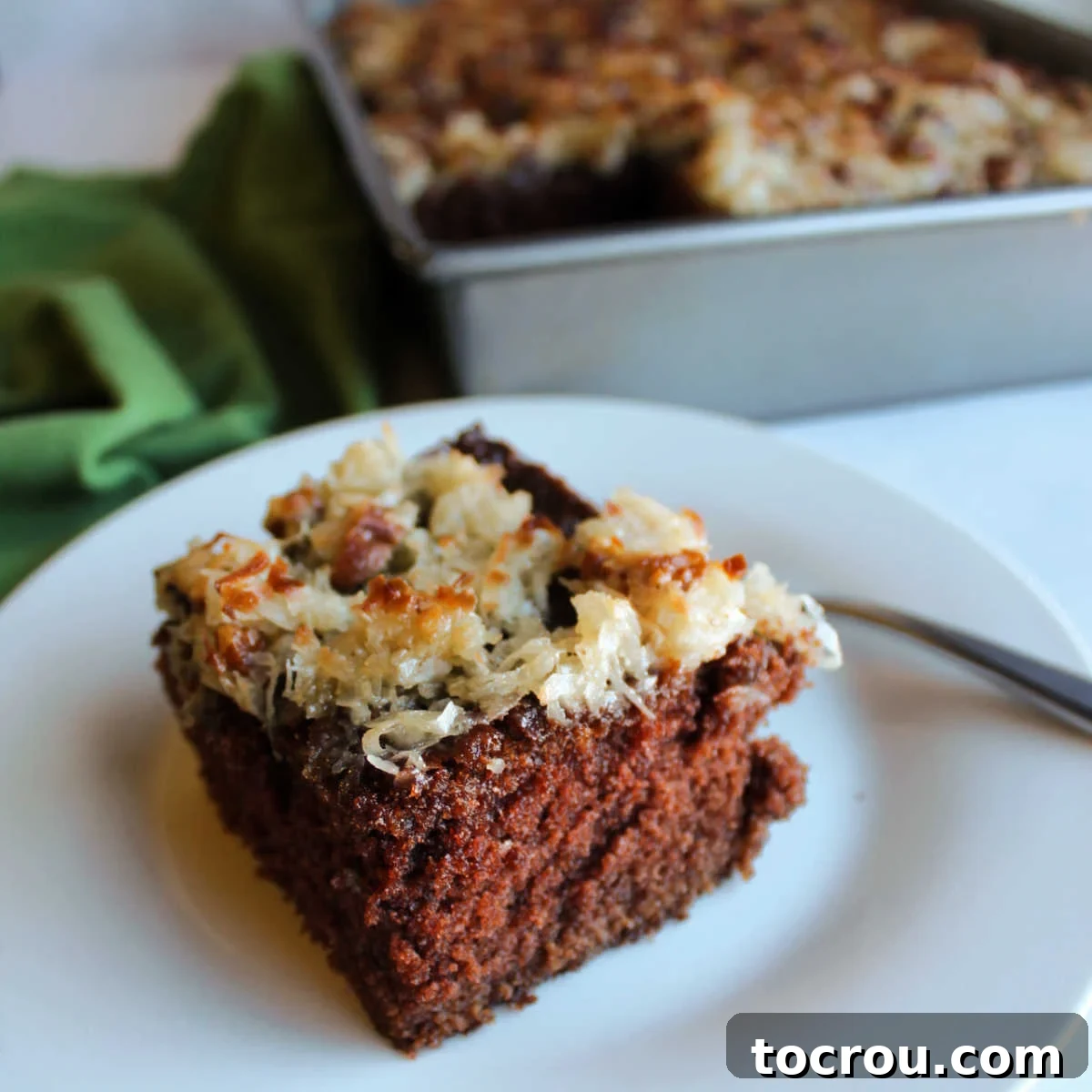
Great-Grandma’s German Chocolate Cake with Broiled Coconut Topping: A Timeless Family Treasure
Prepare to rediscover a classic dessert with a delightful twist! This isn’t just any German chocolate cake; it’s a cherished family recipe, lovingly passed down through generations, featuring a truly unique and irresistible broiled coconut and pecan frosting. Forget the gooey, caramel-like topping you might be accustomed to – this version offers a golden, toasted, and utterly delicious experience that sets it apart. The broiler works its magic, lightly toasting the coconut and pecans to perfection, infusing every bite with a warm, nutty aroma and a satisfying crunch. Get ready for a dessert that’s both comforting and exciting, a true testament to the timeless wisdom of great-grandma’s kitchen.
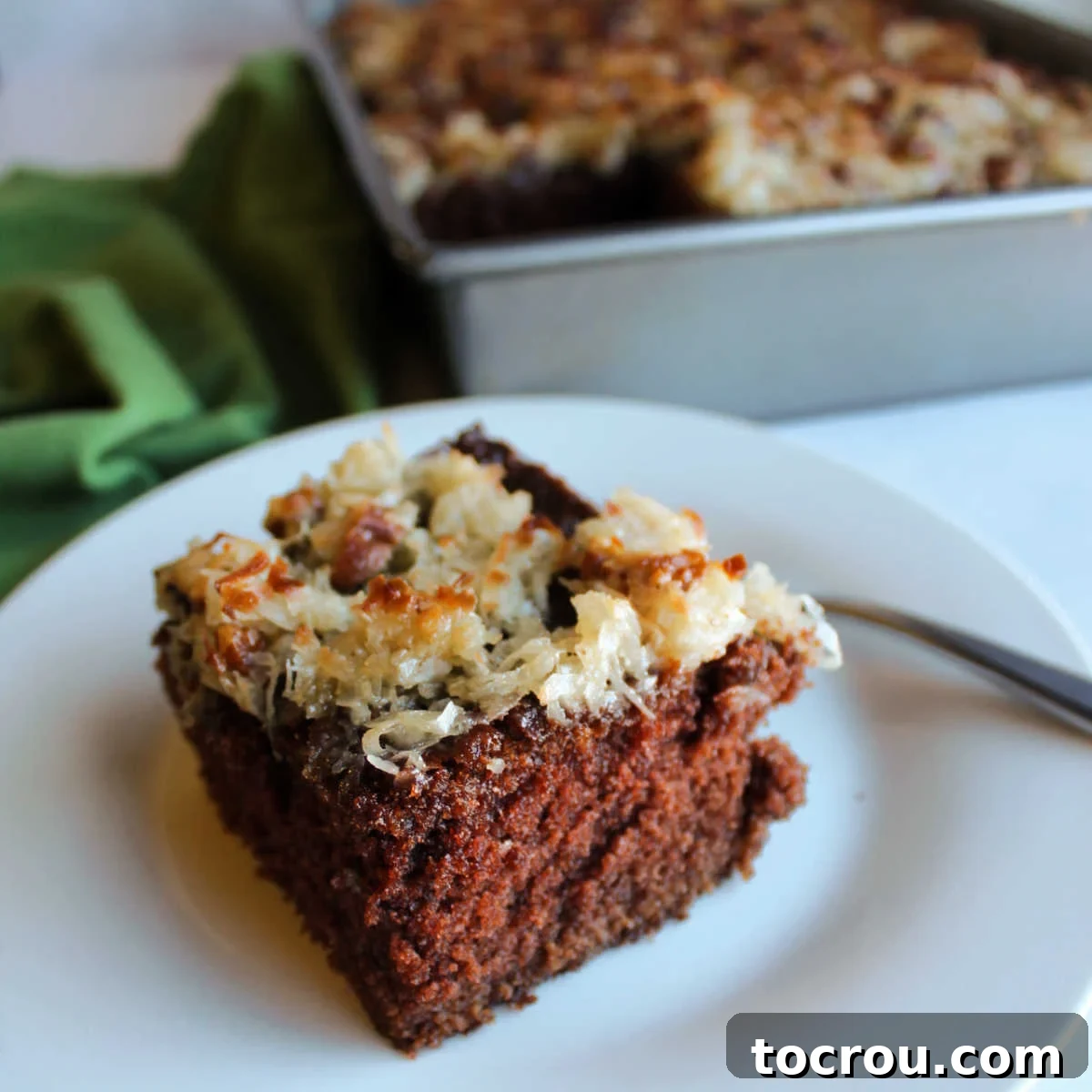
This old-fashioned German chocolate cake begins with a perfectly soft, moist, and rich homemade chocolate cake as its foundation. It’s a testament to simple, quality ingredients coming together to create something truly special. But what truly elevates this dessert is its signature topping: a decadent blend of coconut, pecans, and brown sugar, artfully toasted under the broiler. This brief, intense heat transforms the frosting, creating a caramelized, slightly crispy top layer that is both golden in color and deeply flavorful. It’s a departure from many contemporary German chocolate cake recipes, but one bite, and you’ll understand why this particular method has remained a beloved staple in my family for decades.
Every family has those treasured recipes, handwritten on yellowed cards, that tell a story. This German chocolate cake is one of ours. It’s more than just a dessert; it’s a connection to the past, a taste of heritage. While other recipes might offer a more conventional approach, this broiled topping is a secret weapon, delivering an unparalleled texture and depth of flavor that promises to impress. It’s a nostalgic journey back to simpler times, when baking was an act of love and every dish had a personal touch. You’ll quickly discover why this particular rendition has been safeguarded and celebrated by generations.
A Glimpse into the Past: Great-Grandma Peggy’s Legacy
Though I never had the incredible fortune of meeting my Great-Grandma Peggy, the stories I’ve heard about her paints a vivid picture of a woman full of life – spunky, yet undeniably classy. Her spirit clearly resonated through her delicious cooking and baking. My Great-Grandpa Buchsbaum, I’m told, was absolutely head over heels for her, and their life together sounds like something out of a classic romance novel. It’s a wonderful feeling to connect with such a rich family history, especially when it involves something as comforting as a homemade cake.
My Maw-Maw, her daughter and my maternal grandmother, recently shared a collection of family recipes with me. Among them, nestled between other culinary gems, was this particular German chocolate cake. The moment I saw it, I knew I had to try it. There’s an undeniable allure to recreating dishes that have brought joy to loved ones through the years. It’s not just about the taste; it’s about preserving a piece of family history, feeling a connection to those who came before us, and perhaps, adding my own chapter to its story. The anticipation of baking Great-Grandma Peggy’s cake was almost as sweet as the cake itself!
Baking the Perfect German Chocolate Cake Base
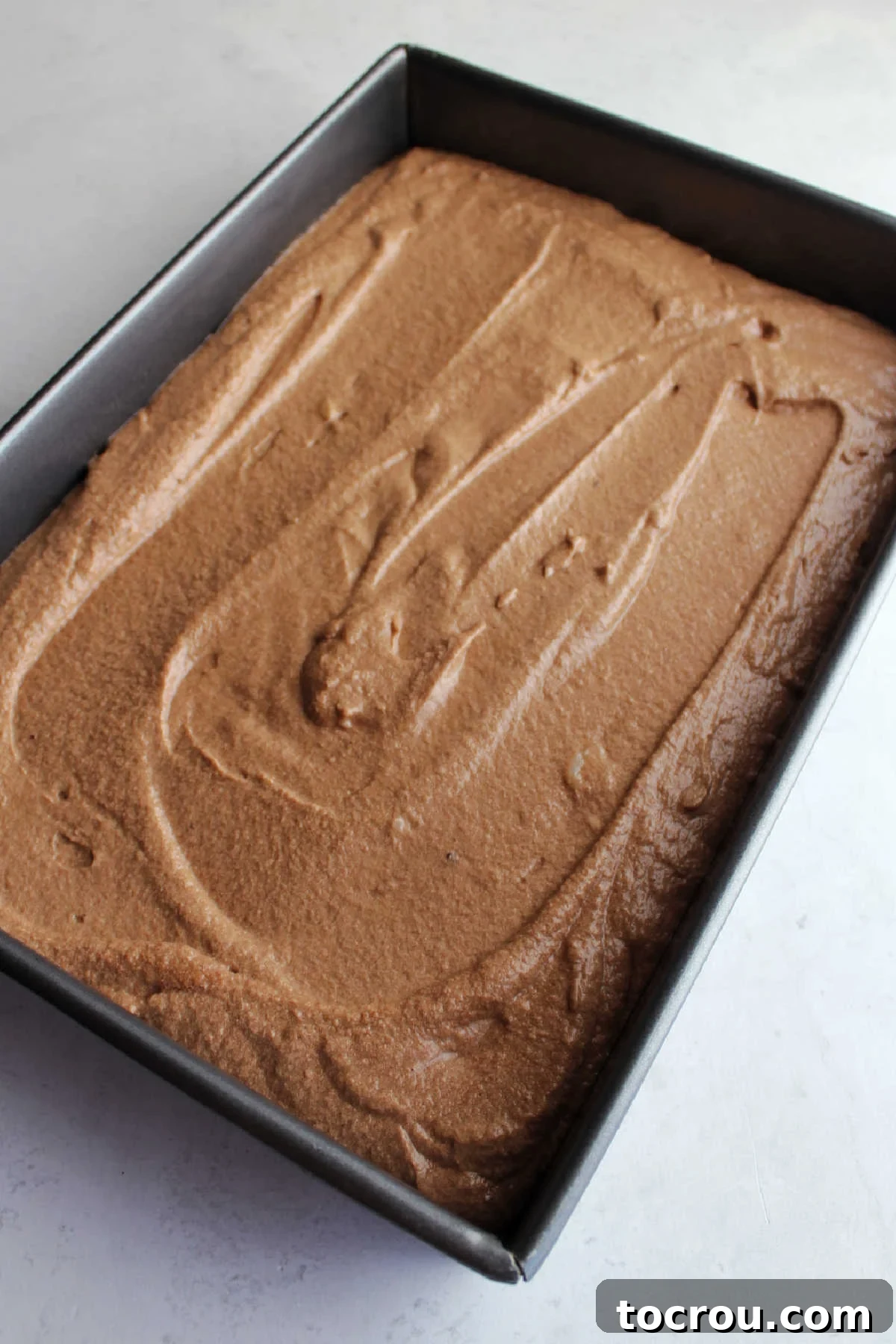
The cake itself is wonderfully straightforward to prepare, proving that exceptional flavor doesn’t always require complicated techniques. With just a few essential ingredients and a trusty mixing bowl, you’ll be well on your way to a delightful homemade chocolate cake. This recipe is designed to yield three perfectly sized 9-inch round cake layers, or, as I often prefer for ease, a single generous 9×13-inch sheet cake. The beauty of this recipe lies in its adaptability, allowing you to choose the presentation that best suits your occasion.
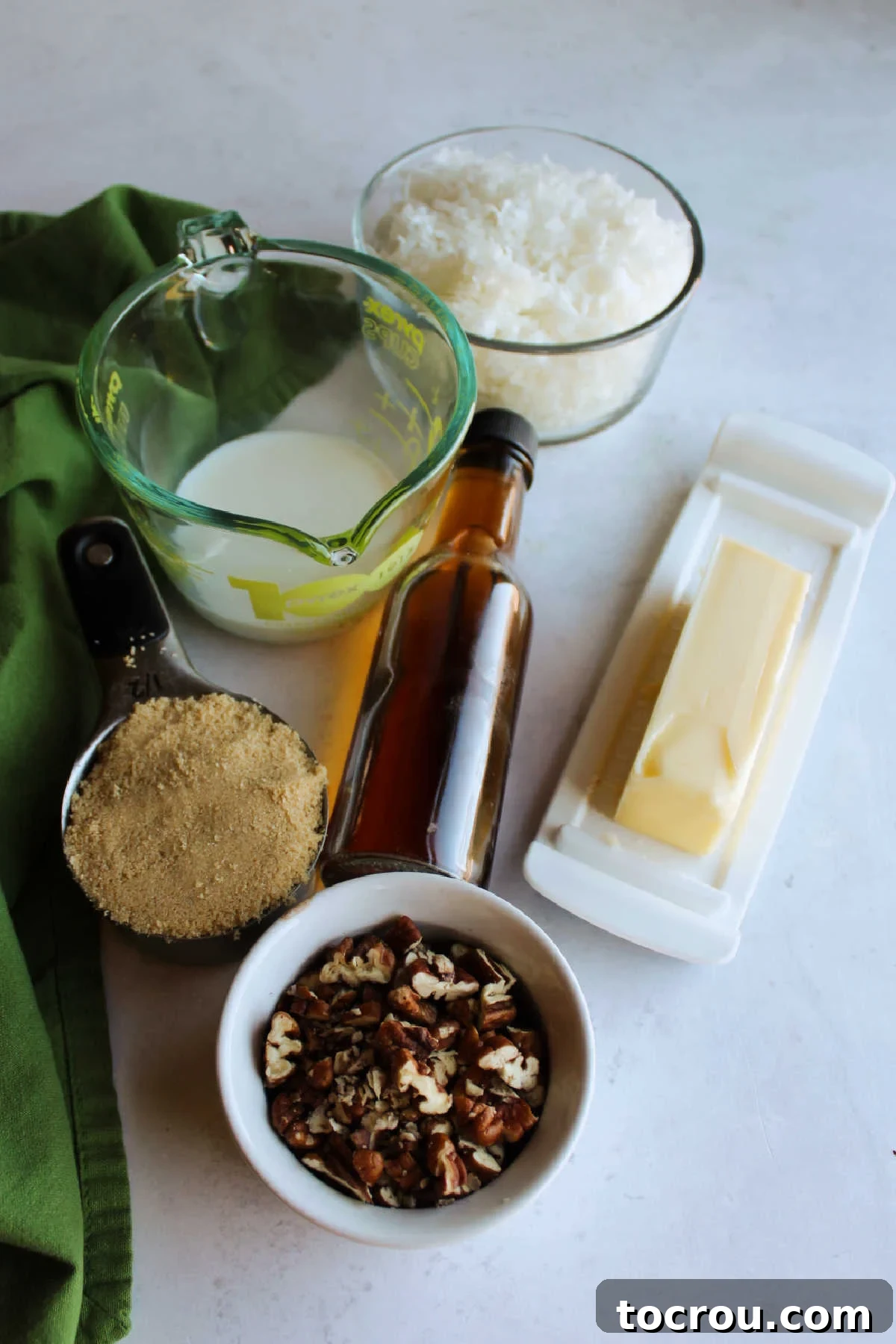
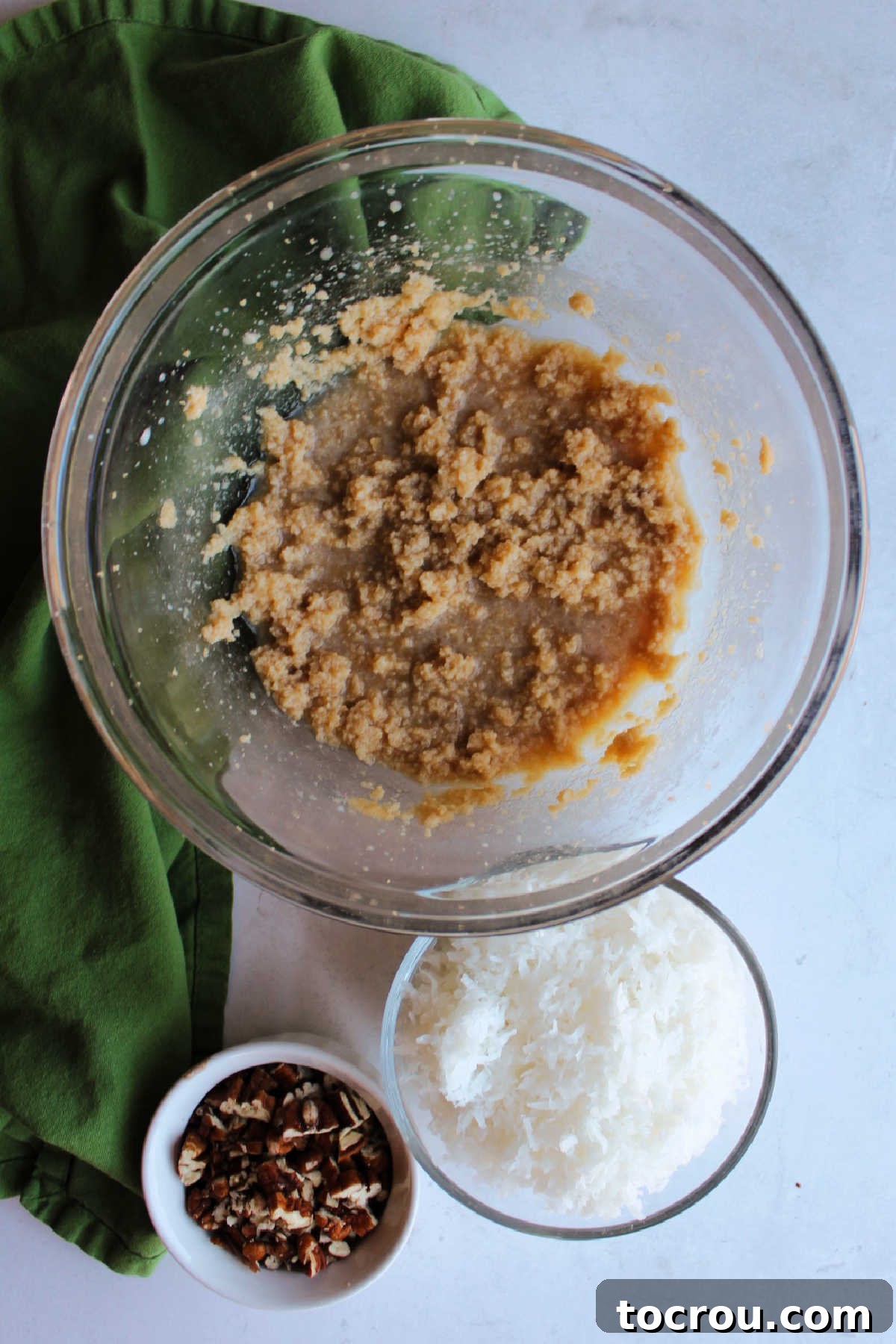
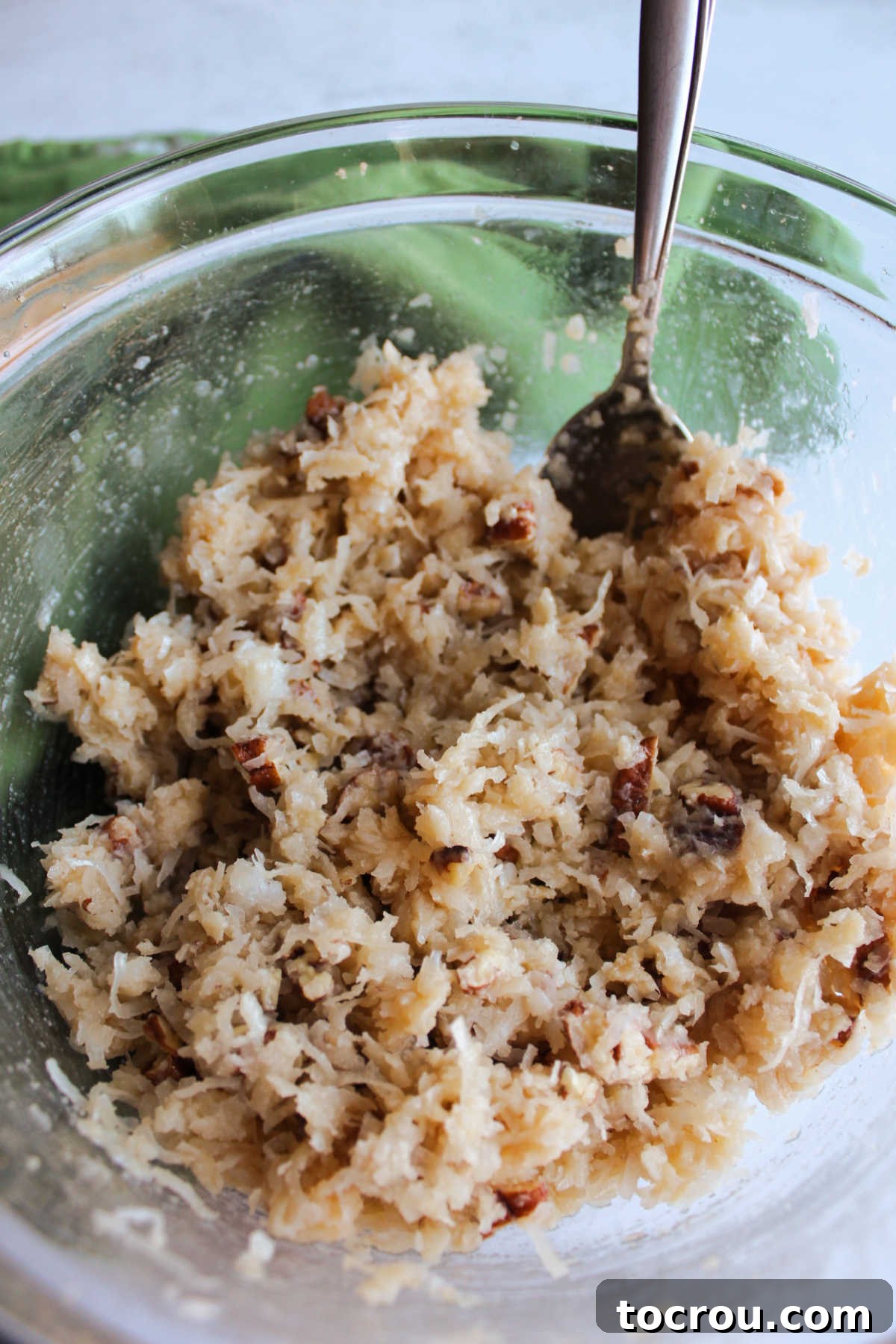
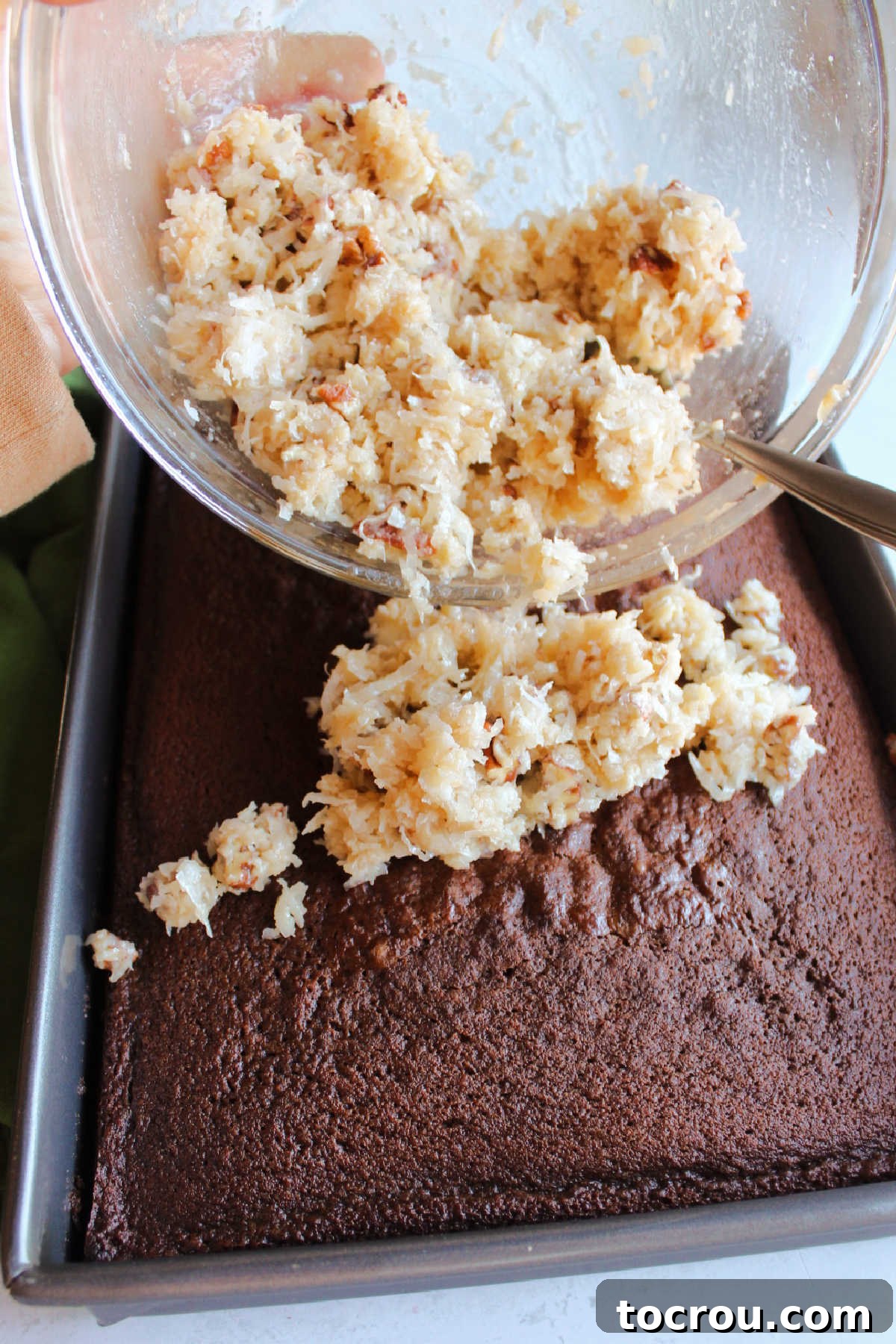
Once the cake layers are baked to a tender, chocolatey perfection, the real magic happens with the frosting. Instead of a traditional cooked custard-style German chocolate frosting, this recipe calls for a unique coconut topping that gets a special finish under the broiler. Once spread over the cooled cake, it’s briefly placed under the broiler for just a few minutes. This crucial step toasts the coconut and pecans, creating an incredibly luscious, slightly caramelized, and deeply flavorful topping. The edges become delicately crisp, while the center remains wonderfully soft and chewy, a textural contrast that makes this cake truly unforgettable.
Presentation: Stacked Layers or Simple Elegance?
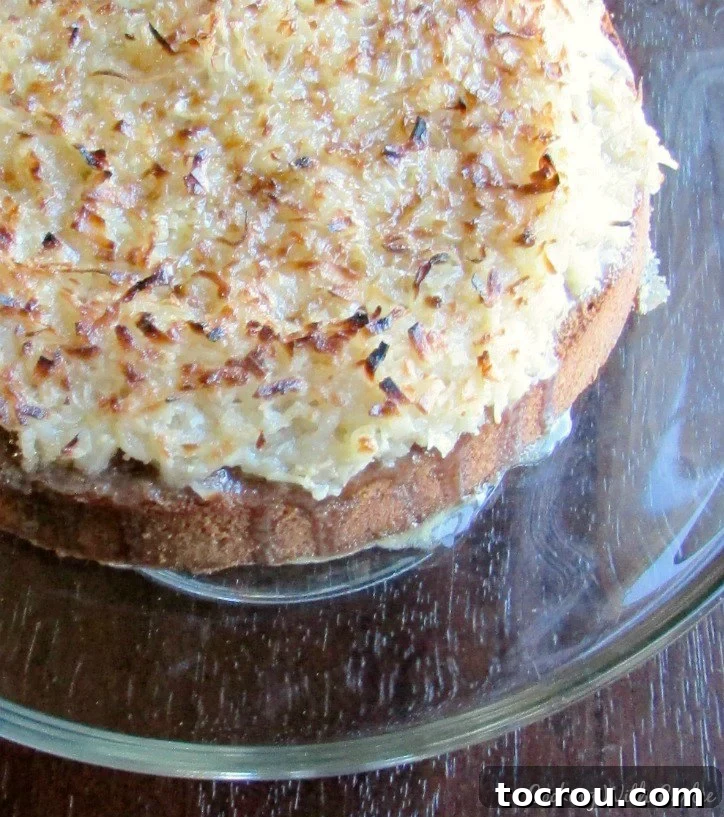
Maw-Maw fondly recalled this cake often being served as individual single-layer treats. This method certainly has its practical advantages, making serving and portioning a breeze. However, when I set out to make this German chocolate cake, practicality wasn’t my primary concern; I was embracing the joy of baking and presentation! So, I opted to stack those lovely layers high, creating a visually impressive dessert that truly celebrates the occasion. While slicing and serving a towering cake can present a slight challenge compared to single layers, the dramatic effect and celebratory feel it brings are absolutely worth it. The anticipation builds with each beautiful slice revealing the moist chocolate cake and the irresistible golden topping.
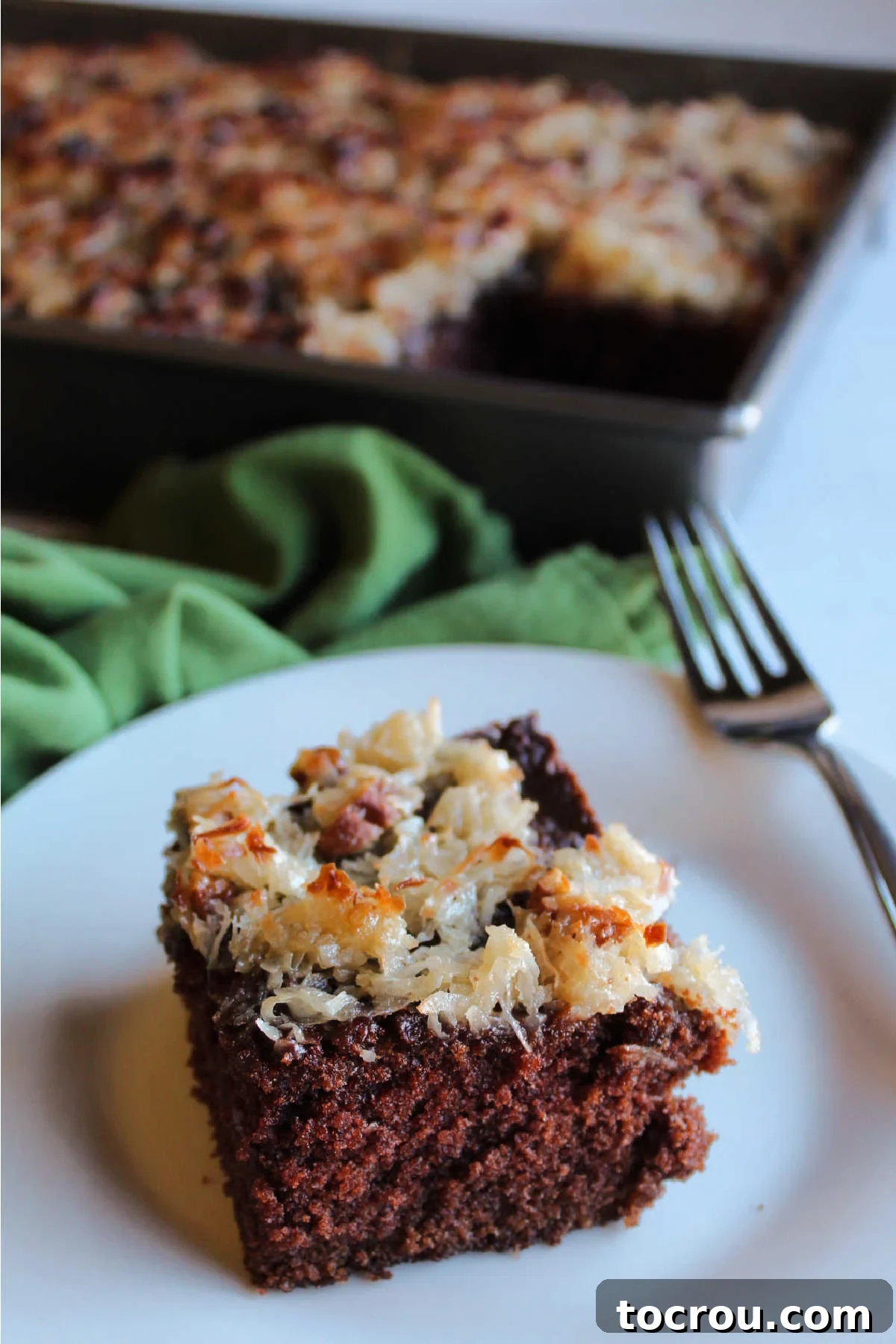
Regardless of how you choose to serve it—whether in elegant stacked layers or charming individual portions—I wholeheartedly encourage you to give this recipe a try. The cake itself boasts a delightfully moist crumb and a rich, deep chocolate flavor that forms the perfect canvas. But it’s truly the broiled coconut topping that makes this dessert shine, elevating it far beyond what you might expect from a standard German chocolate cake. The golden, toasted perfection of the coconut and pecans adds an unparalleled depth of flavor and texture that creates a truly memorable experience.
Broiling a frosting was a novel adventure for me, and I must admit, it was surprisingly fun and incredibly rewarding! The transformation from a simple topping to a glistening, golden masterpiece happens so quickly, adding a touch of drama to the baking process. The result is a frosting that’s rich, nutty, and wonderfully caramelized – a truly unique characteristic that stands out from the crowd. Have you ever experimented with broiling your frosting before? It’s a technique I now highly recommend for adding that extra special touch to your desserts.
Modernizing a Classic: My Recipe Adjustments
While Great-Grandma Peggy’s original recipe provided an excellent foundation, I’ve made a few subtle alterations to streamline the process without sacrificing any of the delicious flavor or texture. Many traditional German chocolate cake recipes, including hers, often instruct bakers to separate egg yolks from whites. The yolks are incorporated into the batter, while the whites are whipped separately to stiff peaks before being gently folded in. This method is effective but can add an extra step and some complexity to the baking process.
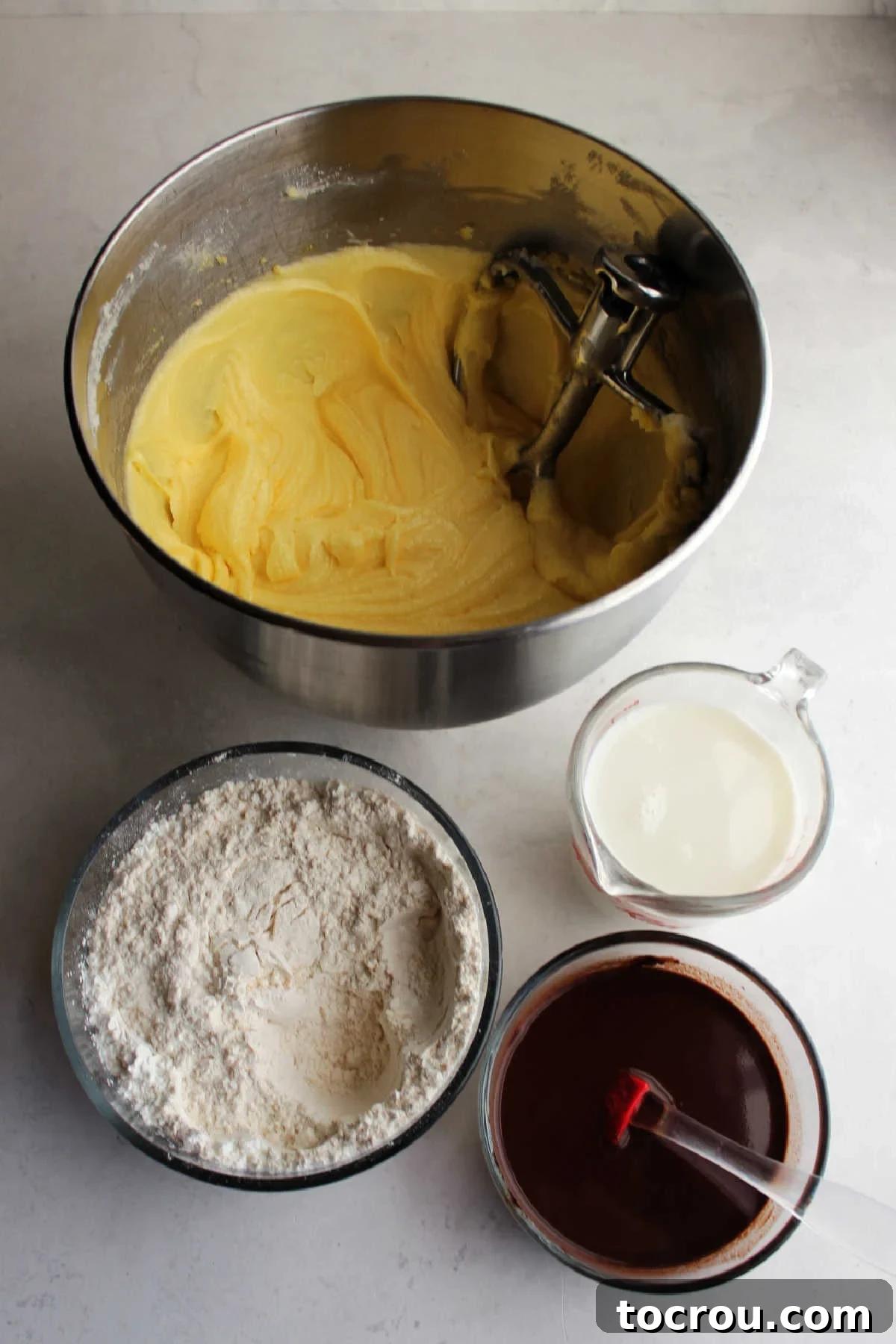
To simplify things, I’ve adopted a more contemporary approach: adding the whole eggs directly to the creamed butter and sugar mixture. The key here is to whip this mixture thoroughly for several minutes. This vigorous beating incorporates plenty of air, resulting in a lighter, pale yellow mixture that is noticeably more voluminous. This technique achieves a similar airy texture to folding in whipped egg whites, but with significantly less fuss. It makes the entire cake-making process more approachable for home bakers, ensuring a beautifully tender and moist cake every time.
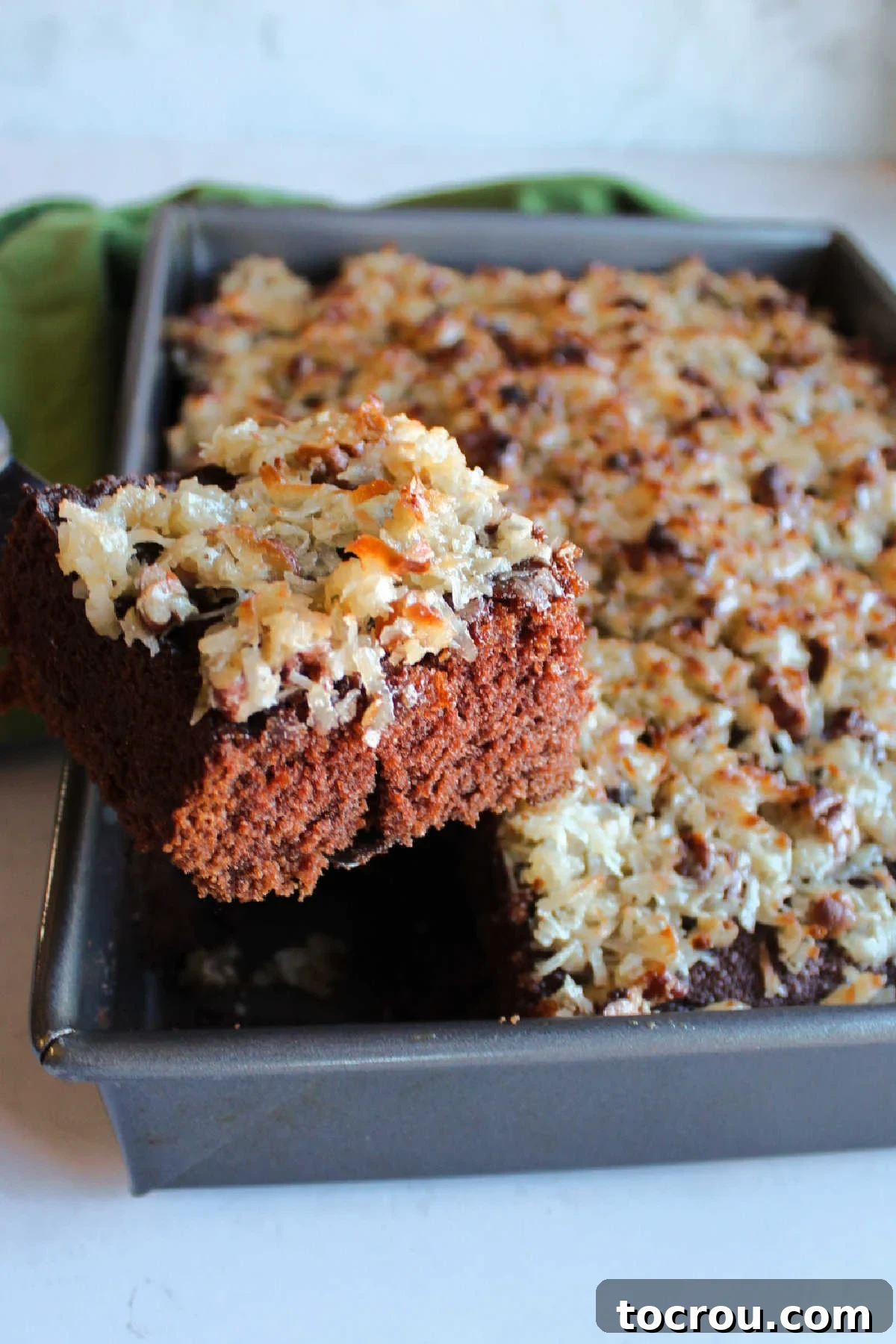
Another practical adjustment I’ve found incredibly beneficial relates to the baking pans. While baking this cake in three individual 9-inch round cake pans yields a classic tiered presentation and is undeniably delicious, I often prefer the simplicity and convenience of a single 9×13-inch pan. This method is particularly useful for casual gatherings or when you’re looking for an easier serving solution. Instead of carefully inverting delicate layers onto a wire rack, I simply leave the cake in the pan. The coconut topping is then spread directly onto the cake while it’s still in its pan, and it’s broiled right there. This minimizes handling, reduces the risk of breakage, and makes serving an absolute breeze. While a single-layer cake might not possess the same fancy flair as a towering three-tiered creation, I can assure you, the taste remains absolutely phenomenal, and the ease of preparation is a huge bonus.
Frequently Asked Questions About German Chocolate Cake
What makes German chocolate cake unique?
German chocolate cake is distinguished by several key characteristics, though its name is often a source of confusion. Contrary to popular belief, it’s not named after the country of Germany, but rather after Samuel German, who developed a mild, sweet dark chocolate bar for Baker’s Chocolate Company in 1852. This namesake chocolate gives the cake its distinctive sweet chocolate flavor, often mellower than other chocolate cakes. Traditionally, German chocolate cake is paired with a rich, unique coconut-pecan frosting. While many modern versions feature a gooey, custard-like cooked frosting, this old-fashioned recipe stands out with its broiled coconut and pecan topping, which offers a delightful toasted flavor and crunchy texture.
Do I have to use buttermilk in this recipe?
Buttermilk plays a crucial role in many baking recipes, including this German chocolate cake, contributing to its tender crumb and subtle tang. The acidity in buttermilk reacts with the baking soda, helping the cake rise beautifully. If you don’t have buttermilk on hand, there’s no need to despair – you can easily make a homemade substitute. Simply pour a cup of regular milk (whole, 2%, or even skim will work) into a measuring cup, then add one teaspoon of either fresh lemon juice or white vinegar. Stir it gently and let it sit for about 5-10 minutes. The milk will curdle slightly and thicken, mimicking the consistency and acidity of true buttermilk. This quick trick ensures you can still achieve the desired texture and flavor in your cake.
Can I store German chocolate cake, and how long does it last?
This German chocolate cake stores beautifully! If you’ve opted for the 9×13-inch pan, simply cover it tightly with plastic wrap or aluminum foil. If you made a layered cake, store slices in an airtight container. At room temperature, the cake will stay fresh for 1-2 days. For longer storage, you can refrigerate it for up to 5-7 days. The flavors actually deepen slightly over time in the refrigerator, making it an excellent make-ahead dessert. Before serving from the fridge, you might want to let it sit at room temperature for 15-30 minutes to soften the cake and frosting to their ideal consistency.
Mastering Cake Flour: A Simple DIY Substitute
Cake flour is often specified in recipes for its lower protein content compared to all-purpose flour, which results in a remarkably tender and fine-crumbed cake. If your pantry doesn’t stock cake flour, there’s no need to rush to the store or compromise on your cake’s texture. You can easily create a very effective substitute using readily available all-purpose flour and cornstarch.
For every cup of cake flour required in a recipe, measure out one full cup of all-purpose flour. Then, remove two tablespoons of that all-purpose flour. Replace those two tablespoons with two tablespoons of cornstarch. Whisk these two ingredients together thoroughly to ensure the cornstarch is evenly distributed throughout the flour. This ingenious trick works because cornstarch is a pure starch, effectively reducing the overall protein percentage of the all-purpose flour. The result is a flour blend that behaves much like commercial cake flour, helping you achieve a wonderfully soft, delicate, and melt-in-your-mouth cake every single time.
Explore More Delightful Cake Recipes
My great-grandma’s culinary talents extended far beyond this German chocolate cake. She was also famously known for her exquisite French Butter Cake with Fudge Frosting. This particular cake held a special place in our family, becoming my mom’s perennial birthday request year after year. It’s another timeless recipe that embodies comfort and celebration, and I highly recommend exploring that recipe as well for another taste of our family’s baking legacy!
And if your palate truly yearns for the more widely recognized version of German chocolate cake—the one with its signature rich, gooey coconut and pecan frosting—don’t worry, I have you covered! You can find my recipe for the classic German Chocolate Cake with Gooey Coconut Frosting right here too. Whichever version you choose, you’re in for an incredibly decadent and satisfying dessert experience.
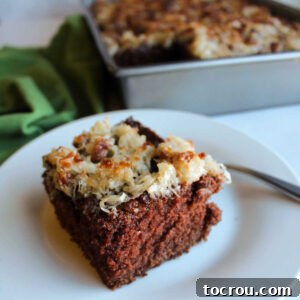
Great Grandma’s German Chocolate Cake with Broiled Coconut Topping
Author: Carlee
Servings: 16 Servings (a 9×13 or 3 9-inch cakes)
My great-grandma topped her German chocolate cake with a coconut frosting, but it’s different than what you may be thinking. It’s a broiled coconut frosting! You just have to try this!
Pin Recipe
Rate This Recipe
Prep Time: 20 mins
Cook Time: 45 mins
Total Time: 1 hr 5 mins
Equipment
- Libbey Selene Glass Cake Stand with Dome
- Wilton 9-Inch Round Cake Pans, Set of 2
- USA Pan with Lid, 9×13-Inches
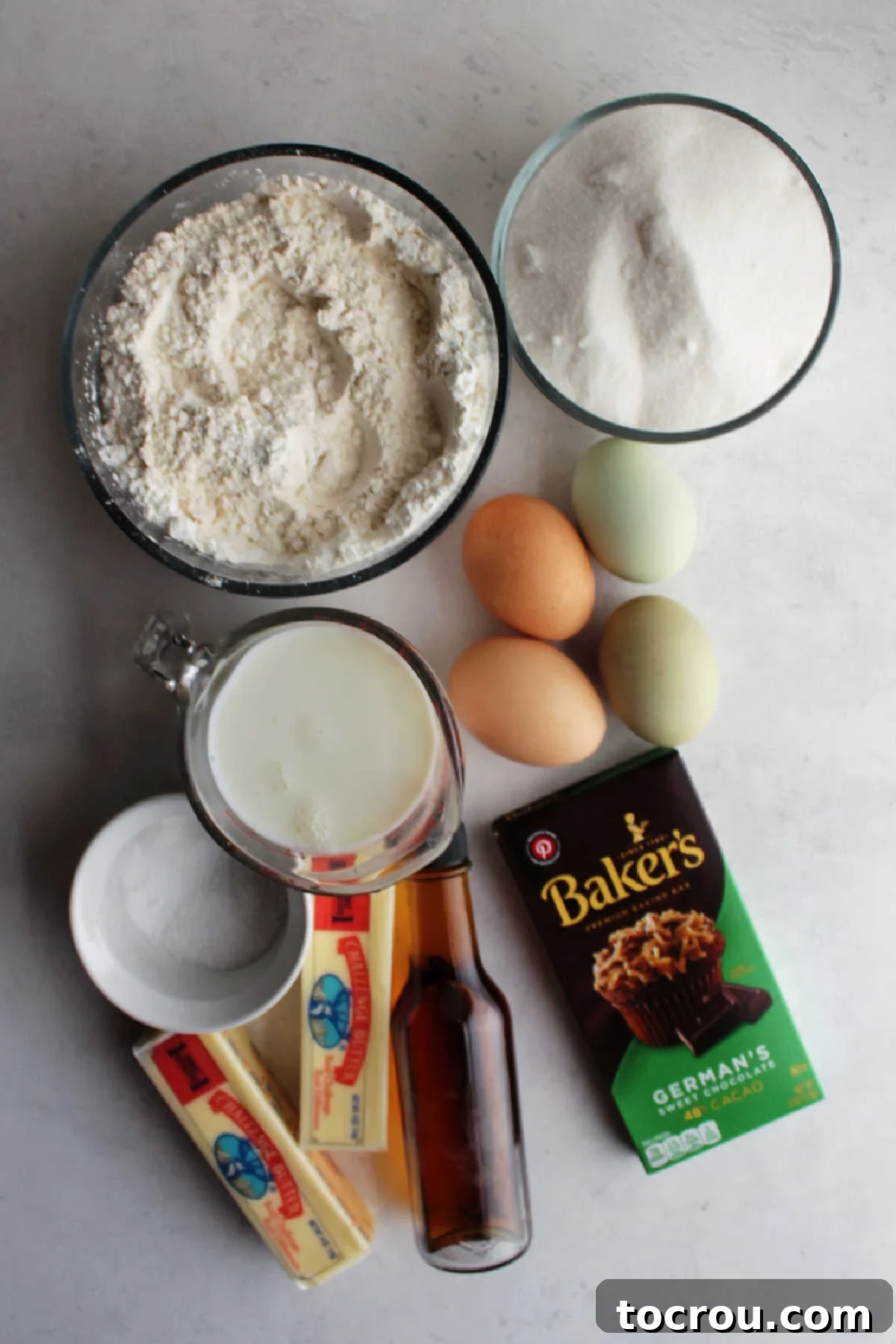
Ingredients
Cake
- 4 oz. German’s Sweet Chocolate
- ½ cup boiling water
- 1 cup unsalted butter, softened
- 4 large eggs
- ½ teaspoon salt
- 2 cups granulated sugar
- ½ teaspoon vanilla extract
- 1 teaspoon baking soda
- 2½ cups cake flour
- 1 cup buttermilk
Topping
- 6 Tablespoons unsalted butter, softened
- ½ cup packed light brown sugar
- ¼ cup whole milk
- ⅛ teaspoon salt
- ½ teaspoon vanilla extract
- 1½ cups sweetened shredded coconut
- ½ cup chopped pecans or additional coconut
Instructions
Cake
- Preheat oven to 350°F (175°C) and prepare your cake pans. You can use three 9-inch round cake pans or one 9×13-inch pan, greasing and flouring them as usual.
- Place the German’s Sweet Chocolate in a small glass bowl and pour the boiling water over it. Set it aside to melt completely while you prepare the other ingredients.
- In a large mixing bowl or the bowl of a stand mixer fitted with the paddle attachment, cream together the softened unsalted butter and granulated sugar until the mixture is light, fluffy, and pale in color. This process usually takes 2-3 minutes on medium speed.
- Add the large eggs to the creamed butter and sugar mixture, one at a time, beating well after each addition until thoroughly combined.
- Once all the eggs are incorporated, increase the mixer speed to medium and continue beating for an additional two minutes. The mixture should become even lighter and more voluminous.
- Stir the melted chocolate mixture to ensure it’s completely smooth. If any chocolate pieces remain, microwave for a few more seconds until fully melted. Stir the melted chocolate mixture and vanilla extract into the butter-egg mixture until well combined.
- In a separate medium bowl, whisk together the cake flour, baking soda, and salt.
- Gradually add half of the flour mixture to the wet ingredients, mixing on low speed until just combined. Stir in the buttermilk, then add the remaining flour mixture, continuing to beat on low speed until the batter is smooth and no dry streaks of flour remain. Be careful not to overmix.
- Evenly spoon the cake batter into your prepared pan(s). Bake for 30-40 minutes for round pans or 35-45 minutes for a 9×13-inch pan. The cake is done when a wooden skewer inserted into the center comes out clean, and the top springs back lightly when touched.
- If baking in round pans and planning to invert, cool the cakes in their pans for 10 minutes before carefully turning them out onto a wire rack to cool completely. For a 9×13-inch cake, you can cool it completely in the pan before frosting.
Frosting
- In a medium mixing bowl, beat together the softened unsalted butter and packed light brown sugar until the mixture is smooth and creamy.
- Stir in the whole milk until it is fully incorporated into the butter and sugar mixture.
- Add the sweetened shredded coconut, vanilla extract, salt, and chopped pecans (or additional coconut if preferred). Stir everything together until all ingredients are evenly combined.
- Once the cake is completely cooled (whether in layers or in a single pan), spread the coconut and pecan topping evenly over the surface of the cake.
- Preheat your oven’s broiler. Place the frosted cake under the preheated broiler for 3-4 minutes, carefully watching it at all times. The topping should become golden brown and bubbly. Remove immediately once desired toastiness is achieved to prevent burning.
Notes
If you don’t have cake flour, you can easily make a substitute. Measure out 2½ cups of all-purpose flour. Remove 5 tablespoons of this flour and replace it with 5 tablespoons of cornstarch. Whisk it together thoroughly, and use this mixture in place of the cake flour in the recipe. This substitution will help you achieve a tender cake crumb.
Want this recipe sent straight to your inbox?
Enter your email below to receive a direct link to this post, along with new recipes from me every week!
Nutrition Information
Serving: 1 Serving | Calories: 444kcal | Carbohydrates: 56g | Protein: 5g | Fat: 23g | Saturated Fat: 13g | Polyunsaturated Fat: 8g | Trans Fat: 1g | Cholesterol: 90mg | Sodium: 362mg | Fiber: 1g | Sugar: 37g
“Cooking With Carlee” is not a dietitian or nutritionist, and any nutritional information shared is an estimate. If calorie count and other nutritional values are important to you, we recommend running the ingredients through whichever online nutritional calculator you prefer. Calories and other nutritional values can vary quite a bit depending on which brands were used.
Did you try this recipe?
Don’t forget to leave a rating below and make sure to follow on Pinterest and Instagram for more!