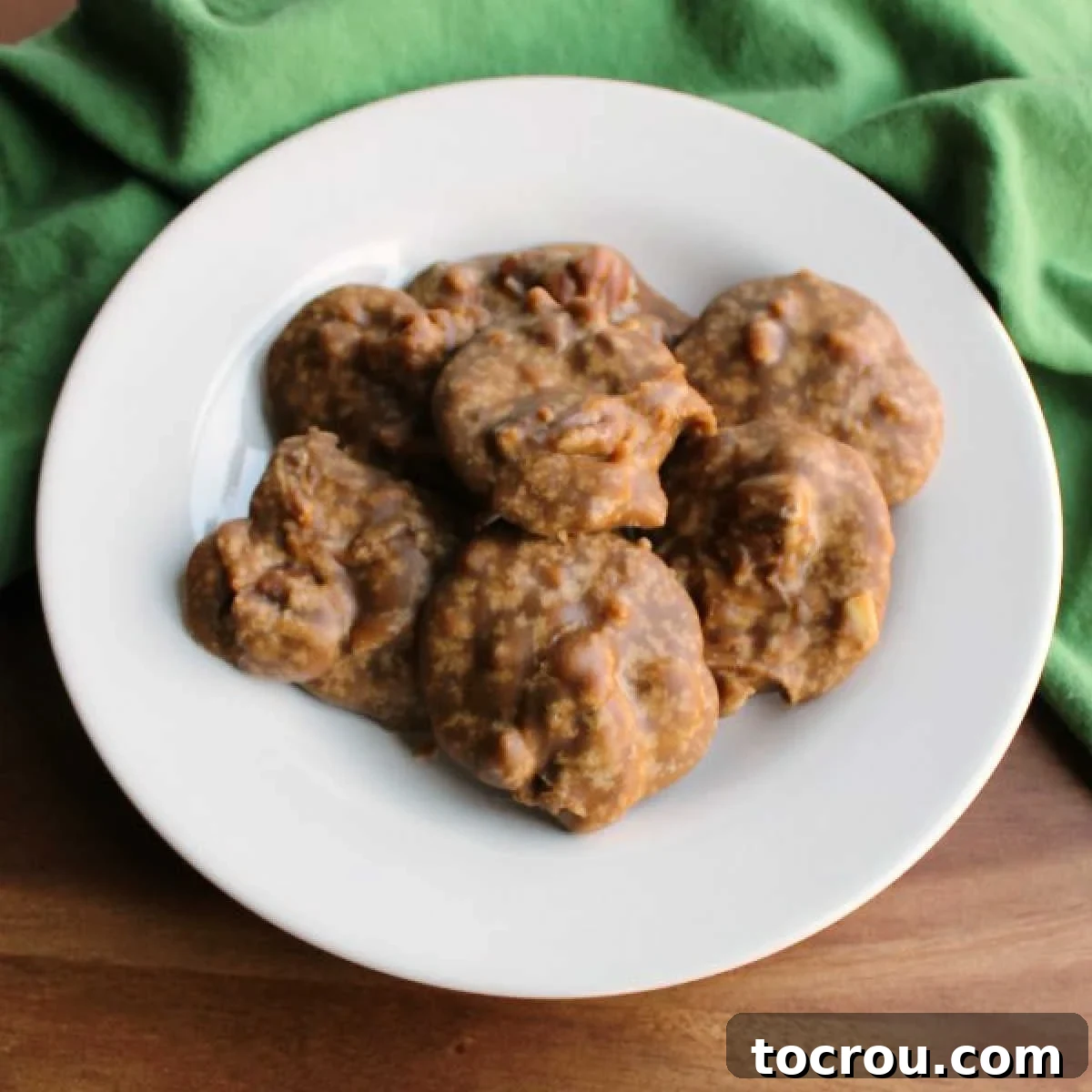
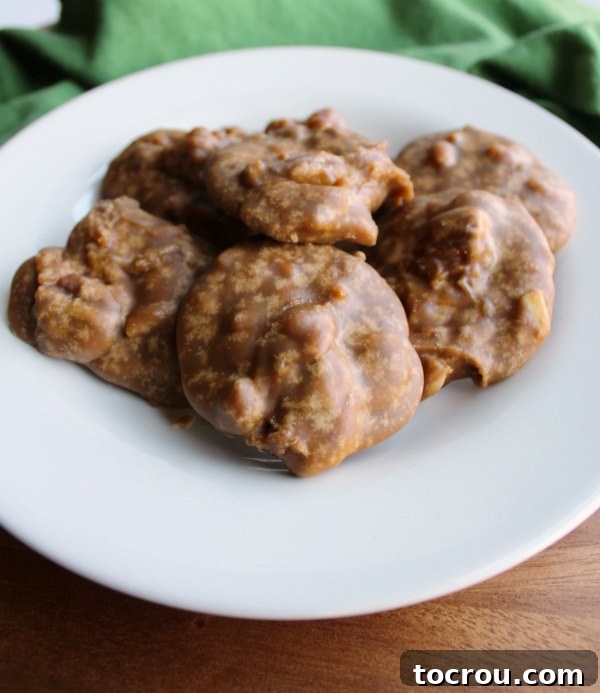
Step into the rich culinary heritage of the American South with a timeless confection that captures hearts and taste buds alike: Southern Pecan Pralines. These delightful candies, celebrated for their deep caramel flavor and abundance of crunchy pecans, are more than just a treat—they’re a tradition. This recipe bridges the gap between generations, combining the robust, earthy notes of old-fashioned molasses with the smooth sweetness of modern sugar recipes, offering a praline experience that truly boasts the best of both worlds.
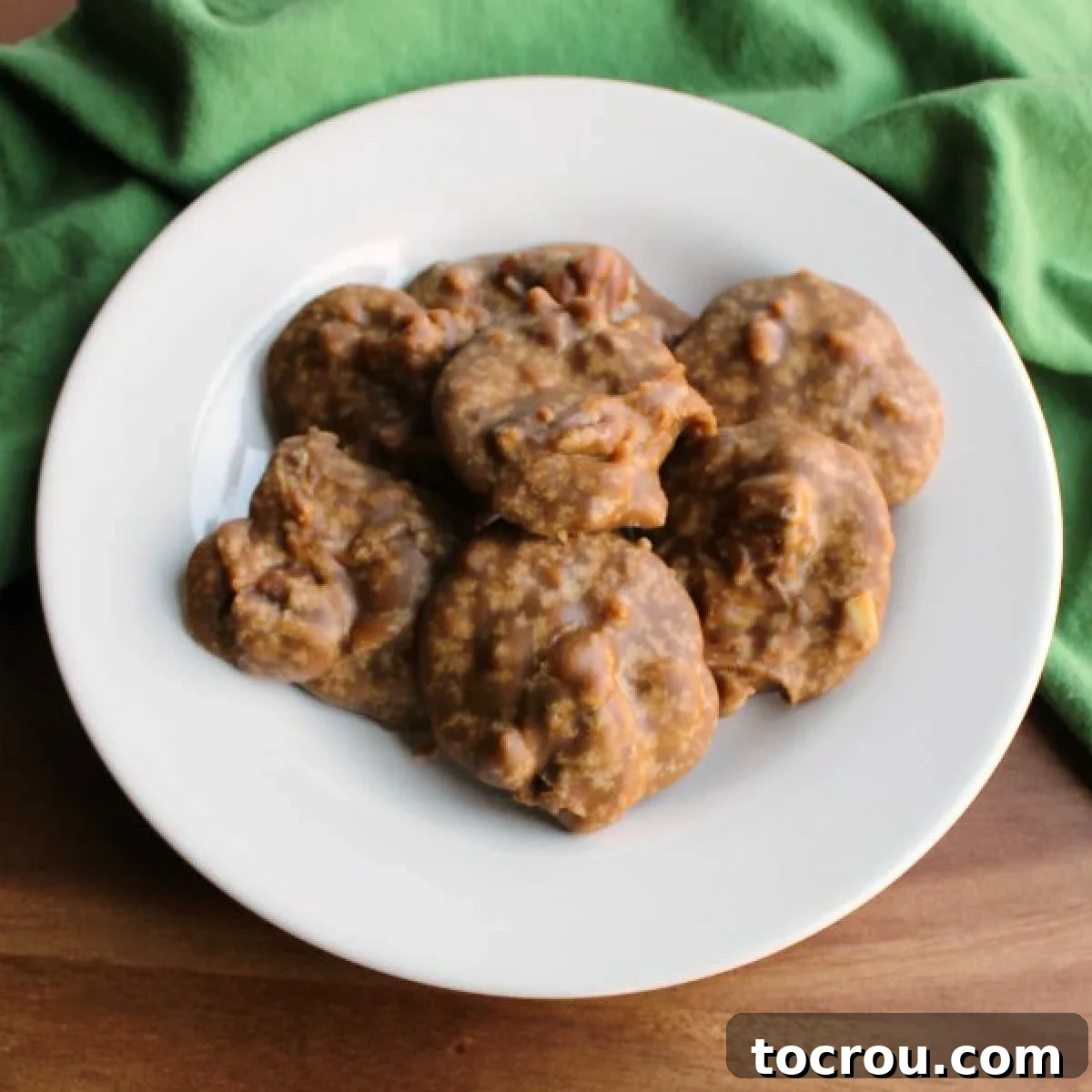
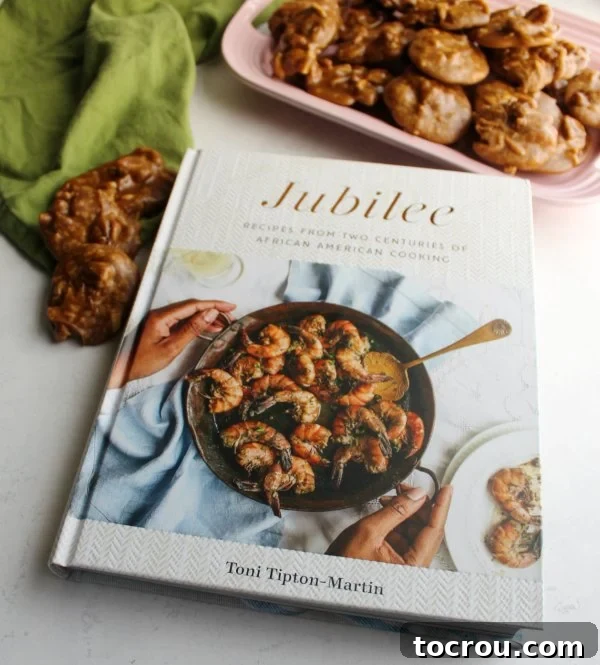
My culinary journey often leads me to explore historical recipes and the stories behind them. Recently, I had the pleasure of delving into a copy of Toni Tipton-Martin’s Jubilee, a remarkable cookbook that chronicles centuries of African American cooking. It’s a treasure trove of recipes and historical insights, and it was here that I found inspiration for this unique praline recipe. As always, the opinions shared here are entirely my own, shaped by a genuine passion for cooking and sharing delicious food.
The Allure of Homemade Pralines: A Southern Sweet Symphony
Creating your own batch of rich, caramel-infused pralines might seem daunting at first glance, but I assure you, it’s far less complicated than you might imagine. This recipe thoughtfully blends traditional methods with contemporary ease, making the art of praline-making accessible to everyone. The result is a truly authentic Southern delicacy that embodies comfort and indulgence.
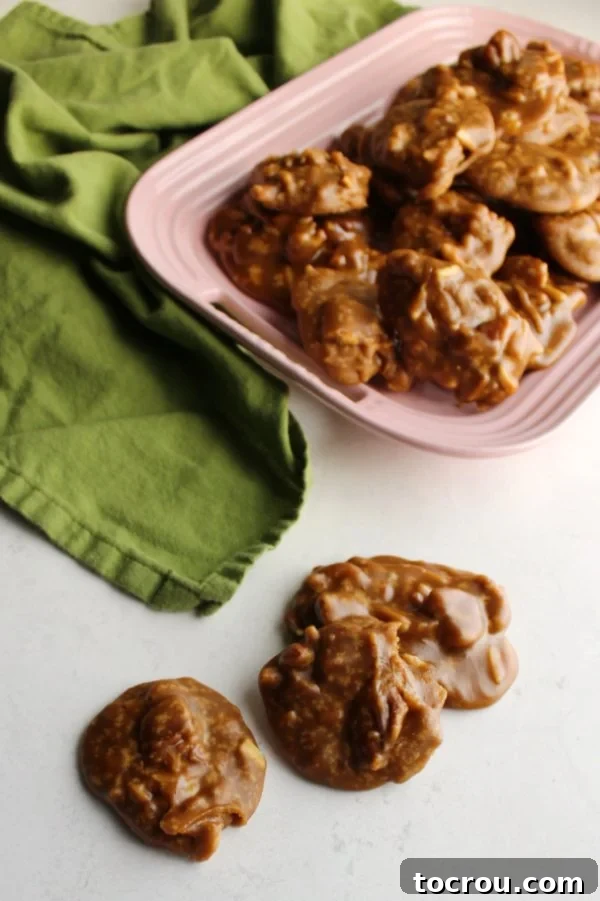
Pralines are an exquisite standalone treat, perfect for satisfying a sweet craving or sharing with loved ones. Their delightful crunch and sweet, buttery texture make them irresistible. Beyond enjoying them whole, consider chopping them into smaller pieces to use as a decadent topping. Imagine them sprinkled over vanilla ice cream, swirled into yogurt, mixed into cookie dough, or even adorning a cheesecake. The possibilities are endless, and for that reason, I always recommend making an extra batch—one for immediate enjoyment and another for culinary experimentation.
The Great Praline Pronunciation Debate: How Do You Say It?
Before we fully immerse ourselves in the sweet science of praline-making, let’s address a matter of considerable importance, at least in the South: how exactly do you pronounce “praline”? This seemingly simple word sparks spirited discussions across the region, revealing fascinating linguistic nuances.
Are you a proponent of pr-ah-leen, where the “a” echoes the sound you make when visiting the dentist? Or perhaps you lean towards pr-ay-leen, reminiscent of a solemn moment in church? Each pronunciation carries a distinct regional flavor, often signifying where one hails from or grew up.
And, while we’re on the subject of pronunciation, what about the star ingredient, the pecan? Is it pe-cans, as in “you can do it,” implying possibility and ability? Or do you prefer pe-cahns, rhyming with the unfortunate encounter one might have with a “con artist”?
One might wonder if there’s a linguistic pairing: if you say pr-ah-leens, do you automatically say pe-cahns, perhaps due to a harmonious vowel sound? This playful debate highlights the rich cultural tapestry woven into Southern cuisine. I’m genuinely curious about your take on this mystery! Feel free to share your pronunciations in the comments below or connect with me on social media to settle, or perhaps further ignite, this delightful discussion.
A Rich History: The Evolution of Pralines
Regardless of how you pronounce their name, there’s no denying the sheer delight of indulging in homemade pralines. The history of this beloved candy is as rich and layered as its flavor. Toni Tipton-Martin, in her seminal work Jubilee, beautifully illuminates the origins of pralines, noting their initial creation with molasses and pecans.
The journey of the praline began in 17th-century France, where it was originally a confection of whole almonds coated in caramelized sugar, named after Marshal du Plessis-Praslin. When French settlers brought the confection to Louisiana, a unique transformation occurred. The readily available and abundant pecan quickly replaced the more expensive almond, and French sugar plantations provided the perfect environment for molasses, a byproduct of sugar refining, to become a staple ingredient. Molasses, being a low-cost byproduct, was easily acquired and became the base for early American pralines. It was boiled down until it reached a dark, caramelized consistency, then mixed with various nuts like pecans, peanuts, or even sesame seeds. Sometimes, for an added twist, cornflakes were incorporated for texture. A touch of butter would be folded in to achieve a wonderfully creamy texture, and the hot mixture was then typically poured onto corn husks to cool and set. These sweet treats were so popular they were even sold door-to-door, becoming a cherished part of Southern street food culture.
As the refinement of sugar advanced and granulated sugar became more affordable and widely available, it began to replace molasses as the primary sweetener in praline recipes. This shift allowed for a lighter color and a different, often creamier, texture. However, many traditionalists continued to appreciate the profound depth of flavor that molasses imparts. This particular recipe pays homage to those rich origins by incorporating just a hint of molasses alongside granulated sugar, creating a complex and perfectly balanced flavor profile that honors history while embracing modern tastes.
Choosing Your Ingredients: Milk vs. Cream
In crafting this recipe, I opted for whole milk because it’s a pantry staple in my kitchen, rarely leaving me without it. The beauty of homemade pralines, however, lies in their adaptability. If you prefer a distinctly thicker, richer, and even creamier candy, you are absolutely welcome to substitute heavy cream for the whole milk. Either choice will yield delicious results, but the cream will undoubtedly offer a more luxurious mouthfeel.
Understanding the historical evolution and the subtle ingredient choices behind pralines can deepen your appreciation with every single bite. That satisfying crunch from the toasted pecans, coupled with the sweet, slightly crumbly, and wonderfully buttery sensation of the candy itself, creates a symphony of textures and flavors. It’s a treat that transcends simple sweetness, offering a nostalgic warmth and a hearty dose of Southern charm.
While some might compare the flavor of pralines to a nuttier version of fudge, they truly occupy a class of their own. These candies evoke a sense of nostalgia, deliver a generous helping of Southern hospitality, and provide a burst of sweetness that is utterly captivating. They’re the kind of confection that makes you fall in love with the simple pleasures of life.
For those who yearn for a beautiful journey through history and the vibrant landscape of Southern cuisine, Jubilee is an indispensable companion. Its evocative photographs and truly fabulous recipes are sure to inspire you to spend more cherished moments in your kitchen. The book features a delightful array of dishes, offering abundant insights into their origins and cultural significance. With such stunning photography, it easily doubles as a captivating coffee table book when not actively inspiring your next culinary adventure!
Essential Tools for Crafting Perfect Pralines
Having the right tools can make all the difference in candy making, transforming a potentially tricky process into an enjoyable and successful one. For this praline recipe, a few key pieces of equipment will prove invaluable:
- Heavy-Bottomed Saucepan: This is arguably the most crucial tool. You’ll need a large, heavy-bottomed saucepan, preferably 3-quart or larger. The mixture will get incredibly hot, and as it boils, it has a tendency to foam and expand significantly. A heavy bottom helps distribute heat evenly, minimizing the risk of scorching your precious candy mixture. I personally rely on my cast iron saucier for its superior heat retention and ample space, which greatly helps prevent burning.
- Reliable Candy Thermometer: While not strictly mandatory for experienced candy makers, a candy thermometer is highly recommended for accuracy and ease. It takes the guesswork out of reaching the precise soft-ball stage (240°F / 115°C). Judging the soft-ball stage by sight and feel can be tricky, and even a few degrees off can significantly impact the texture of your finished candy. Investing in a good thermometer ensures consistent results every time.
- Parchment Paper or Wax Paper: You will absolutely need to line your baking sheets with parchment paper or wax paper. This crucial step prevents the sticky praline mixture from adhering to the pan, making removal effortless and cleanup a breeze.
- Wooden Spoon or Heat-Resistant Spatula: A sturdy wooden spoon or a heat-resistant silicone spatula is essential for frequent stirring, especially as the mixture heats up and thickens. It helps prevent sticking and ensures uniform cooking.
Knowing When Your Candy is Perfectly Ready: The Soft Ball Stage
Achieving the correct temperature or “stage” in candy making is paramount for texture. For pralines, we aim for the soft ball stage. Here’s how to know when your candy is ready to be removed from the heat:
- Using a Candy Thermometer (Easiest Method): The most straightforward and accurate way is to use a candy thermometer. Insert the thermometer into the boiling mixture, ensuring it doesn’t touch the bottom of the pan. Cook until the thermometer precisely reads 240°F (115°C). This temperature consistently indicates the soft ball stage.
- The Cold Water Test (Traditional Method): If you don’t have a candy thermometer, you can rely on the traditional cold water test. Keep a bowl of very cold water (ideally with ice cubes) nearby. Once the candy mixture appears to be thickening and boiling steadily, carefully drop a tiny amount (about ½ teaspoon) off a spoon into the cold water.
- Soft Ball Stage: If the mixture forms a soft, pliable ball that can be flattened between your fingers, it’s ready.
- Too Long: If it forms a hard, brittle ball, it has cooked too long. You might still be able to salvage it, but the texture will be chewier or harder.
- Needs More Time: If it dissolves or falls apart in the water, it needs to cook longer.
Always exercise extreme caution when performing the cold water test, as the hot sugar mixture is very sticky and can cause severe burns.
Southern Pecan Pralines
Make these old-fashioned pecan pralines with molasses for a deeply rich and complex flavor. They are a southern delicacy for good reason, offering a perfect blend of sweet, buttery, and nutty goodness that’s utterly irresistible.
Equipment
-
Candy & Deep Fry Stainless Steel Paddle Thermometer
-
3 qt Enameled Cast Iron Covered Saucier
Ingredients
- 2 cups pecans
- 1½ cups light brown sugar packed
- 1½ cups granulated sugar
- 3 Tablespoons molasses or corn syrup if you prefer
- 1 cup whole milk or heavy cream
- 4 Tablespoons butter
- 1 pinch salt
- 1 teaspoon vanilla extract
Instructions
-
First, toast the 2 cups pecans. You can do this on the stove over medium-low heat or in the oven at 300° F (150°C). Heat them until they are just fragrant and lightly golden, typically 5-10 minutes. Be careful not to burn them, as burned pecans can impart a bitter flavor. Remove them from the heat and set them aside to cool slightly.
-
Line a large baking sheet with parchment paper or wax paper. This step is crucial for easy removal of the cooled pralines. Set the lined sheet aside.
-
In your large, heavy-bottomed saucepan, combine the 1½ cups light brown sugar, 1½ cups granulated sugar, 3 Tablespoons molasses, and 1 cup whole milk. Place the saucepan over medium-high heat. Stir the mixture frequently with a wooden spoon or heat-resistant spatula until all the sugar crystals have completely dissolved. This ensures a smooth base for your pralines.
-
Bring the sugar mixture to a rolling boil. Continue to cook, without stirring, for about 5 minutes, or until the candy reaches the soft ball stage. The easiest way to confirm this is by using a candy thermometer, which should read 240° F (115°C). If you are using the cold water test, a small drop should form a soft, pliable ball.
-
Immediately remove the pan from the heat. Carefully stir in the 4 Tablespoons butter, the toasted pecans, 1 pinch salt, and 1 teaspoon vanilla extract. Now, stir the mixture vigorously for about 2-3 more minutes. This vigorous stirring is essential; it helps the sugar crystals form, causing the mixture to start thickening and lose its glossy sheen, indicating it’s ready to set.
-
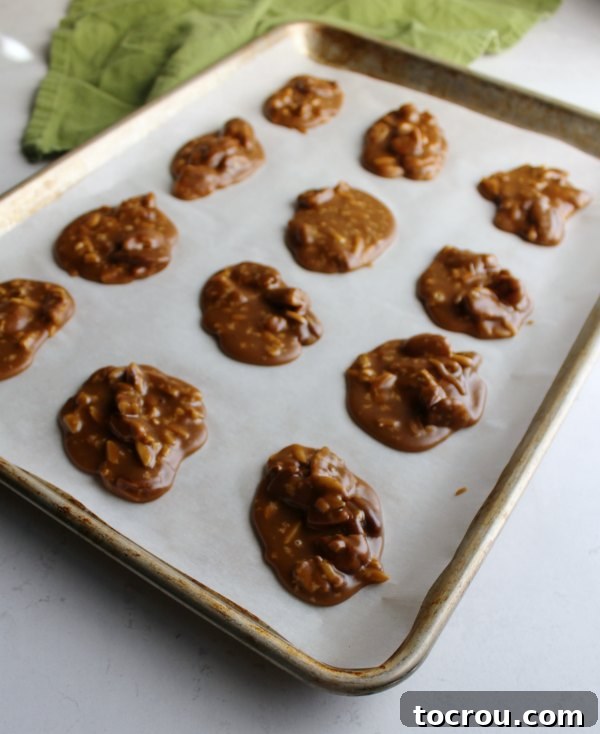
Working quickly (as the mixture will set rapidly), drop heaping tablespoons full of the praline mixture onto the prepared parchment-lined baking sheet. Space them out slightly to prevent them from merging. Allow them to cool completely and harden at room temperature. Once firm, store the pralines in an airtight container at room temperature for optimal freshness and texture.
Notes
Feel free to be generous with your two cups of pecans and use up to 2.5 cups. The pecans are my favorite part and add a wonderful crunch to every bite!
Nutrition Information
Serving: 1 Serving | Calories: 188kcal | Carbohydrates: 29g | Protein: 1g | Fat: 8g | Saturated Fat: 2g | Polyunsaturated Fat: 2g | Monounsaturated Fat: 4g | Trans Fat: 0.1g | Cholesterol: 6mg | Sodium: 25mg | Potassium: 105mg | Fiber: 1g | Sugar: 29g | Vitamin A: 79IU | Vitamin C: 0.1mg | Calcium: 36mg | Iron: 0.4mg
“Cooking With Carlee” is not a dietitian or nutritionist, and any nutritional information shared is an estimate. If calorie count and other nutritional values are important to you, we recommend running the ingredients through whichever online nutritional calculator you prefer. Calories and other nutritional values can vary quite a bit depending on which brands were used.
Did you try this recipe?
Don’t forget to leave a rating below and make sure to follow on Pinterest and Instagram for more delicious recipes and culinary inspiration!