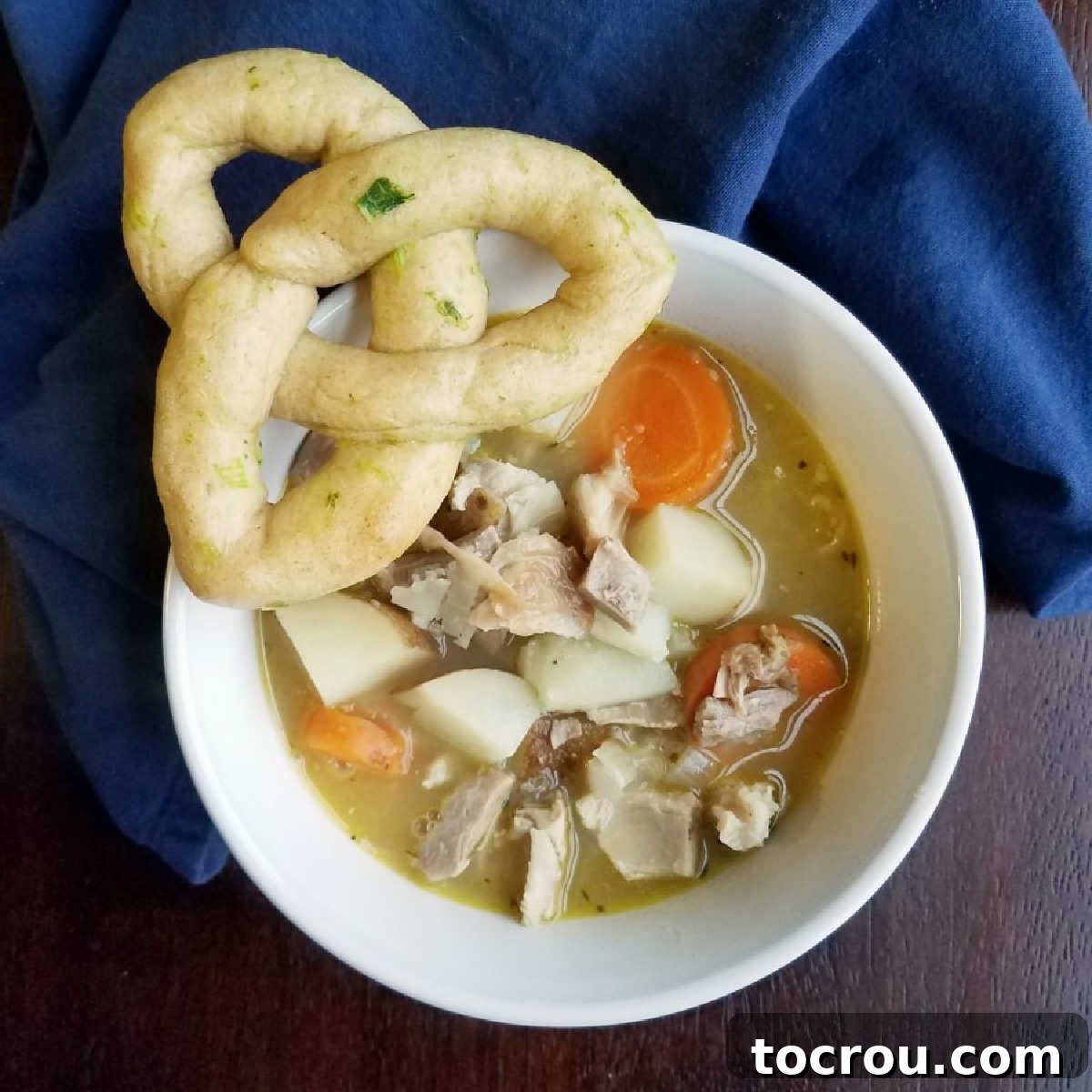
There’s nothing quite like the aroma of freshly baked bread filling your home, especially when that bread comes with a touch of magic and tradition. These delightful Celtic Knot Rolls are more than just a side dish; they are a celebration in themselves. Perfect for pairing with a hearty bowl of soup or stew, they bring a charming elegance to any meal. With their beautiful interwoven design and a savory herb butter finish, these rolls are not only incredibly tasty but also surprisingly fun to make, making them an ideal choice for St. Patrick’s Day or any occasion where you want to add a special touch.
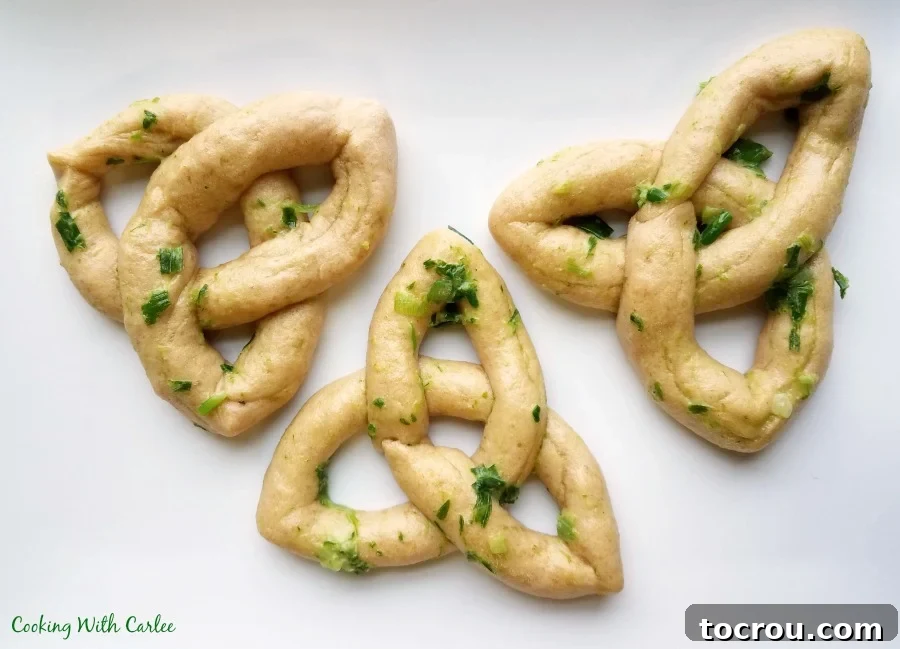
The Charm of Celtic Knot Rolls: Easier Than You Think!
Don’t let the intricate appearance of these Celtic knot rolls intimidate you. While they look like something a master baker would conjure, they are remarkably simple to achieve, even for novice bread makers. The secret lies in a forgiving dough and a straightforward shaping technique that’s more like playing with playdough than complex baking. Once baked to golden perfection, each roll is generously brushed with a vibrant herb butter, imparting a fresh, savory flavor and a subtle “kiss o’ green” that’s particularly fitting for springtime festivities or St. Patrick’s Day.
Imagine serving these soft, warm rolls alongside a rich beef stew or a creamy potato soup. They are an exquisite accompaniment to traditional St. Patrick’s Day fare like corned beef and cabbage, elevating the meal from simple comfort food to a memorable feast. You’ll quickly discover that these aren’t just for one holiday; their universal appeal will have you wanting to bake them far beyond St. Paddy’s Day.
Celebrating St. Patrick’s Day with Authentic Flavors
St. Patrick’s Day is a truly magical day each year, a time when everyone gets to embrace their inner Celt, regardless of their heritage. It’s a day for vibrant celebrations, be it dyeing rivers green, enjoying a celebratory green beer, or simply gathering with loved ones for a special meal. While some traditions lean towards the whimsical, many families, including ours, prefer to celebrate with classic dishes like savory corned beef and tender cabbage, creating a meal steeped in Irish culinary history.
For those seeking a more authentic Irish experience, a robust pint of Guinness stout or a warming Irish coffee might be on the menu. You could begin your day with a slice of traditional Irish tea brack, a fruit loaf often enjoyed with a cup of tea, and perhaps conclude the evening with a touch of creamy Irish liqueur. Last year, a mischievous leprechaun left green footprints and chocolate gold coins for the kids at Little Dude’s daycare, reminding us that there are countless joyful ways to honor this special day, each as unique as the celebrants themselves.
Inspiration Strikes: From Concept to Your Kitchen Table
When it came time to decide on this year’s St. Patrick’s Day creation, the options felt endless. My initial thoughts, naturally, drifted towards something indulgent and chocolate-based – perhaps a decadent mousse or a fun, festive frosting for cupcakes. But as tempting as desserts are, a balanced meal needs more than just sweets. So, I pivoted my focus towards creating something truly special for the dinner table – a savory star that would complement the main course and delight everyone.
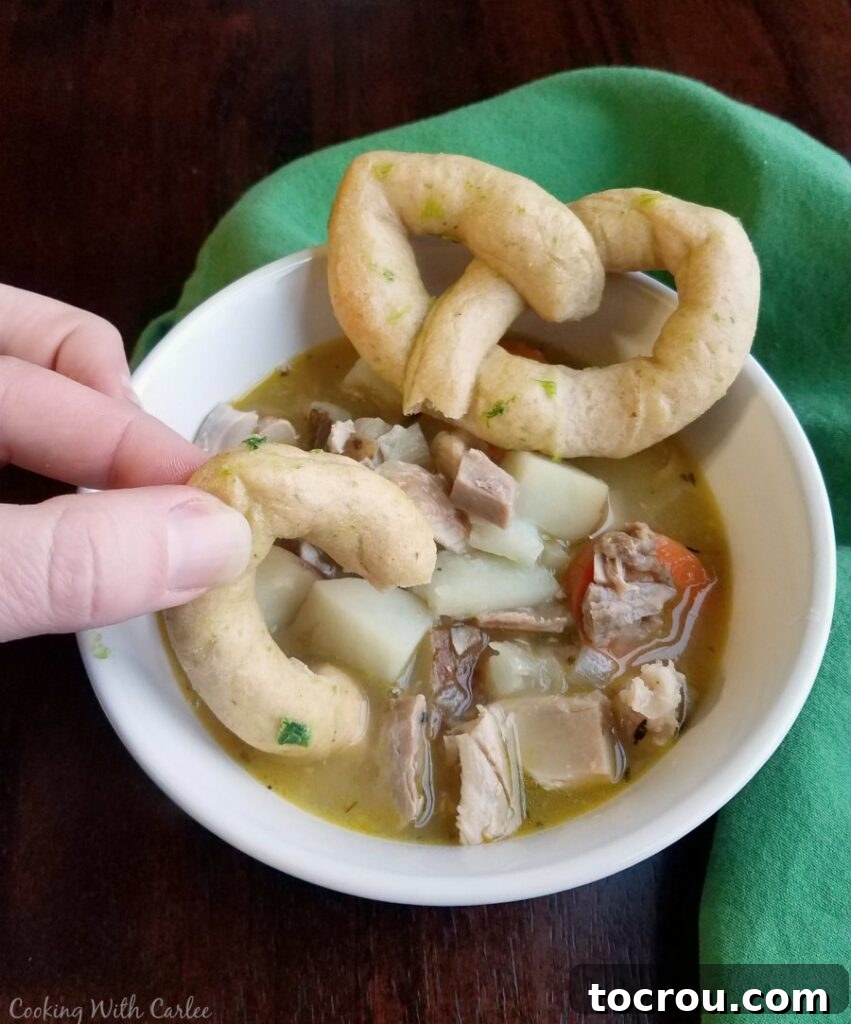
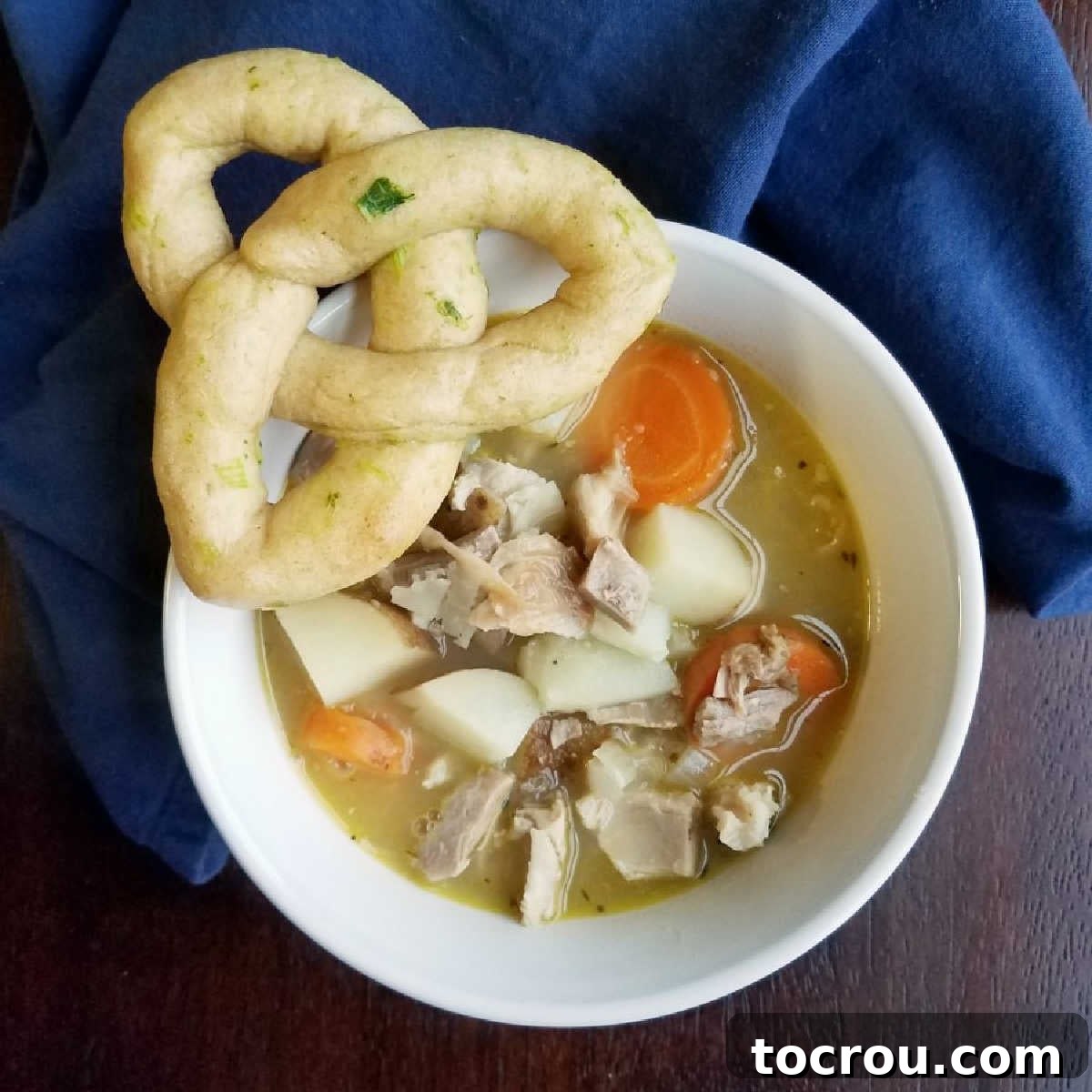
It was during this culinary brainstorming that I discovered the concept of Celtic Knot rolls from the talented duo, Jo and Sue. Their innovative idea sparked my imagination, and I knew immediately that I could adapt it, infusing it with my own unique flair to craft a recipe that would be both enjoyable to make and incredibly delicious to eat. These rolls proved to be a delightful project, and they were absolutely perfect for dipping into a rich shortcut chicken stew. They would also be incredibly comforting and flavorful served with a homemade beef stew – imagine the cozy warmth on a chilly evening!
Crafting the Perfect Dough for Your Rolls
The foundation of these outstanding Celtic knot rolls is a simple yet versatile dough. We’ve based it on a favorite pizza crust recipe, which ensures a lovely, pliable texture that’s easy to work with and bakes beautifully. To ensure the rolls achieve that desirable soft, tender crumb, we opt for a slightly lower baking temperature than many bread recipes, allowing them to cook evenly without becoming too crisp. This gentle bake contributes significantly to their melt-in-your-mouth quality, making them irresistible straight from the oven.
Working with the dough is a joy. The yeast activates in warm water with a touch of sugar, creating a lively starter. Then, olive oil, salt, and a blend of flours (white whole wheat and all-purpose) are incorporated. The kneading process, about ten minutes long, transforms the sticky mixture into a smooth, elastic dough, a true pleasure to handle. After its initial rise, the dough doubles in size, becoming light and airy, ready for the magical transformation into knots.
The Art of Shaping Celtic Knots: A Step-by-Step Guide
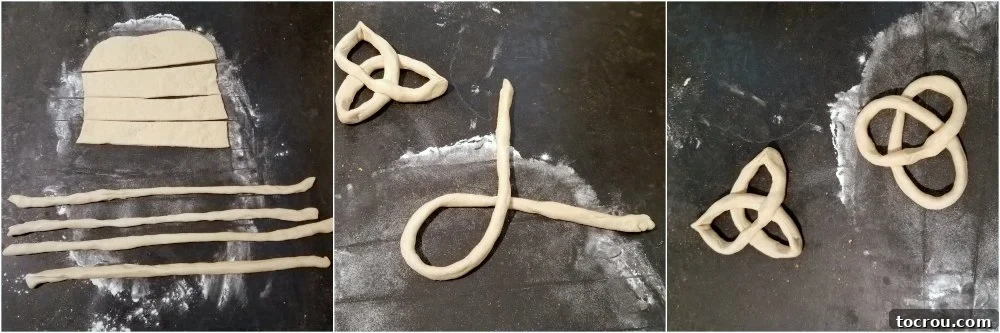
Shaping these rolls is arguably the most enjoyable part of the process – it’s almost meditative! If you’ve ever made pretzels, the technique will feel familiar, but with a unique twist: you leave the “tails” long. Here’s how to create those beautiful, symbolic knots:
- Once your dough has risen and rested, gently punch it down and roll it into a rectangle on a lightly floured surface.
- Cut the rectangle into 8 equal pieces. This will give you eight perfectly portioned rolls.
- Take each piece of dough and roll it into a “snake” or rope, aiming for about a foot in length. Uniform thickness will help the knots bake evenly.
- Form each rope into a “U” shape.
- Next, cross the ends of the “U” over each other, much like you would start tying a shoelace.
- Then, wrap these ends back over, creating a loop and forming the basic outline of the knot.
- Finally, pinch all the overlapping edges of the dough together firmly to secure the knot. To give them that characteristic Celtic knot shape, gently pinch the ends to create slightly pointed tips instead of leaving them rounded. This little detail makes a big difference in their visual appeal.
You’ll find detailed visual guides in the images above, which clearly illustrate each step of the knot-making process. It truly is easy peasy!
The Finishing Touch: Garlic Scallion Herb Butter
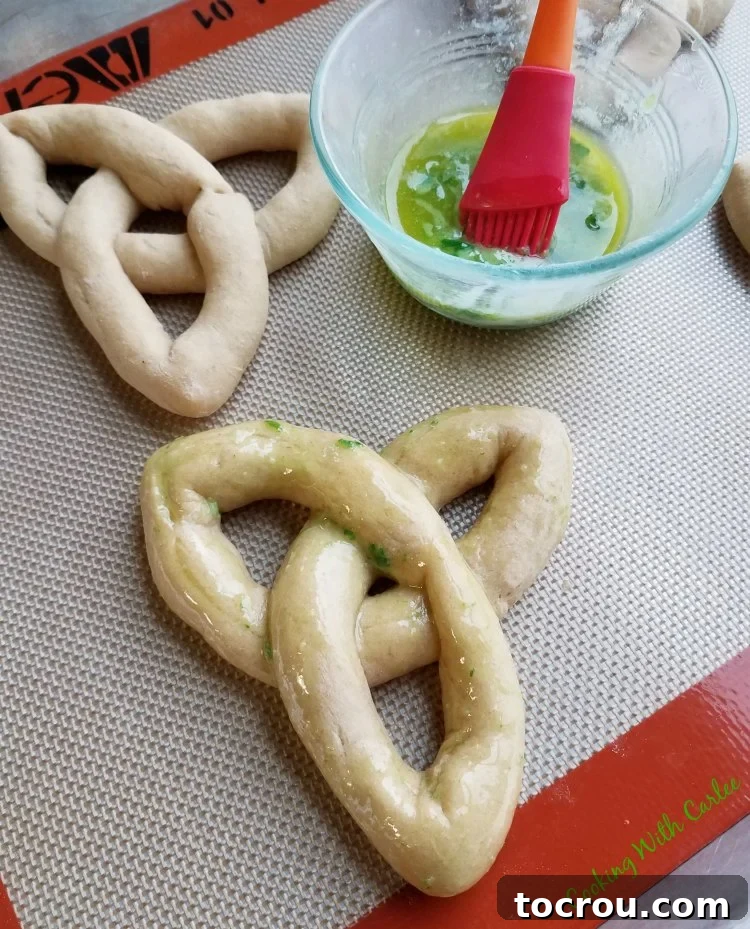
After these beautiful knots emerge golden brown from the oven, the final step is to brush them generously with a vibrant garlic scallion butter. This isn’t just for shine; it infuses the warm rolls with an extra layer of savory flavor and gives them that inviting, subtle green hue. The combination of melted butter, finely chopped scallions (green onions), and a hint of garlic salt creates an aromatic, herbaceous topping that elevates the simple bread to something truly extraordinary. It’s that “kiss o’ green” that makes them extra special, particularly for a St. Patrick’s Day spread.
The results are consistently delicious and wonderfully fun to serve. These rolls are perfect for tearing and dunking into a robust stew or soup, soaking up all the rich flavors. But honestly, they’re equally yummy just for snacking on while still warm from the oven! The delicate balance of the soft, slightly chewy bread with the crisp, flavorful butter makes them utterly irresistible. So, grab a roll (or two!) and enjoy the taste of tradition and warmth. ☘
Tips and Variations for Your Celtic Knot Rolls
- **Flour Substitutions:** While our recipe uses a mix of white whole wheat and all-purpose flour for a balance of nutrition and softness, you can easily substitute all-purpose flour for the entire amount of whole wheat flour if you prefer a lighter, even softer roll.
- **Herb Butter Alternatives:** Don’t limit yourself to scallions! Feel free to experiment with your favorite fresh herbs. Chopped parsley, chives, dill, or a blend of Italian herbs would all make fantastic additions to the melted butter, offering different flavor profiles to complement your meal.
- **Make Ahead:** To save time, you can prepare the dough up to the first rise, then punch it down, cover it tightly, and refrigerate overnight. Let it come to room temperature for about 30-60 minutes before proceeding with shaping and the second rise.
- **Freezing Instructions:** These rolls freeze beautifully! Once completely cooled, store them in an airtight freezer bag for up to 3 months. Reheat in a preheated oven (around 350°F / 175°C) for 5-10 minutes, or until warmed through.
- **Serving Beyond Stew:** Beyond the classic stews, consider serving these rolls with roasts, alongside a festive brunch spread, or even as a unique base for sliders. They also make excellent mini sandwiches!
Frequently Asked Questions About Baking Rolls
- What kind of yeast should I use?
- Active dry yeast is specified in this recipe. Ensure your yeast is fresh and active by proofing it in warm water with a pinch of sugar. If it doesn’t foam after 5-10 minutes, your yeast might be old, and it’s best to start with a new batch.
- How do I know if my water is warm enough for the yeast?
- The ideal temperature for activating active dry yeast is between 105-115°F (40-46°C). It should feel pleasantly warm to the touch, like bathwater. Too hot will kill the yeast, and too cold won’t activate it.
- Can I make these rolls without a stand mixer?
- Absolutely! Kneading by hand is a traditional and satisfying method. Just be prepared for a bit of an arm workout. Knead on a lightly floured surface for about 10-15 minutes, until the dough is smooth and elastic. You’ll know it’s ready when it springs back slowly when poked.
- What if my dough isn’t rising?
- Several factors can affect rising: expired yeast, water that was too hot or too cold, or a room that’s too cool. Ensure your yeast is fresh, your water temperature is correct, and place the dough in a warm, draft-free spot (like a slightly warmed oven turned off, or near a sunny window).
- Can I make the knots a different way?
- The knot described is a simple loop and pinch, mimicking a trinity knot. You can explore other simple knot designs, but the key is to keep them relatively open so they bake evenly and don’t become dense in the middle.
Celtic Knot Rolls Recipe
Celtic Knot Rolls
These beautiful Celtic Knot Rolls are the perfect accompaniment to any stew or soup. They are flavorful, fun to shape, and a fantastic addition to your St. Patrick’s Day menu or any meal.
Author: Carlee
Yields: 8 Rolls
Prep Time: 10 mins
Cook Time: 10 mins
Additional Time (Rise): 2 hrs
Total Time: 2 hrs 20 mins
Equipment
- Bench Scraper
- Silicone Basting Brushes
Ingredients
For the Rolls:
- 1 teaspoon granulated sugar
- ¾ cup warm water
- 2¼ teaspoons dry active dry yeast (or 1 package)
- 2 teaspoons olive oil
- ¾ teaspoons salt
- 1 cup white whole wheat flour
- ¾ cup all-purpose flour
For the Garlic Scallion Butter:
- 2 Tablespoons melted butter
- 1 scallion, finely chopped
- ½ teaspoon garlic salt
Instructions
- In a medium bowl, combine 1 teaspoon granulated sugar and ¾ cup warm water. Sprinkle with 2¼ teaspoons dry active dry yeast. Let this mixture sit for 5-10 minutes until foamy, indicating the yeast is active.
- Stir in the 2 teaspoons olive oil, ¾ teaspoon salt, 1 cup white whole wheat flour, and ¾ cup all-purpose flour. Mix until a shaggy dough forms.
- Turn the dough out onto a lightly floured surface and knead for about 10 minutes, or until you achieve a smooth, elastic dough. Add a tiny bit more flour or water if necessary to reach the correct consistency – it should be soft but not overly sticky.
- Lightly oil a clean bowl, place the dough in it, and turn once to coat. Cover the bowl with plastic wrap or a clean kitchen towel and place it in a warm, draft-free spot. Let it rise until doubled in size, which typically takes about 1 hour.
- Once risen, gently punch down the dough to release the air. Let it rest for another 10 minutes to relax the gluten.
- Transfer the dough to a lightly floured surface and roll it into a rectangle. Use a bench scraper or knife to cut the rectangle into 8 equal pieces.
- Take each piece of dough and roll it into a “snake” or rope, approximately 12 inches long, ensuring an even thickness.
- To form the knot: Shape each dough rope into a “U”. Cross the ends over each other, then wrap them back around to create a loop. Pinch all the overlapping edges firmly together to secure the knot. Gently pinch the ends to give them pointed tips, enhancing the Celtic knot appearance. (Refer to the image collage above for visual guidance!)
- Place the shaped rolls on baking sheets that have been greased or lined with parchment paper or silicone baking mats. Cover them with a clean kitchen towel and allow them to rise again for about 45 minutes, or until visibly puffy.
- While the rolls are undergoing their second rise, preheat your oven to 400°F (200°C).
- Bake the rolls for approximately 10-12 minutes, or until they are golden brown on top and sound hollow when tapped on the bottom.
- While the rolls are baking, prepare the garlic scallion butter: In a small bowl (or a small blender for a smoother consistency), combine 2 tablespoons melted butter, ½ teaspoon garlic salt, and 1 finely chopped scallion. Buzz for a couple of seconds if using a blender, or simply stir well.
- As soon as the rolls are out of the oven, generously brush them with the prepared garlic scallion butter. Serve warm and enjoy!
Notes
- You can easily substitute all-purpose flour for the white whole wheat flour if you prefer a lighter texture.
- Feel free to use your favorite fresh herbs, such as chives or parsley, instead of scallions in the herb butter for a different flavor profile.
Nutrition Information (per serving)
Serving: 1 Roll | Calories: 136kcal | Carbohydrates: 21g | Protein: 4g | Fat: 5g | Saturated Fat: 2g | Polyunsaturated Fat: 2g | Cholesterol: 8mg | Sodium: 322mg | Fiber: 2g | Sugar: 1g
Disclaimer: Nutritional information is an estimate. “Cooking With Carlee” is not a dietitian or nutritionist. Values may vary significantly based on brands and exact measurements used. If precise nutritional values are crucial, please calculate them using your preferred tool.
What’s Your Favorite Way to Celebrate St. Patrick’s Day?
We’d love to hear how you embrace the spirit of St. Patrick’s Day! Do you have cherished family recipes, unique traditions, or a go-to festive meal? Share your ideas in the comments below! Your feedback helps other bakers, and we love connecting with our community.
For more delicious recipes and baking inspiration, be sure to follow us on Pinterest and Instagram!