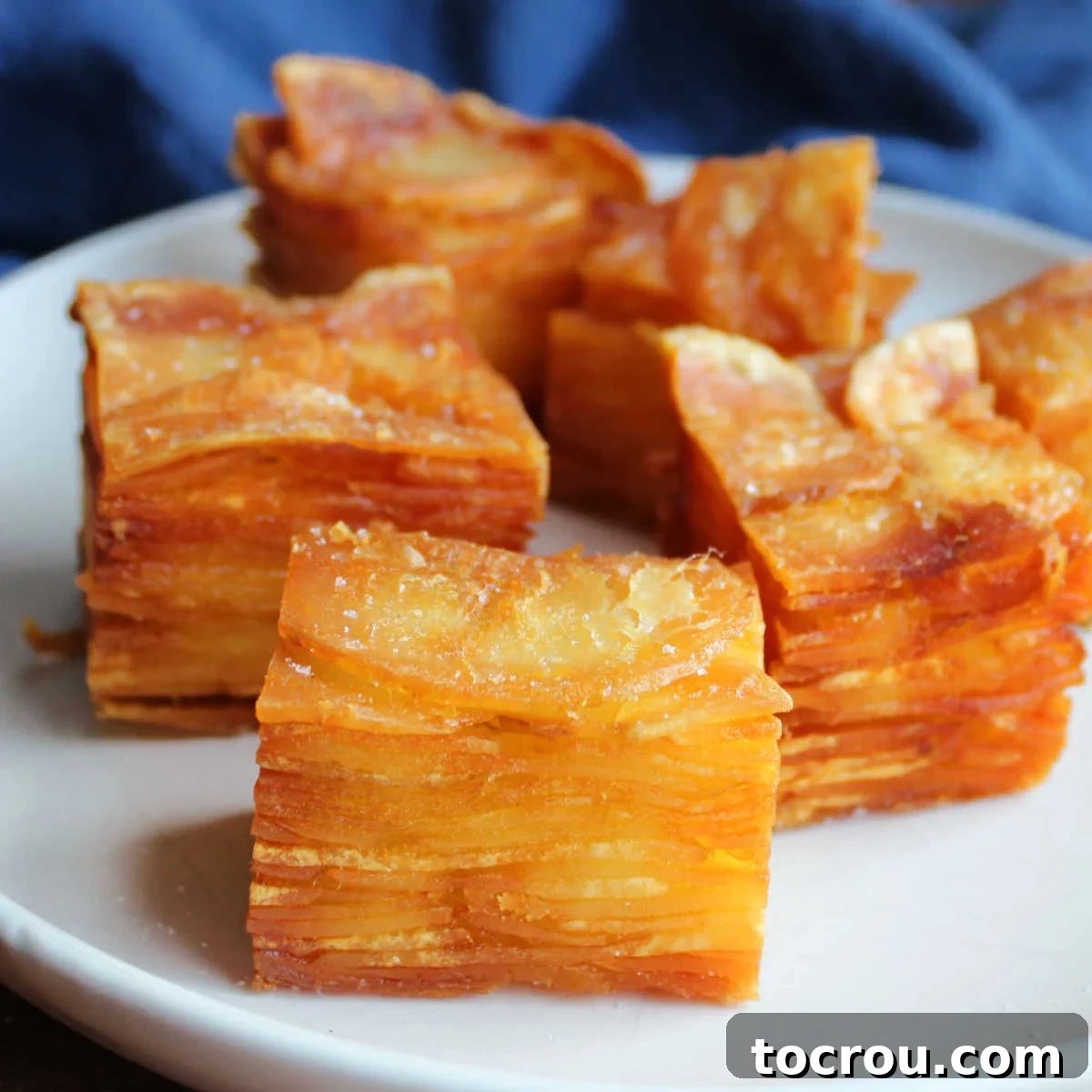
Prepare to elevate your side dish game with a recipe that transforms humble potatoes into a culinary masterpiece: Thousand Layer Potatoes. These exquisite spuds are a symphony of textures, offering an incredibly tender, fluffy interior encased in a remarkably crispy, golden-brown crust. Every bite is an indulgence, a testament to the magic that can happen when simple ingredients are prepared with a touch of patience and a sprinkle of culinary flair. This isn’t just a side dish; it’s a statement, a decadent delight that promises to make any meal feel special and wonderfully over-the-top.
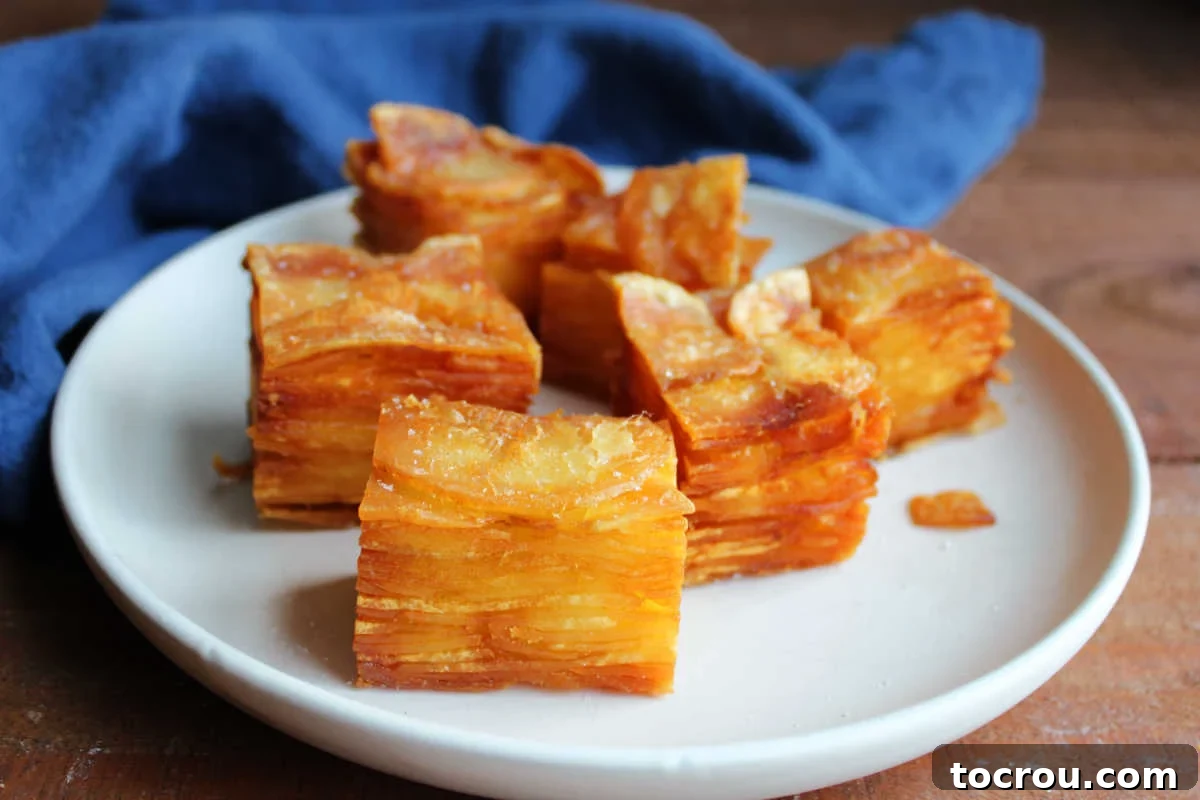
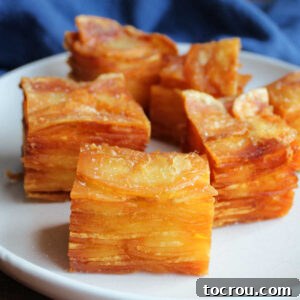
The allure of Thousand Layer Potatoes lies in their captivating presentation and unparalleled texture. Thinly sliced potatoes are meticulously layered, generously coated in rich duck fat, and seasoned to perfection. They undergo a precise baking process until they achieve a delicate tenderness, then are pressed and chilled to solidify their intricate structure. The final, glorious step involves frying each individual cube until it boasts a magnificent golden crispness on the outside, yielding a fluffy, melt-in-your-mouth interior. A sprinkle of premium finishing salt, such as the aromatic truffle salt we recommend, enhances their flavor to new heights, transporting you straight to potato paradise.
From Our Garden to Your Table: A Culinary Journey
The journey to these incredible Thousand Layer Potatoes often begins with a story, and ours is no exception. For young LD, potato harvest day was a highly anticipated event, a tradition he looked forward to even before the first potato plant sprouted. Last year, his efforts yielded a modest two potato mounds from starts he nurtured at school. But this year, ambition blossomed, resulting in an entire garden bed brimming with potential, plus additional potatoes planted directly in the ground. LD’s excitement was palpable, almost a daily topic of conversation, and with every mention of the harvest, he invariably brought up one specific dish: Thousand Layer Potatoes.
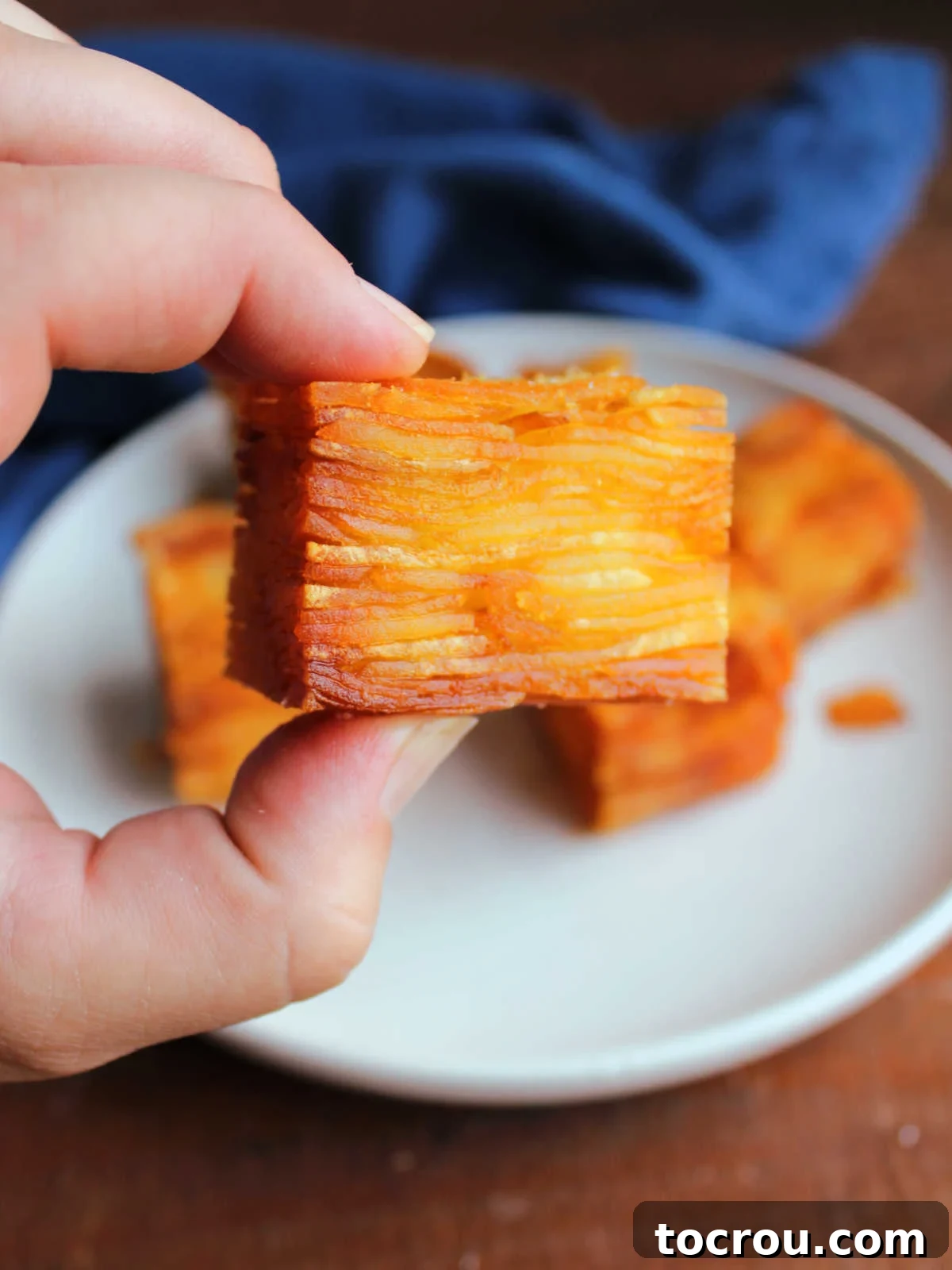
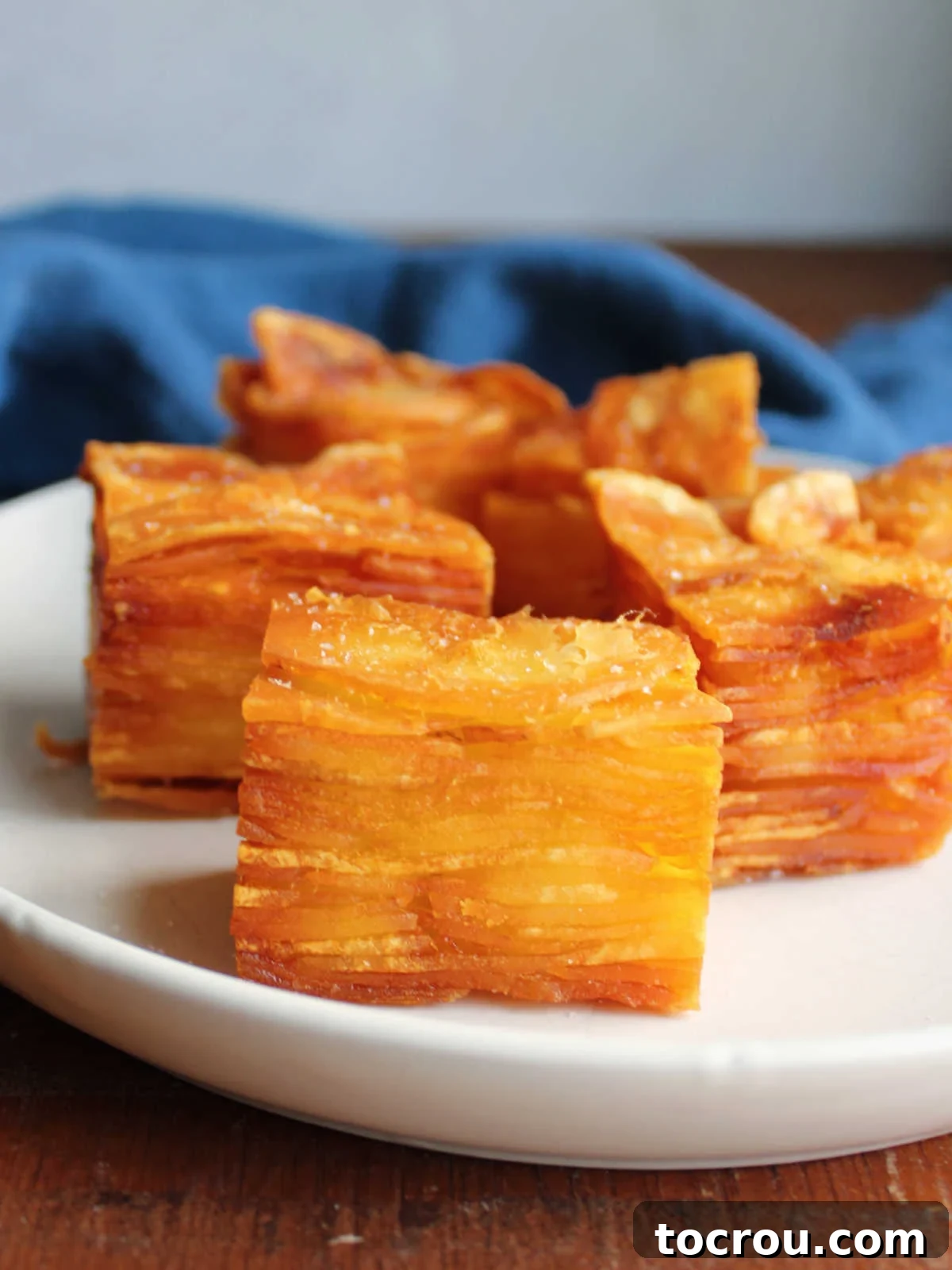
Inspired by culinary creators like Joshua Weissman and Nick DiGiovanni, whose YouTube videos showcase this intricate potato preparation, LD was determined to recreate the magic at home. Typically, my kitchen adheres to a strict “no frying” policy, a rule I seldom break. However, LD’s sheer enthusiasm and unwavering desire to try this particular recipe were simply too compelling to resist. And so, the rule was happily suspended, paving the way for a memorable cooking adventure.
The outcome was nothing short of spectacular. Each golden cube, with its multitude of delicate layers and perfectly crisp exterior, was a testament to the effort and excitement poured into its creation. We all reveled in the deliciousness, savoring every bite of this extraordinary potato dish. While Thousand Layer Potatoes may not become a weekly fixture on our dinner menu due to their special nature, the experience was undoubtedly rewarding. We were all incredibly glad to have made and enjoyed them, and the thought of repeating this culinary tradition with next year’s harvest already sparks anticipation. It’s more than just a recipe; it’s an experience, a delightful fusion of family, gardening, and gourmet cooking.
What Makes Thousand Layer Potatoes So Special?
The appeal of Thousand Layer Potatoes extends far beyond their savory flavor. It’s a dish celebrated for its unique structural integrity and the delightful contrast of textures it presents. Each individual cube is a miniature architectural marvel, composed of countless paper-thin potato slices pressed together, baked until tender, and then fried to a golden crisp. This multi-stage cooking process is what elevates them from a simple potato dish to a gourmet experience.
The Allure of Texture and Flavor
Imagine biting into a potato that shatters with an audible crunch, immediately giving way to layers of soft, creamy potato within. That’s the hallmark of a perfectly executed Thousand Layer Potato. The exterior achieves an irresistible crispness, often attributed to the fat used in frying, while the interior remains wonderfully tender, almost custardy. This incredible textural juxtaposition is what makes them so addictive. Furthermore, the duck fat infusion during the layering process imparts a deep, savory richness that elevates the potato’s natural flavor, making it intensely satisfying.
The Culinary Art of Presentation
Beyond taste and texture, Thousand Layer Potatoes are also a feast for the eyes. Their precisely cut, uniform cubes, revealing the delicate layers within, make for an impressive presentation. They convey a sense of craftsmanship and attention to detail, transforming a humble root vegetable into an elegant side dish suitable for any special occasion, from holiday feasts to intimate dinner parties. They are designed to impress and delight.
Essential Ingredients for Culinary Excellence
Crafting the perfect Thousand Layer Potatoes relies on a few key ingredients and thoughtful choices that contribute to their signature taste and texture.
Choosing the Right Potatoes: Waxy vs. Starchy
The type of potato you select plays a crucial role. For Thousand Layer Potatoes, waxy potatoes are generally preferred. Varieties like Yukon Gold, Red Bliss, or new potatoes hold their shape beautifully when sliced thinly and cooked. They have a lower starch content and a firmer texture, which prevents them from becoming mushy during the long baking process and helps them maintain their distinct layers. Starchy potatoes like Russets, while great for fluffy mashed potatoes, tend to break down more easily and might not create the defined layers we’re aiming for.
The Magic of Duck Fat (and Alternatives)
Duck fat is a cornerstone of this recipe, contributing immensely to the rich flavor and incredible crispness. Its high smoke point makes it ideal for frying, and its unique savory profile infuses the potatoes with an unparalleled depth. If duck fat is not readily available or you prefer an alternative, other fats can be used. Lard or beef tallow are excellent substitutes, offering similar savory notes and crisping properties. For a slightly different flavor, melted butter can be used during the baking phase, though you might want a higher smoke point oil for the final frying. Heavy cream is another interesting alternative for coating the layers before baking, adding a creamy richness to the final product.
Elevating Flavor with Finishing Salt
A simple sprinkle of salt can transform a dish, and for Thousand Layer Potatoes, a good finishing salt is non-negotiable. While regular fine salt is used during the layering, a flaky sea salt or a flavored salt applied after frying adds a burst of flavor and a delicate crunch. Our personal favorite is truffle salt, which introduces an earthy, luxurious aroma that complements the richness of the duck fat beautifully. Other options include smoked sea salt, rosemary salt, or even a dash of finely chopped fresh herbs like parsley or chives for a fresh counterpoint.
Only Fry What You Need for Maximum Freshness
Thousand Layer Potatoes are at their absolute best when freshly fried. The delicate balance of crisp exterior and tender interior is most pronounced right out of the oil. Since the recipe involves baking and then freezing the potato loaf before the final frying stage, you have the flexibility to fry only the portion you plan to eat immediately. Keep the remaining pre-cooked, frozen cubes in the freezer for future enjoyment. This ensures that every serving delivers that peak crispy-tender perfection.
If you do happen to have leftovers of the fried potatoes, an air fryer is your best friend for reheating. A quick blast in the air fryer will help revive the exterior crispness, bringing them much closer to their original glory than a microwave or conventional oven would.
Thousand Layer Potatoes
Carlee
6
Servings
15 minutes
2 hours
30 minutes
10 hours
12 hours
45 minutes
Ingredients
-
2
pounds
potatoes -
¼
cup
duck fat
melted -
2
teaspoons
salt -
oil
for frying -
flaky salt
for finishing
Instructions
-
Preheat your oven to 300℉ (150°C). This low and slow temperature is crucial for tenderizing the potatoes without browning them too quickly.
-
Line a 9×5-inch loaf pan with parchment paper. Ensure the paper covers the bottom and extends up the sides of the pan with a slight overhang. This overhang will serve as handles and prevent the potatoes from sticking.
-
Carefully peel the 2 pounds of potatoes. For the signature “thousand layer” effect, slice them as thinly as possible, ideally to ⅛-inch thick. A mandoline slicer is highly recommended for achieving uniform, paper-thin slices, which are essential for proper layering and tenderness.
-
In a large bowl, toss the thinly sliced potato rounds with the melted ¼ cup duck fat and 2 teaspoons of salt. Ensure each slice is lightly coated, as this fat is what binds the layers and imparts flavor.
-
Begin layering the potato slices tightly into the prepared loaf pan. Overlap them slightly, ensuring they form a compact and even loaf. The tighter the layers, the better the final structure.
-
Once all potatoes are layered, drizzle any remaining duck fat from the mixing bowl evenly over the top of the potatoes in the pan. This adds an extra layer of richness.
-
Fold the excess parchment paper over the top of the layered potatoes, then cover the entire loaf pan tightly with aluminum foil. This traps steam and ensures the potatoes cook evenly and become tender.
-
Bake for approximately 2 hours, or until the potatoes are thoroughly tender when pierced with a skewer or a thin knife. The exact time may vary depending on your oven and potato thickness.
-
Once tender, remove the aluminum foil. Place a second, empty loaf pan directly on top of the parchment-covered potatoes. Weigh it down with several heavy canned goods or weights. This pressing step is crucial for compressing the layers, removing excess moisture, and achieving a dense, stable block that will hold its shape when fried.
-
Allow the weighted potatoes to cool at room temperature for about 1 hour. Then, transfer the entire setup (with weights) to the refrigerator and chill for at least 8 hours, or preferably overnight. This extended chilling period is vital for the fat to solidify and the layers to set firmly.
-
Once completely chilled, remove the weights and the top loaf pan. Carefully lift the potato loaf out of its pan using the parchment paper overhang. Discard the parchment paper. Using a sharp knife, cut the firm potato loaf into squares, approximately 1½-inches on each side.
-
For best results and easier frying, freeze the individual potato cubes for at least 30 minutes before frying. They can be frozen for up to a month; if storing longer than a few hours, transfer them to a freezer-safe bag or airtight container once fully frozen to prevent freezer burn.
-
In a sturdy Dutch oven or deep saucepan, heat about 1½ inches of frying oil to 375℉ (190°C). Use a candy thermometer or deep-fry thermometer to monitor the temperature precisely.
-
Working in small batches to avoid overcrowding the pan and dropping the oil temperature, carefully add the frozen potato cubes to the hot oil. Fry until they are beautifully golden brown and crispy on all sides, typically about 5-6 minutes. Turn them as needed to ensure even browning.
-
Remove the fried potatoes from the oil with a slotted spoon and transfer them to a wire rack set over paper towels to drain any excess oil. Immediately sprinkle with finishing salt while they are hot.
-
Serve these glorious Thousand Layer Potatoes hot and enjoy their decadent deliciousness!
Notes
While duck fat is highly recommended for its flavor and crisping ability, you can certainly experiment with other fats if it’s not available. Lard or beef tallow are excellent alternatives that will provide a similar richness. For a dairy-rich option, you could also try using melted butter or even heavy cream to coat the potato slices before the baking stage, which will yield a different but still delicious result.
Video
Hide Nutrition Information
Nutrition Information
Serving:
1
serving
|
Calories:
192
kcal
|
Carbohydrates:
26
g
|
Protein:
3
g
|
Fat:
9
g
|
Saturated Fat:
3
g
|
Polyunsaturated Fat:
1
g
|
Monounsaturated Fat:
4
g
|
Cholesterol:
9
mg
|
Sodium:
784
mg
|
Potassium:
637
mg
|
Fiber:
3
g
|
Sugar:
1
g
|
Vitamin A:
3
IU
|
Vitamin C:
30
mg
|
Calcium:
19
mg
|
Iron:
1
mg
“Cooking With Carlee” is not a dietitian or nutritionist, and any nutritional information shared is an estimate. If calorie count and other nutritional values are important to you, we recommend running the ingredients through whichever online nutritional calculator you prefer. Calories and other nutritional values can vary quite a bit depending on which brands were used.
Did you try this recipe?
Don’t forget to leave a rating below and make sure to follow on Pinterest and Instagram for more!