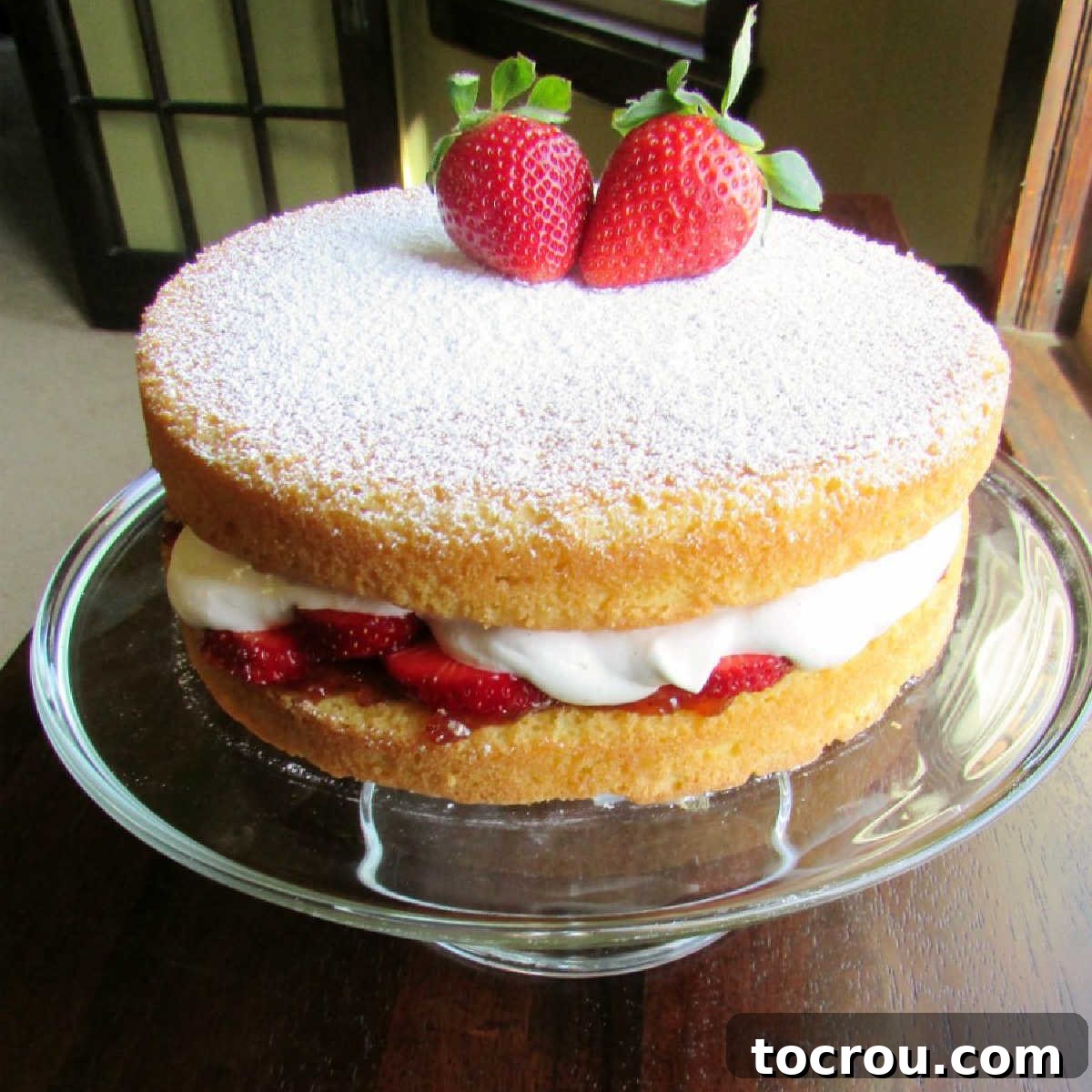
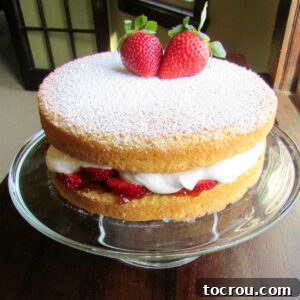
Step into a world of timeless elegance with the classic Victoria Sponge Cake, a delightful treat perfect for any occasion. This beloved British classic features two layers of light, airy sponge cake, generously filled with luscious fresh whipped cream, vibrant strawberry jam, and an abundance of ripe, fresh strawberries. It’s an iconic dessert that brings a touch of sophistication to afternoon tea or any gathering, embodying simplicity and pure deliciousness.
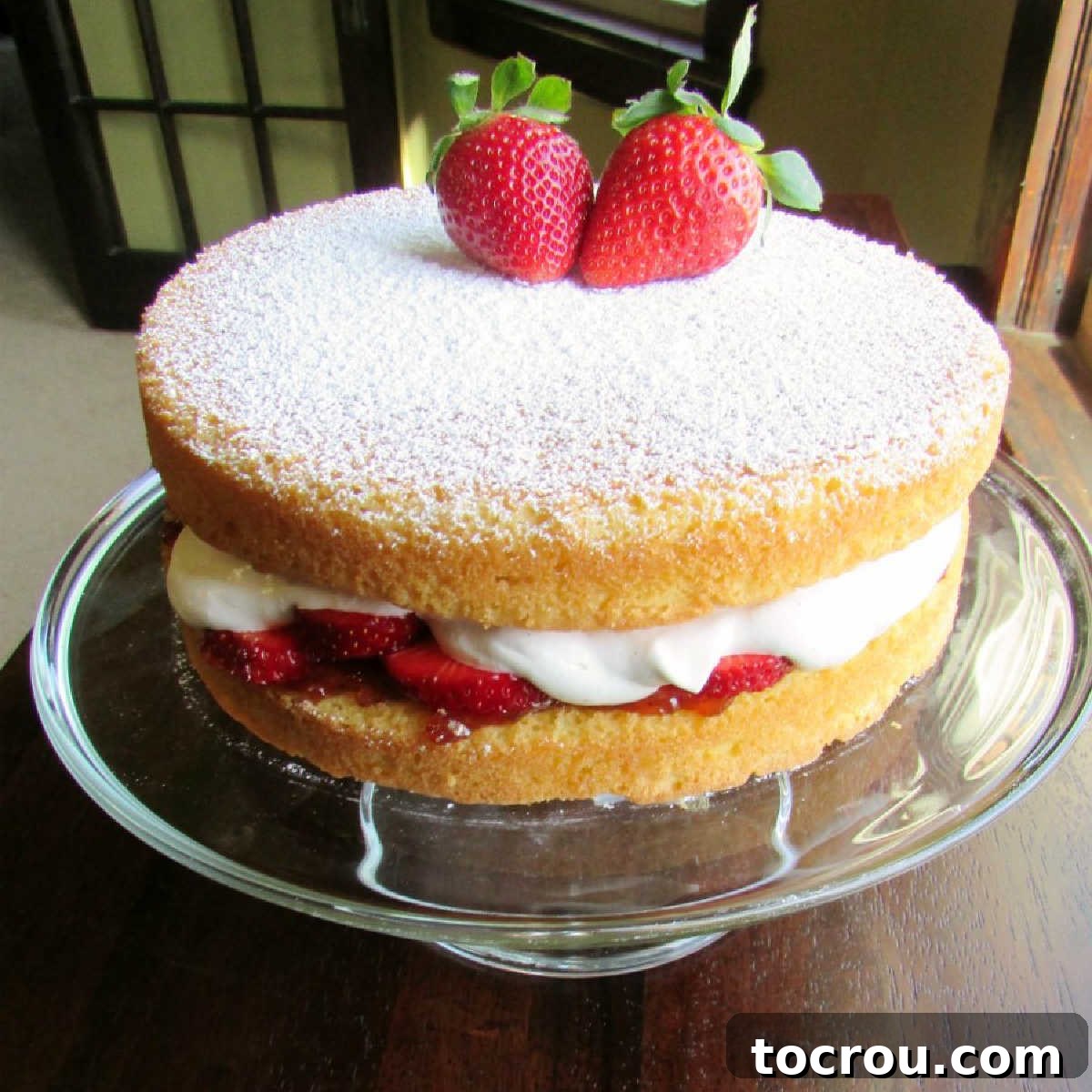
The Victoria Sponge, often called a Victoria Sandwich, is more than just a cake; it’s a culinary institution. Its layers of fluffy vanilla sponge, embracing a delightful core of creamy whipped topping and juicy strawberries, ensure it’s always a crowd-pleaser. Imagine a sophisticated version of a giant strawberry shortcake, elevated with a refined British charm. Today, we’ll dive into why this cake has remained a classic for centuries and how you can whip one up in your own kitchen.
There’s something inherently charming about berry-infused cakes, especially as the seasons change and fresh berries become abundant. This particular Victoria Sponge, with its delightful combination of strawberry jam and fresh cream nestled between soft cake layers, truly captivated me. While sponge cake wasn’t traditionally my go-to texture, its elegant presentation and tempting flavors were an invitation I couldn’t resist. Plus, having all the necessary ingredients on hand always makes a recipe more appealing!
The Enduring Legacy of the Victoria Sponge
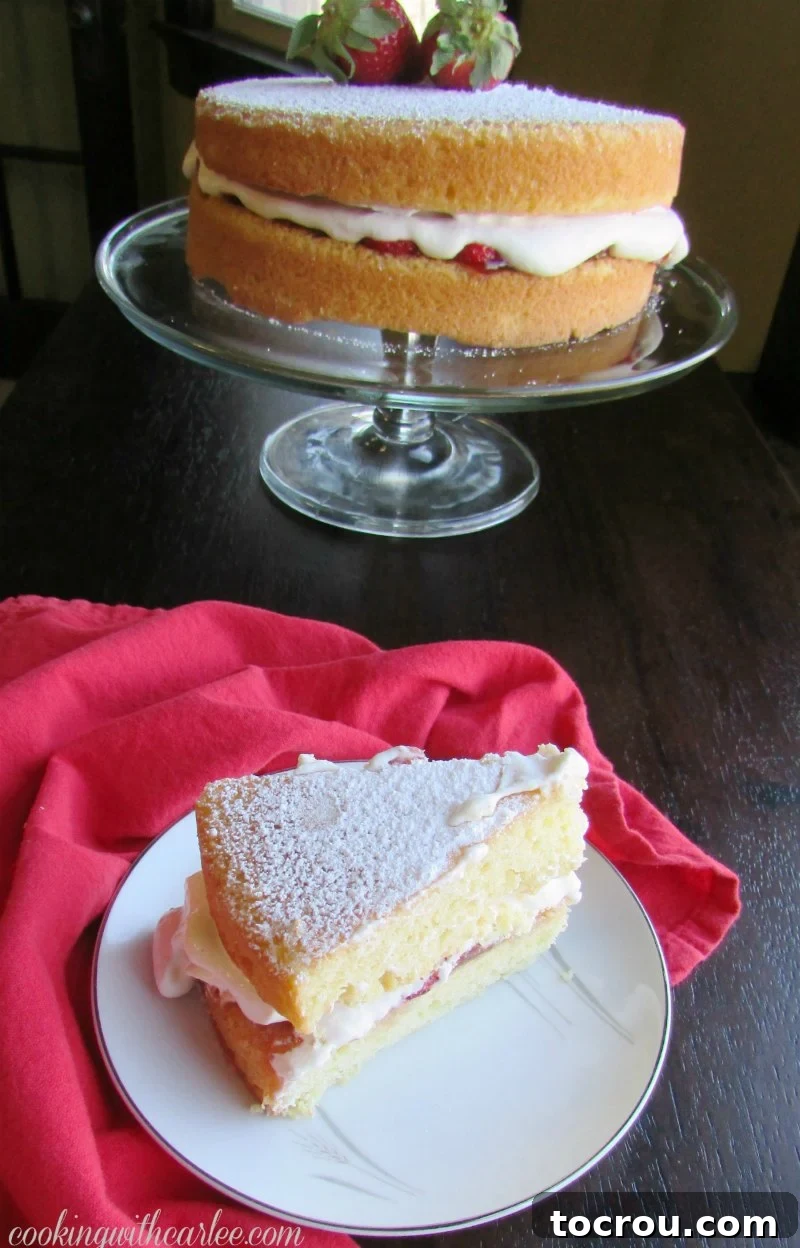
The Victoria Sponge Cake holds a rich history, dating back to the reign of Queen Victoria. It is said that the Queen herself cherished this simple yet elegant cake with her afternoon tea. By 1885, the Victoria sandwich cake had firmly established itself as a quintessential afternoon tea-time treat throughout Great Britain, a tradition that continues to this day. Unlike more decadent celebration cakes often found in other cuisines, the Victoria Sponge offers a balanced sweetness, making it a perfect accompaniment to a warm cup of tea without being overwhelmingly rich.
My own journey with this cake began when I decided to bake it for my mother-in-law’s birthday lunch. Everyone enjoyed it, though I still find myself gravitating towards richer cake textures, like a classic American pound cake or the soft, tender crumb of a cake mix cake. My personal preference leans towards a more substantial frosting-to-cake ratio, perhaps explaining why a Coffee and Cream Sponge Cake, with its generous creamy topping, previously won me over. Nevertheless, this Victoria Sponge, with its delicate balance of flavors, was a hit and certainly didn’t go to waste!
Perhaps it’s a matter of cultural preference; the British tea-time treats are often designed to complement the tea, offering a subtle sweetness rather than an extravagant sugar rush. This difference in expectation can significantly impact one’s perception of a cake’s ideal texture and sweetness. However, I remain eager to explore more sponge cake recipes, hoping to find one that perfectly aligns with my palate while still honoring the essence of this delightful cake family.
Crafting the Perfect Victoria Sponge: Tips for Success
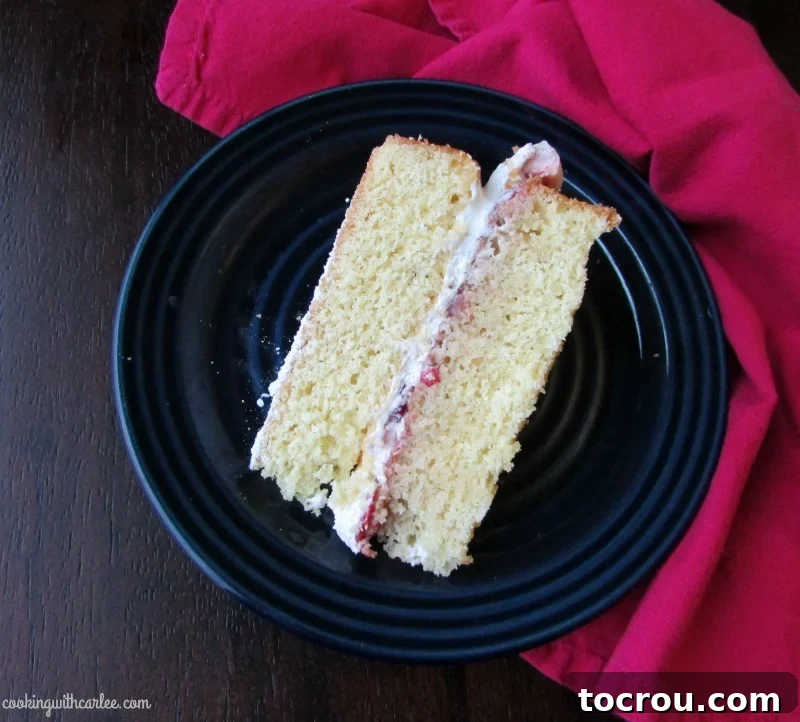
Creating a truly authentic and delicious Victoria Sponge is an art that combines precise measurements with a gentle touch. Here are some key tips to help you achieve a perfectly light and fluffy cake:
- Room Temperature Ingredients: Ensure your butter and eggs are at room temperature. This allows them to cream together smoothly, incorporating more air for a lighter cake batter.
- Creaming Method: The creaming of butter and sugar is crucial. Beat them together until the mixture is pale, light, and fluffy. This process traps air, which helps the cake rise and contributes to its delicate texture.
- Sift Your Dry Ingredients: Sifting the flour, baking powder, and salt together ensures they are evenly distributed and aerated, preventing lumps in the batter.
- Gentle Mixing: Once the dry ingredients are added, mix just until combined. Overmixing can develop the gluten in the flour, resulting in a tough cake.
- Baking Powder Power: The recipe uses a generous amount of baking powder to ensure a significant rise and that characteristic airy sponge. Don’t skimp on it!
- Don’t Overbake: Sponge cakes can dry out quickly if overbaked. Keep a close eye on them, checking for doneness when the center springs back lightly when touched. The edges should be golden.
- Cooling Completely: Allow the cakes to cool fully on a wire rack before attempting to fill them. Warm cakes will melt the whipped cream and jam, leading to a messy assembly.
Beyond Strawberries: Delightful Filling Variations
While strawberry jam and fresh strawberries are the traditional choice for a Victoria Sponge, don’t hesitate to experiment with other delightful fillings to suit your taste or the season:
- Raspberry Rendezvous: Swap strawberry jam for a tart raspberry jam to add a zesty contrast to the sweet cake and cream. Fresh raspberries can be added alongside or in place of strawberries.
- Lemon Zest: Incorporate lemon curd along with whipped cream for a bright, citrusy twist. A sprinkle of lemon zest in the cake batter can further enhance this flavor.
- Blackberry Bliss: Use blackberry jam and fresh blackberries for a rich, deep berry flavor.
- Chantilly Cream vs. Simple Whipped Cream: While the original recipe calls for “lightly sweetened whipped cream,” traditional Victoria Sponge often features Chantilly cream, which is whipped cream subtly flavored with vanilla extract and a touch of sugar. Both are delicious!
- Buttercream Boost: For those who, like me, appreciate a richer filling, a light vanilla buttercream can replace or supplement the whipped cream, though it does move slightly away from the classic light sponge texture.
The beauty of the Victoria Sponge lies in its versatility and ability to be adapted while retaining its quintessential charm. Whether you stick to the classic strawberry or venture into other berry and cream combinations, the result is always a delightful and elegant dessert.
Victoria Sponge Cake
Average Rating: 4.91 from 11 ratings
Author: Carlee
Servings: 16 Servings
Two layers of tender sponge cake sandwich fresh whipped cream, sweet strawberry jam, and vibrant fresh strawberries. My take on a beloved tea time classic treat.
Prep Time: 20 mins
Cook Time: 15 mins
Total Time: 35 mins
Equipment
- KitchenAid 5-Qt. Stand Mixer
- Wilton 9-Inch Round Cake Pans, Set of 2
Ingredients
Cake
- 1 cup unsalted butter, softened
- 1 cup granulated sugar
- 4 large eggs
- 1⅔ cups all purpose flour
- ½ teaspoon salt
- 4 teaspoons baking powder
- 1 teaspoon vanilla extract
- 2 teaspoons whole milk
Filling
- 1½ cup lightly sweetened whipped cream
- ½ cup strawberry jam
- 1 cup sliced strawberries (optional)
- Powdered sugar, for dusting
Makes: 9 inch round cake
Instructions
- Preheat your oven to 350°F (175°C) and prepare two 9-inch cake tins by greasing and flouring them, or lining with parchment paper.
- In a large bowl, using a stand mixer or hand mixer, cream together the room temperature 1 cup unsalted butter and 1 cup granulated sugar until the mixture is light, pale, and fluffy. This process typically takes 3-5 minutes.
- Beat in the 4 large eggs, adding them one at a time, ensuring each egg is fully incorporated before adding the next. Remember to scrape down the sides of the bowl frequently to ensure everything is well combined.
- In a separate small bowl, whisk together the 1⅔ cups all-purpose flour, ½ teaspoon salt, and 4 teaspoons baking powder. Gradually add the dry ingredients to the wet butter mixture, mixing on low speed until just combined. Be careful not to overmix.
- Stir in the 2 teaspoons whole milk and 1 teaspoon vanilla extract, mixing until the batter is smooth and uniformly combined.
- Divide the cake batter evenly between your two prepared pans. Spread the batter gently to ensure an even layer.
- Bake for 12-15 minutes, or until a wooden skewer inserted into the center comes out clean, and the top of the cake springs back when lightly touched with a finger.
- Allow the cakes to cool in their pans for about 10 minutes before carefully inverting them onto a wire cooling rack to cool completely. This is crucial before filling.
- To assemble, place one cooled cake layer on your serving plate. Spread the ½ cup strawberry jam evenly over the top. If using, arrange the 1 cup sliced strawberries over the jam. Then, spread the 1½ cup lightly sweetened whipped cream over the strawberries.
- Carefully place the second cake layer on top. Dust the entire top of the cake generously with powdered sugar before serving.
Notes
Adapted from Roger Pizey’s World Class Cakes.
Nutrition Information
Serving: 1 Serving | Calories: 286 kcal | Carbohydrates: 31g | Protein: 3g | Fat: 17g | Saturated Fat: 10g | Polyunsaturated Fat: 1g | Monounsaturated Fat: 3g | Trans Fat: 0.5g | Cholesterol: 87mg | Sodium: 204mg | Potassium: 56mg | Fiber: 1g | Sugar: 19g | Vitamin A: 579IU | Vitamin C: 6mg | Calcium: 83mg | Iron: 1mg
“Cooking With Carlee” is not a dietitian or nutritionist, and any nutritional information shared is an estimate. If calorie count and other nutritional values are important to you, we recommend running the ingredients through whichever online nutritional calculator you prefer. Calories and other nutritional values can vary quite a bit depending on which brands were used.
Did you try this recipe?
Don’t forget to leave a rating below and make sure to follow on Pinterest and Instagram for more!