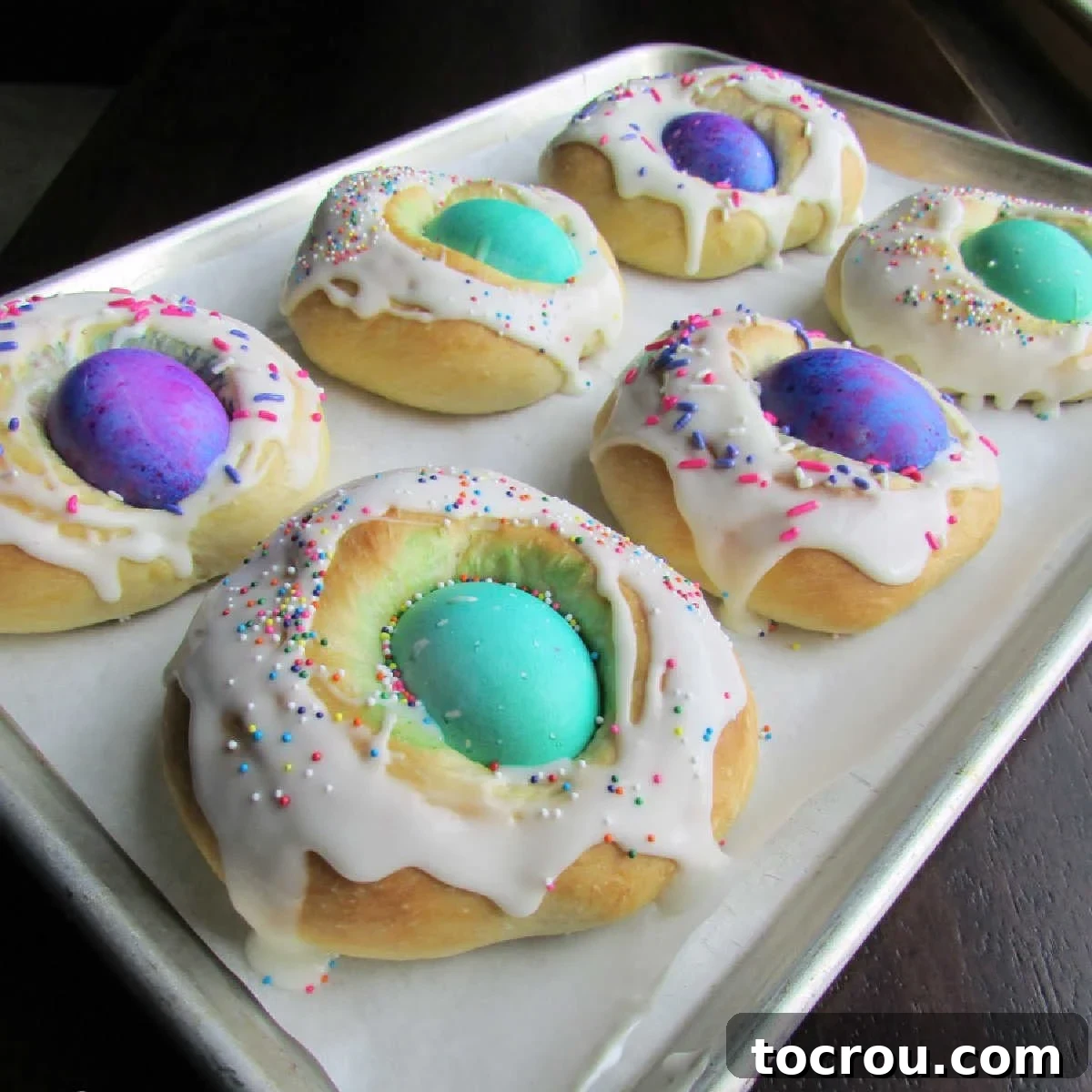
Easter is a time for renewal, celebration, and, of course, delicious food. Among the many culinary traditions, few capture the spirit of the season quite like a beautifully crafted Easter bread. These delightful individual-sized Easter breads are not only a feast for the eyes but also incredibly simple to prepare, making them a perfect project for bakers of all skill levels. With their subtly sweet flavor, tender crumb, and charming centerpiece egg, they promise to bring a festive touch to any Easter brunch or gathering.
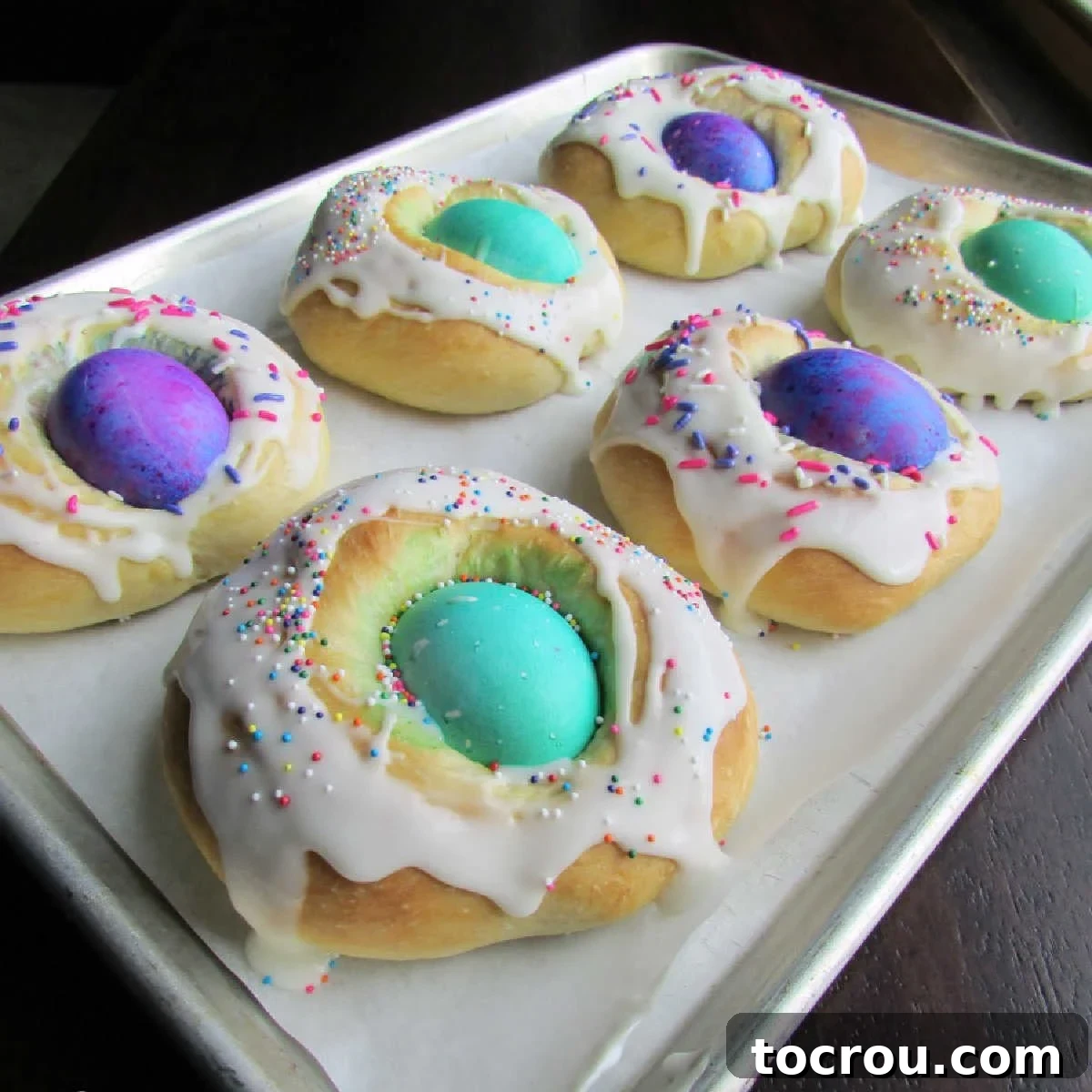
For years, the allure of Easter bread has captivated my imagination. There's an undeniable charm in a braided loaf, adorned with vibrant sprinkles and a brightly colored egg nestled within its embrace. This isn't just a simple bread; it's a symbol of spring, rebirth, and the joy of the holiday season, making it a truly special addition to your Easter menu. While the idea of baking an entire egg directly into bread might seem a bit unusual at first glance, the combination of fluffy bread and savory egg is surprisingly harmonious and utterly delicious.
Many traditional Easter bread recipes, particularly those from Italian heritage, incorporate flavors like anise, giving them a distinct and aromatic profile. However, for this year's Easter baking endeavor, I decided to take a slightly different approach. My goal was to create a universally appealing, slightly sweet bread that highlights the rich, comforting flavors of butter and eggs, without the stronger, more divisive anise flavor. This choice resulted in a bread that, once adorned with a quick, luscious glaze, evokes the beloved taste and texture of a cinnamon roll, minus the spice. It's a comforting, inviting treat that everyone can enjoy.
Crafting the Perfect Easter Bread: A Step-by-Step Guide
Creating these delightful Easter breads is a rewarding process that begins with a few essential steps, blending traditional baking techniques with a touch of holiday fun.
Dyeing the Eggs: A Colorful Beginning
The visual appeal of these Easter breads largely comes from the vibrant, uncooked eggs baked right into the center. This step is a fantastic opportunity to involve younger family members in the preparation. My little helper and I started by dyeing the eggs, ensuring they were colorful and festive. Since these eggs would be in direct contact with the bread dough, we opted for food-safe coloring agents—simple food coloring drops mixed with a bit of vinegar, which helps the color adhere beautifully to the eggshells. We even discovered that a particular purple food gel separated in a unique way, creating stunning, marbled effects that added an unexpected artistic touch to our eggs. Once our eggs were perfectly colorful, we moved on to the heart of the recipe: the bread dough.
Preparing the Dough: The Foundation of Flavor
The journey to a perfect Easter bread begins with a rich, soft dough. We start by gently warming milk and butter in a saucepan until the butter is just melted, ensuring it doesn't come to a boil. This creates the ideal warm environment for activating the yeast. Once off the heat, we stir in granulated sugar and sprinkle the yeast over the mixture, allowing it a few minutes to bloom, indicating it's active and ready to work its magic.
In a separate large bowl, two large eggs are lightly beaten, adding richness and structure to the dough. To this, we incorporate the all-purpose flour and a teaspoon of salt, followed by the warm milk and yeast mixture. Everything is gently mixed until it forms a cohesive, shaggy dough. The real transformation happens during kneading. Turning the dough out onto a lightly floured surface, we knead it for about ten minutes. This process develops the gluten, resulting in a smooth, elastic, and supple dough that is a joy to work with. After kneading, the dough is placed in a greased bowl, covered, and left to rise in a warm spot until it has gloriously doubled in size, typically taking 1 to 1.5 hours depending on ambient temperature.
Shaping the Breads: Artistic Flourishes
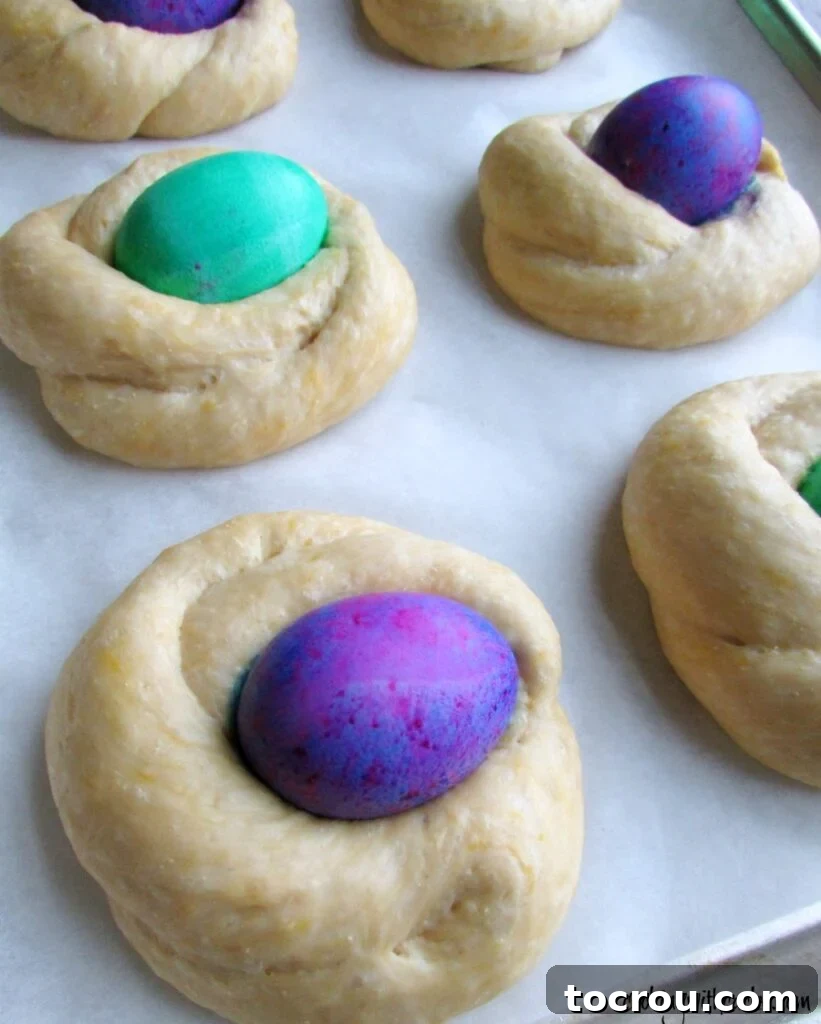
Once the dough has completed its first rise, it’s time for shaping. Gently punch down the dough to release the air, then divide it into six equal portions. Each portion is then rolled into a long, uniform rope, akin to a snake. To create the characteristic twisted appearance, cut each rope in half and gently twist the two pieces together. This forms a beautiful braided-like texture. Next, shape the twisted rope into a circular wreath, pinching the ends firmly together to seal them. Finally, carefully nestle one of your vibrantly dyed uncooked eggs into the center of each dough circle. Repeat this process until all portions of dough and eggs are used, arranging the shaped breads on a baking sheet lined with parchment paper or a silicone mat. Cover the breads once more and allow them to rise for a second time, for about an hour, which will make them light and airy. During this second rise, you'll notice the dough expanding beautifully around the eggs, ready for baking.
Baking and Glazing: The Sweet Finale
Preheat your oven to 350°F (175°C). Bake the Easter breads for 20-25 minutes, or until they turn a beautiful golden brown and sound hollow when tapped. The egg in the center will cook perfectly alongside the bread, emerging as a delightful surprise. Once baked, carefully remove the breads from the tray and allow them to cool completely on a wire rack. This cooling period is crucial for the bread's texture.
For the irresistible glaze, simply whisk together powdered sugar, heavy cream, and a hint of vanilla extract. Adjust the consistency by adding more cream for a thinner glaze or more powdered sugar for a thicker one, until it reaches your desired drizzling consistency. Just before serving, generously drizzle this sweet glaze over each individual Easter bread and immediately shower them with festive sprinkles. The sprinkles adhere best when the glaze is still wet, creating a truly eye-catching finish.
The Unforgettable Taste Test
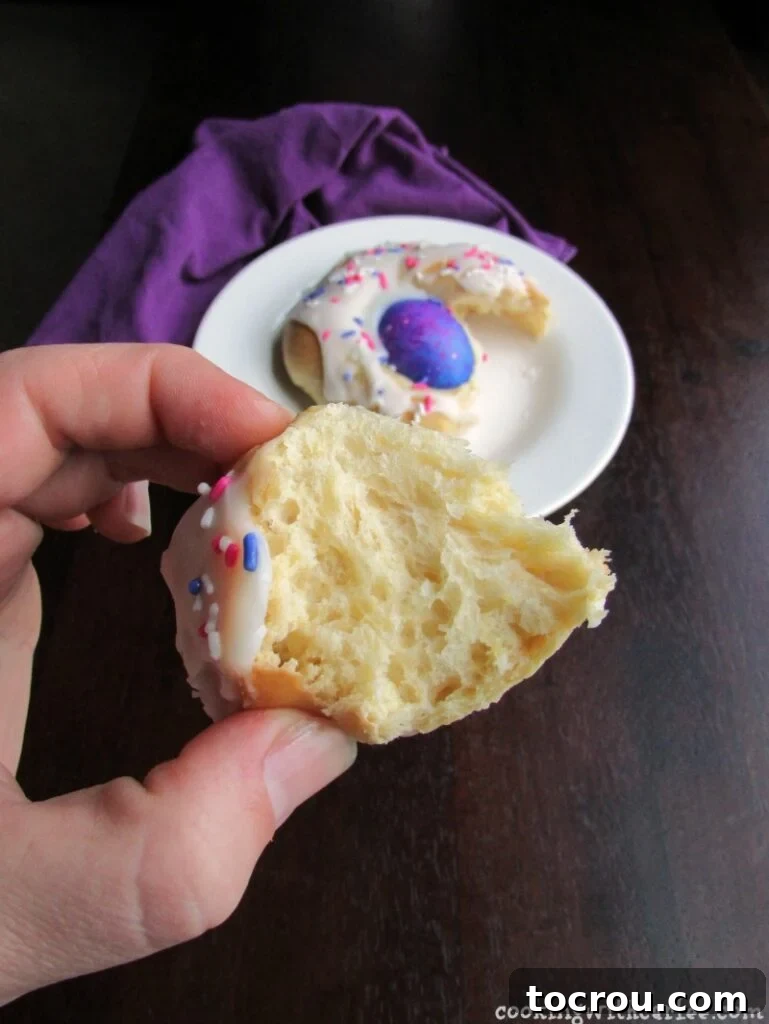
The anticipation for these Easter breads was palpable, especially for my little helper. His eyes, always drawn to the magic of sprinkles, lit up with excitement. He wasted no time in taking a large, enthusiastic bite. The moment he was done chewing, he turned to me, his face beaming, and declared with utmost sincerity, "Mom, this is the best thing I've ever had!" While I might not go quite that far, I must admit, my own bread didn't last long either. Its soft, sweet interior, contrasted with the subtle crunch of the glaze and sprinkles, was truly delightful.
To further test their appeal, I took the four remaining loaves to our weekly family dinner, alongside another homemade dessert. I fully expected the other dessert to be the first to disappear, but to my pleasant surprise, the plate of individual Easter breads came back completely empty. This unanimous approval confirmed that these simple yet charming Easter breads are indeed a triumph, perfect for sharing and creating cherished holiday memories.
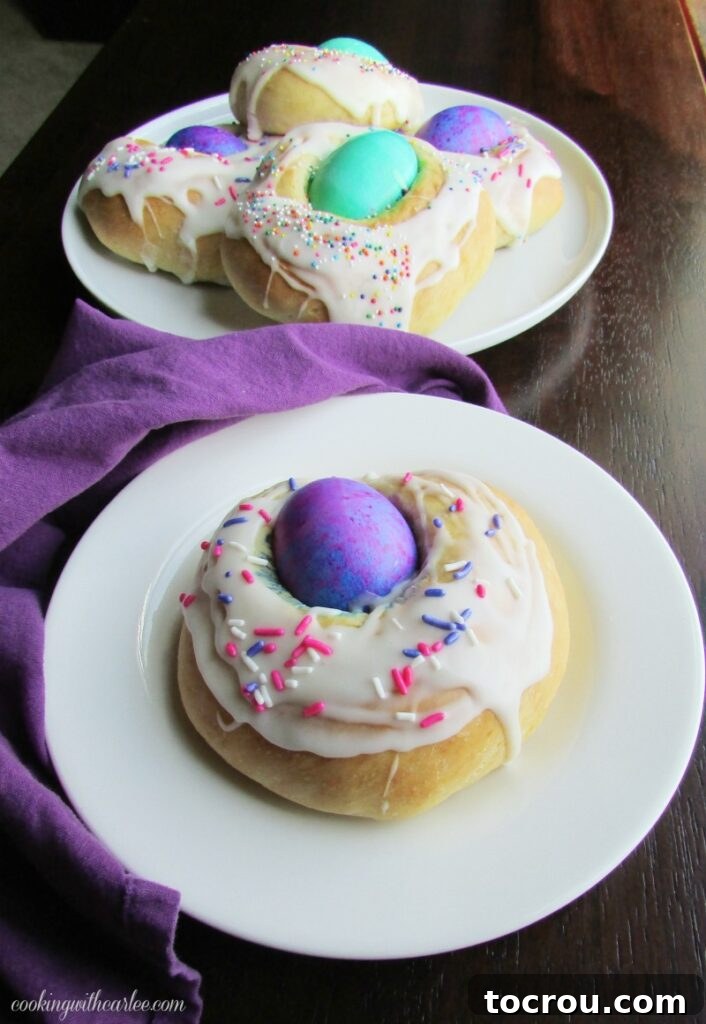
Simple Individual Easter Breads
These cute Easter Breads are individual sized and easy to make. They are really festive, slightly sweet and studded with a pretty egg.
Author: Carlee
Servings: 6 Servings
Prep Time: 15 mins
Cook Time: 25 mins
Additional Time: 1 hr 45 mins (for rising)
Total Time: 2 hrs 25 mins
Print Recipe
Equipment
- KitchenAid 5-Qt. Stand Mixer
- Nordic Ware Half Sheet Pans and Cover
- Pre-Cut Baking Parchment Paper
Ingredients
- ⅔ cup milk
- 2 Tablespoons butter
- ¼ cup granulated sugar
- 1½ teaspoons yeast
- 2 large eggs
- 3 cups all-purpose flour
- 1 teaspoon salt
- 6 dyed eggs, uncooked
- 1 cup powdered sugar (for glaze)
- 3 Tablespoons heavy cream (for glaze)
- ½ teaspoon vanilla extract (for glaze)
- Sprinkles (for decoration)
Instructions
- In a small saucepan, gently warm the milk and butter until the butter is just melted. Do not bring to a boil. Remove from heat and stir in the granulated sugar. Sprinkle the yeast over the top and set aside for 5-10 minutes to bloom.
- In a large bowl, gently beat the 2 large eggs. Add the all-purpose flour, salt, and the warm milk mixture. Mix until all ingredients are completely combined and a shaggy dough forms.
- Turn the dough onto a lightly floured surface and knead for about ten minutes, or until the dough is smooth, elastic, and supple.
- Place the kneaded dough in a lightly greased bowl, cover with plastic wrap or a clean kitchen towel, and let it rise in a warm place until doubled in size, approximately 1 to 1½ hours.
- Prepare a baking sheet by lining it with a piece of parchment paper or a silicone mat.
- Once risen, gently punch the dough down to release the air. Divide the dough into 6 equal pieces. Roll each piece into a long, uniform snake shape.
- Cut each snake in half lengthwise (or approximately in the middle) and twist the two pieces together to form a braided rope. Form the twisted rope into a circle (a wreath shape) and firmly pinch the ends together to seal.
- Place each shaped dough wreath on the prepared baking sheet and nestle one of the dyed uncooked eggs into the center of each circle. Repeat this process until all of the dough and eggs are used.
- Cover the shaped breads again and allow them to rise for a second time for another hour, or until visibly puffy.
- While the breads are rising for the second time, preheat your oven to 350°F (175°C).
- Bake the Easter breads for 20-25 minutes, or until they are golden brown and cooked through.
- Remove the baked breads from the oven and transfer them to a wire rack to cool completely.
- Before serving, prepare the glaze: In a small bowl, stir together the powdered sugar, heavy cream, and vanilla extract until smooth. Adjust the consistency by adding more cream if it's too thick, or more powdered sugar if it's too thin, until you achieve your desired drizzling consistency.
- Drizzle the glaze generously over the cooled Easter breads and immediately decorate with festive sprinkles before the glaze sets.
Nutrition Information
Calories: 507 kcal |
Carbohydrates: 77g |
Protein: 16g |
Fat: 14g |
Saturated Fat: 7g |
Polyunsaturated Fat: 6g |
Cholesterol: 269mg |
Sodium: 496mg |
Fiber: 2g |
Sugar: 27g
"Cooking With Carlee" is not a dietitian or nutritionist, and any nutritional information shared is an estimate. If calorie count and other nutritional values are important to you, we recommend running the ingredients through whichever online nutritional calculator you prefer. Calories and other nutritional values can vary quite a bit depending on which brands were used.
Did you try this recipe?
Don’t forget to leave a rating below and make sure to follow on Pinterest and Instagram for more!
Tips for Perfect Easter Breads Every Time
- Room Temperature Ingredients: Ensure your milk and eggs are at room temperature. This helps the dough rise more effectively and creates a more uniform texture.
- Don't Over-Knead: While kneading is essential for gluten development, over-kneading can result in a tough bread. Knead until the dough is smooth and elastic, but not overly stiff.
- Warm Proofing Environment: Yeast loves warmth! Find a cozy, draft-free spot for your dough to rise. A slightly warm oven (turned off, with just the light on) or a sunny countertop works wonders.
- Gentle Handling: After the first rise, gently punch down the dough to deflate it. Handle the dough lightly during shaping to preserve the delicate air pockets that contribute to its softness.
- Experiment with Egg Dyes: Get creative with your egg coloring! Natural dyes from ingredients like beet juice or turmeric can also be used for a unique touch. Remember, the eggs are uncooked when placed in the dough, so food-safe dyes are key.
- Glaze Consistency: The perfect glaze should be thick enough to cling to the bread but thin enough to drizzle smoothly. Adjust with small amounts of liquid or powdered sugar until you hit the sweet spot.
- Fresh Yeast is Best: Always check the expiration date on your yeast. Fresh, active yeast is crucial for a good rise and a light, airy bread.
The Cultural Significance of Easter Bread
Easter bread, in its myriad forms, is a beloved tradition across many cultures, each variation carrying its own symbolism and flavors. In Italy, where it's often known as "Pane di Pasqua," it frequently features citrus zest or anise, with eggs representing rebirth and new life. Greek Easter bread, or "Tsoureki," is known for its distinctive braided shape and is flavored with mahlab and mastic, spices that impart a unique, aromatic sweetness. In Eastern European countries, similar sweet, yeasted breads like "Paska" are decorated with intricate designs, often symbolizing Christ's resurrection. The inclusion of eggs in all these traditions universally signifies fertility, rebirth, and the new life associated with spring and Easter.
Our simplified version embraces this rich heritage while offering a modern, accessible take on the classic. By focusing on a buttery, slightly sweet dough and individual portions, it becomes a perfect blend of tradition and convenience, ideal for contemporary celebrations. The vibrant dyed egg in the center remains a poignant reminder of the season's hopeful message, making each bite not just delicious, but also meaningful.
Serving Suggestions and Variations
These individual Easter breads are incredibly versatile and can be enjoyed in various ways. They are absolutely perfect as a festive breakfast or brunch item, perhaps alongside fresh fruit, yogurt, or a savory egg dish (if you want more eggs!). They also make a wonderful accompaniment to coffee or tea for an afternoon treat. For a truly indulgent experience, try warming them slightly before serving to enhance their tender texture and the aroma of the sweet glaze.
While this recipe offers a simplified, crowd-pleasing flavor, feel free to experiment with variations:
- Citrus Zest: Add 1-2 teaspoons of lemon or orange zest to the dough for a bright, aromatic twist.
- Almond Flavor: Replace a portion of the vanilla extract in the glaze with almond extract for a nutty depth. You could also sprinkle slivered almonds on top before baking.
- Spiced Version: For those who love a hint of spice, add ½ teaspoon of ground cardamom or a pinch of nutmeg to the dough.
- Chocolate Chips: Fold in ½ cup of mini chocolate chips into the dough before the second rise for a delightful surprise in every bite.
- Larger Loaf: If you prefer a larger, shared loaf, you can combine the dough into two larger braided wreaths with 3 eggs each, adjusting the baking time slightly.
Whether you stick to the recipe or venture into personalized variations, these individual Easter breads are sure to become a cherished part of your holiday baking repertoire. Their charm, ease of preparation, and delicious flavor make them a memorable treat for family and friends. Happy baking, and a very joyful Easter to you!