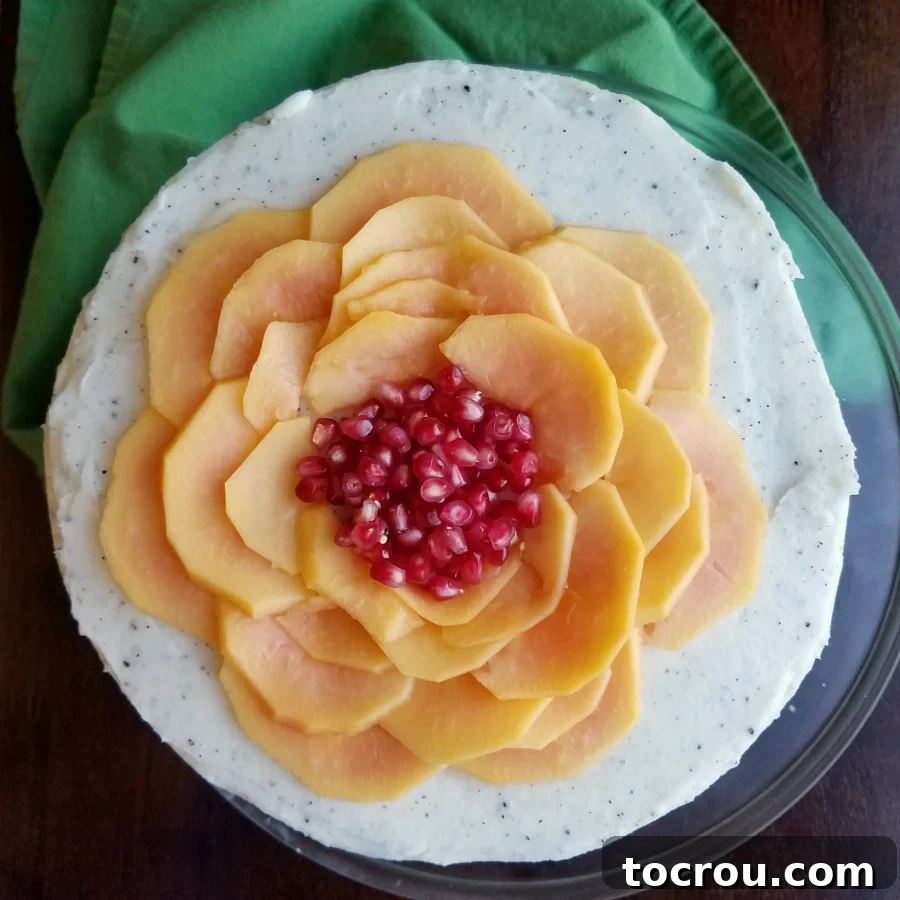
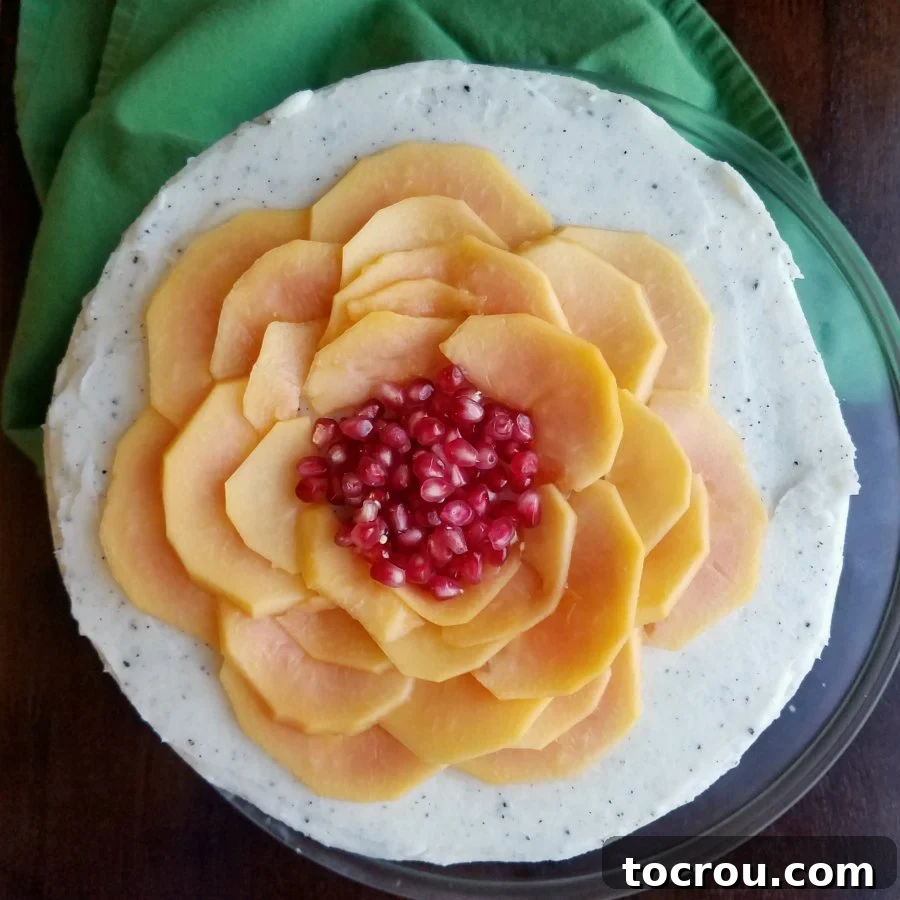
Embark on a culinary journey to the tropics with this exquisite Tropical White Cake, a symphony of vibrant flavors and stunning aesthetics. This dessert masterpiece features a tender, soft white cake, generously filled with a tangy blood orange curd, and enveloped in a dreamy dragonfruit buttercream. Adorned with a delicate arrangement of fresh strawberry papaya and sparkling pomegranate arils, this cake isn’t just a treat for the palate but a feast for the eyes, promising a truly unforgettable experience.
Every bite of this cake transports you to an island paradise. The moist, fluffy white cake provides a perfect canvas for the brighter, more exotic components. Imagine the zesty burst of homemade blood orange curd, its vivid hue contrasting beautifully with the pristine white cake layers. Then comes the whimsical dragonfruit buttercream, speckled with tiny black seeds, offering a subtle sweetness and a unique visual texture. The fresh fruit topping adds a final flourish, marrying beauty with a refreshing natural sweetness.
As a passionate baker and blogger, I am incredibly fortunate that this platform consistently introduces me to fascinating ingredients and inspiring people worldwide. It provides endless opportunities to broaden my culinary horizons and experiment with new flavors and techniques. This tropical white cake is a perfect example of such an adventure, born from a desire to blend familiar comfort with exotic allure. The challenge of incorporating unique fruits like dragonfruit and blood oranges into a classic dessert pushed my creativity, resulting in a cake that exceeded all expectations.
The foundation of this tropical delight is a simple yet incredibly moist white cake. I specifically chose a recipe known for its delicate crumb and rich, buttery flavor, building upon the reliable base I’ve used for my Haleakala Cake. For this particular creation, I opted for three thinner cake layers instead of two thicker ones. This strategic choice allows for a more generous filling-to-cake ratio, ensuring that each slice offers a substantial taste of the luscious blood orange curd without the worry of excessive filling spilling out. It also contributes to the cake’s impressive height and elegant presentation, creating beautiful, distinct layers that are a joy to behold.
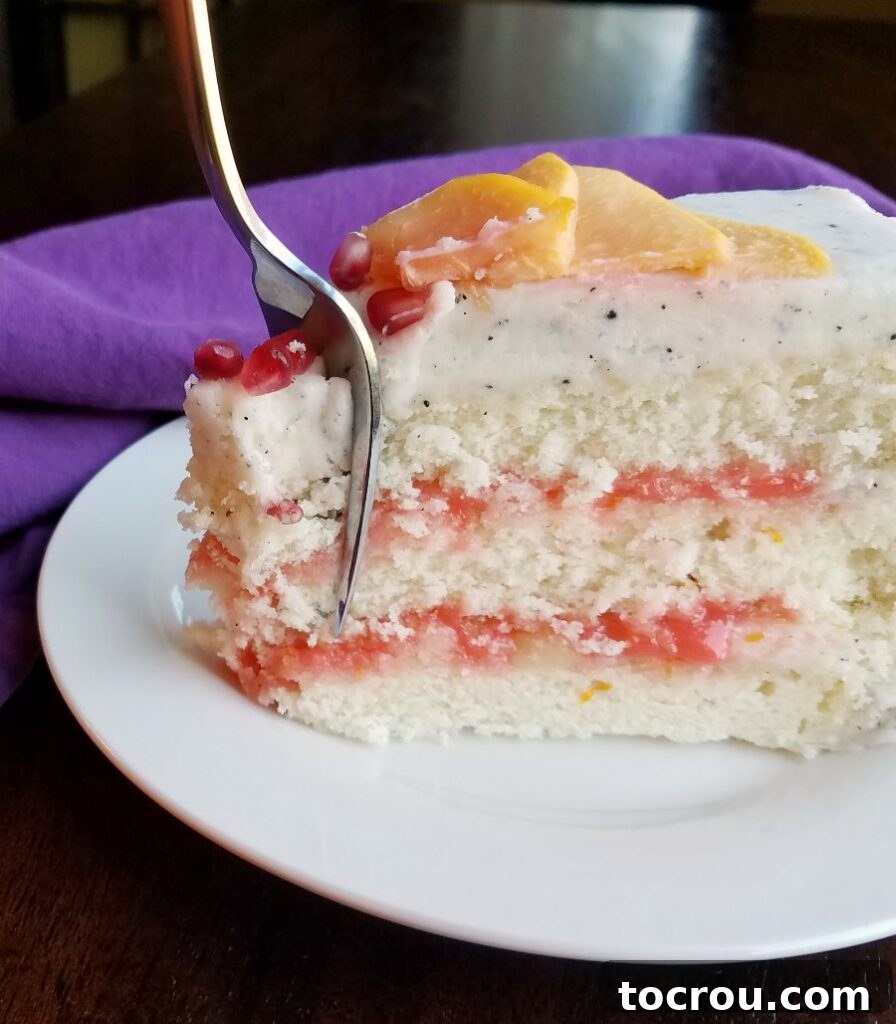
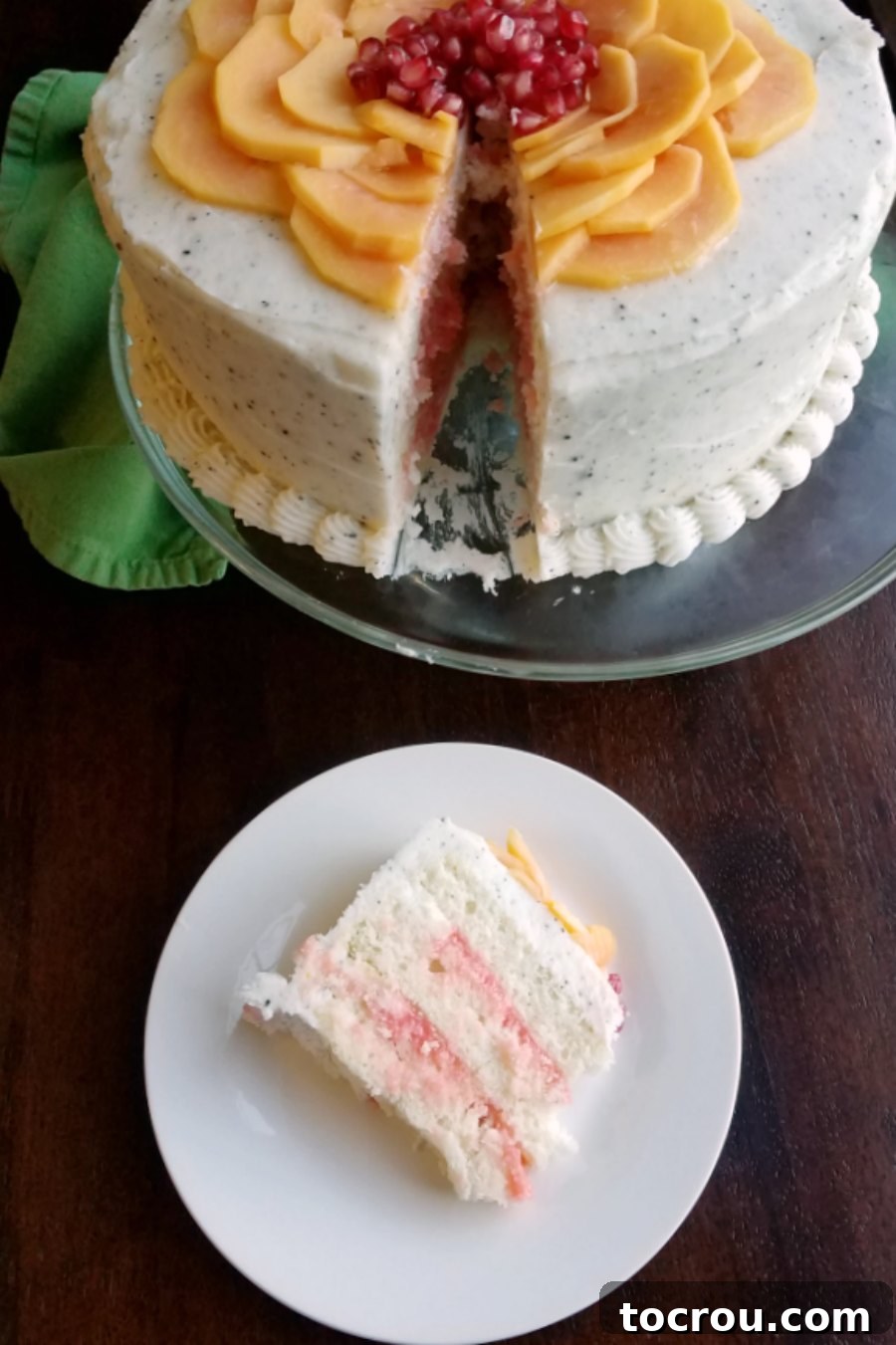
The star of the filling is a homemade blood orange curd. Using fresh blood oranges, I transformed their crimson juice into a velvety, intensely flavored curd that boasts a breathtakingly beautiful, rosy-pink hue. Its vibrant color and delightful tart-sweet profile perfectly complement the subtle sweetness of the white cake, adding a layer of sophisticated flavor and luxurious texture. This curd isn’t just a filling; it’s a central element that elevates the entire cake, delivering a bright, citrusy counterpoint to the rich buttercream.
Creating the dragonfruit buttercream presented a unique challenge. Dragonfruit puree, while exotic and visually appealing with its signature black seeds, tends to be quite loose and high in liquid content. My concern was that simply adding more powdered sugar to achieve the right consistency would result in an overwhelmingly sweet frosting. To avoid this, I devised a clever solution: I gently boiled down a portion of the dragonfruit puree with granulated sugar. This process concentrated the fruit’s flavor and significantly thickened the liquid into a rich, syrupy consistency, making it much easier to incorporate into the buttercream without compromising its texture or balancing the sweetness.
The finished buttercream, with its subtle pink tint and enchanting specks of dragonfruit seeds, was exactly what I envisioned. Its smooth, creamy texture and delicate fruit flavor were already quite pleasing, but as I stood back, I felt the cake needed one final, show-stopping element to truly distinguish it. I briefly considered traditional sprinkles but then remembered the bounty of beautiful, fresh fruit I had on hand. This decision led to the cake’s crowning glory.
Thinly sliced strawberry papaya, arranged with precision, formed a magnificent, natural flower on top of the cake, its soft orange and pink tones echoing the colors within. The center of this edible blossom was then filled with glistening pomegranate arils, adding a jewel-like sparkle and a delightful pop of juicy sweetness. This fresh fruit garnish was not only visually stunning but also introduced a refreshing lightness that perfectly balanced the richness of the cake and frosting. The final result was met with collective “oohs” and “aahs” from everyone who saw it. Many remarked that the blood orange curd’s vibrant color and refreshing taste were reminiscent of a delicious sherbet, a testament to its delightful tropical character.
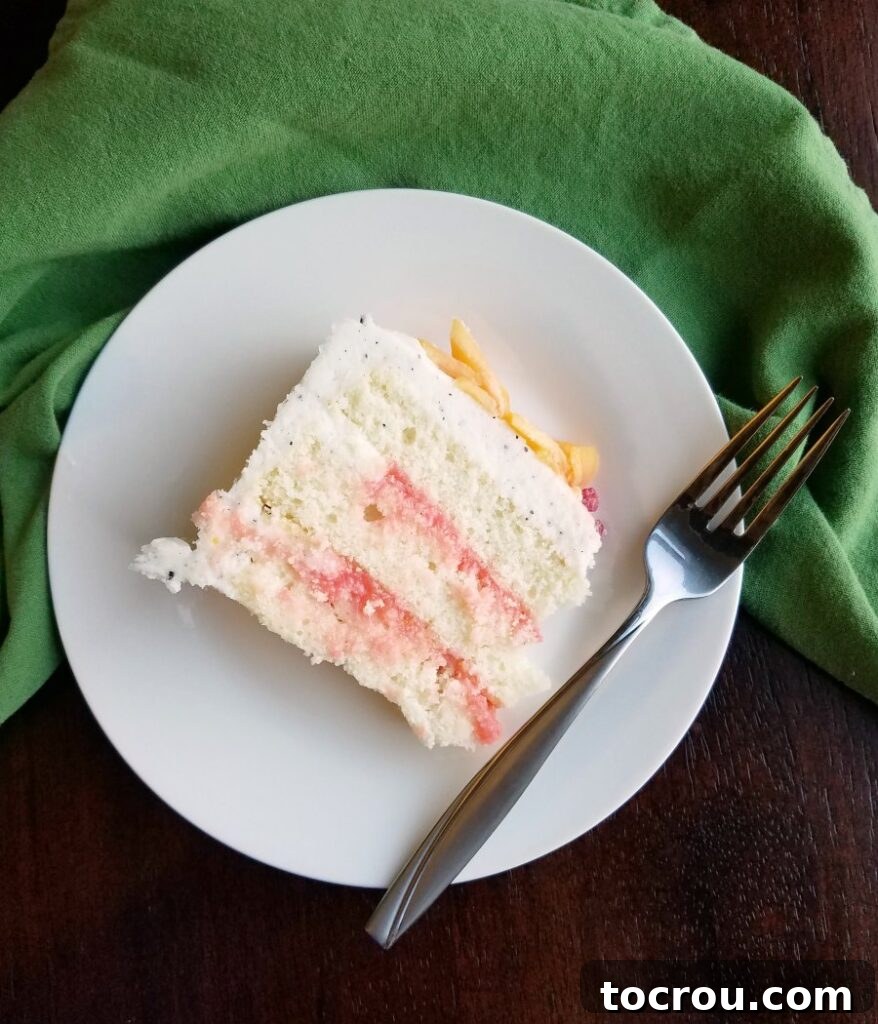
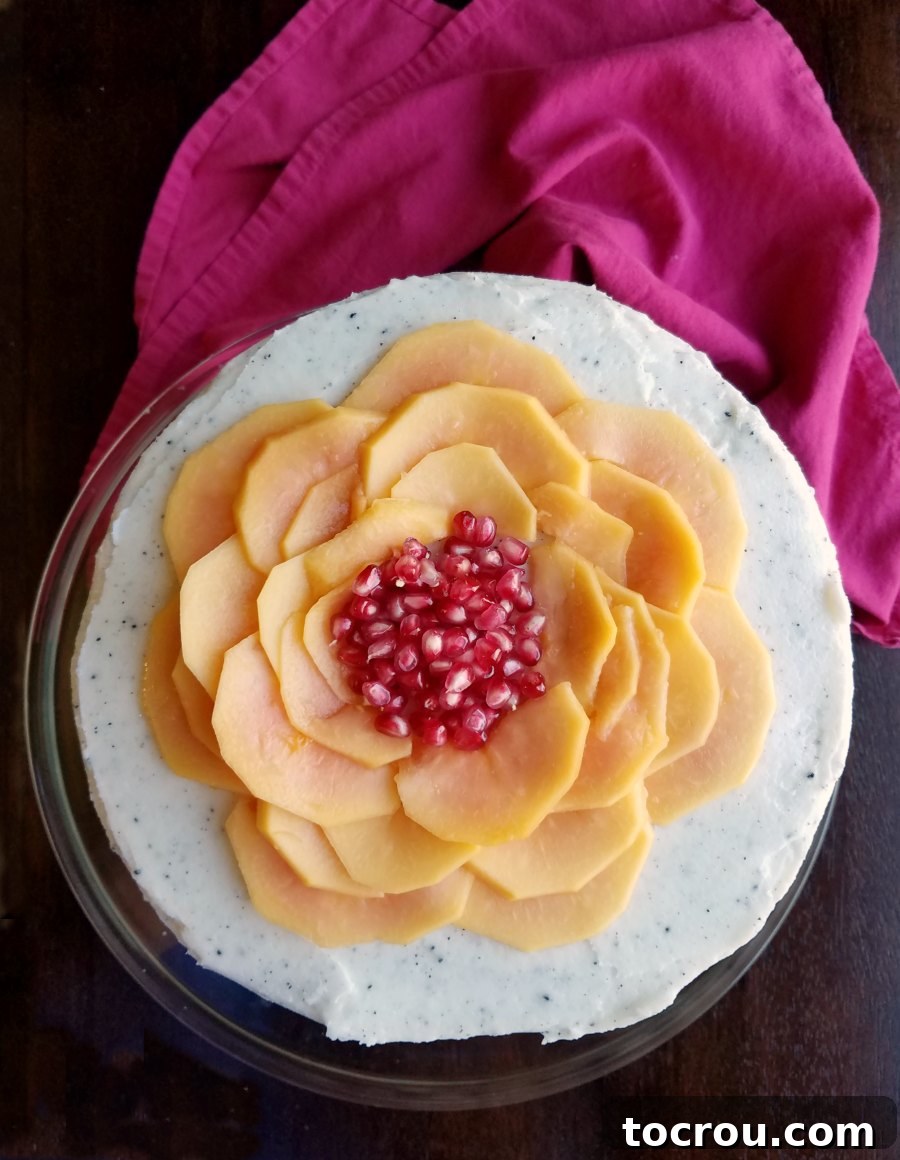
Even my husband, initially hesitant to try another slice of cake (we do enjoy many delicious cakes!), eventually succumbed to its allure. His verdict? He enthusiastically declared it his favorite cake of the year! Given the sheer number of delectable desserts we sample, this is high praise indeed and speaks volumes about the cake’s exceptional taste and appeal. I wholeheartedly agree; I was absolutely thrilled with how this tropical creation turned out, a true highlight of my baking endeavors.
The dragonfruit buttercream recipe is quite generous, which means you’ll likely have some delicious leftovers. Don’t let it go to waste! This versatile frosting is fantastic on cupcakes, spread generously on graham crackers for a quick treat, or even enjoyed simply by the spoonful. For future baking projects, you can easily freeze the extra buttercream in an airtight container for later use. This ensures you always have a touch of tropical goodness ready for your next sweet craving.
I’m always fascinated by how fellow food bloggers interpret creative challenges, especially when working with unique ingredients. I’d love to hear about your experiences! Have you ever had dragonfruit before? If so, what are your favorite ways to enjoy this fun and vibrant fruit? Share your creative ideas in the comments below!
If you don’t have blood oranges, you could use other fruit curd fillings such as:
- Lemon curd: A classic, bright, and zesty alternative that pairs beautifully with white cake.
- Banana curd: For a sweeter, creamier, and uniquely tropical twist that complements the dragonfruit.
Tips and Tricks for a Perfect Tropical Cake
- Dragonfruit Syrup Consistency: The key to a stable dragonfruit buttercream is achieving the right syrup thickness. Your dragonfruit syrup should be quite thick and viscous. Even when warm, it should have a noticeable body, at least the consistency of maple syrup. Once cooled, it should be as thick as honey or even slightly thicker. This ensures your buttercream won’t become too runny.
- Papaya Garnish Longevity: The sliced papaya garnish holds up remarkably well when stored in the refrigerator. If the cake is left at room temperature for an extended period, the papaya might weep a bit due to the sugar content of the frosting. However, once refrigerated again, it regains its structure and freshness, maintaining the cake’s beautiful appearance.
- Buttercream Piping: This dragonfruit buttercream pipes beautifully. While I chose a simple border around the base of the cake, feel free to experiment with various piping tips for more intricate designs. Just be mindful of the tiny dragonfruit seeds; avoid using tips with very small openings that could get clogged.
- Advance Preparation: To reduce stress on baking day, you can bake the cake layers up to a few weeks in advance. Once completely cooled, wrap each layer tightly in plastic wrap and freeze them. Thaw them in the refrigerator overnight when you’re ready to assemble and decorate your stunning tropical cake.

Tropical White Cake with Dragonfruit Buttercream
Carlee
16
Servings
25
40
1 5
Ingredients
Cake
- 2 cups all-purpose flour
- 3½ tsp baking powder
- 1 tsp salt
- ½ cup butter
-
1 tsp
vanilla extract
- 1½ cups granulated sugar
- 1 cup milk
- 4 egg whites
Dragon Fruit Frosting
- 1 cup dragon fruit puree* about 1 dragon fruit
- 1 cup granulated sugar
- 1½ cups butter
- 4 cups powdered sugar
-
3 teaspoons
vanilla extract
- ⅛ teaspoon salt
Garnish and Filling
-
¾ cup
blood orange curd
- 1 strawberry papaya
- pomegranate arils
9inch
round
Instructions
Cake
-
Preheat the oven to 350°F (175°C) and prepare three round 9-inch pans. You can grease and flour them, or use a baking spray with flour.
-
In a medium mixing bowl, whisk together the flour, baking powder, and salt to ensure there are no clumps and all ingredients are evenly distributed. Set this dry mixture aside.2 cups all-purpose flour,
3½ tsp baking powder,
1 tsp salt -
In your mixer bowl, cream the butter until it is light, fluffy, and smooth. Add the granulated sugar and vanilla extract, then continue to beat until these ingredients are completely incorporated and the mixture is pale and airy. Make sure to frequently scrape down the sides and bottom of the bowl to ensure everything is well combined.½ cup butter,
1 tsp vanilla extract,
1½ cups granulated sugar -
Gradually add half of the dry ingredients to the butter mixture, mixing on low speed until just incorporated. Scrape the sides of the bowl, then add half of the milk, again mixing on low until fully combined. Repeat this process with the remaining dry ingredients and then the remaining milk. Scrape the sides of the bowl once more to ensure a uniform batter.1 cup milk
-
Finally, add the unbeaten egg whites to the batter. Beat the batter on high speed for 2 minutes. It is perfectly fine if the final batter does not appear completely smooth; the texture will be perfect after baking.4 egg whites
-
Divide the batter evenly among the three prepared 9-inch pans. Gently tilt each pan a bit to help level out the batter, then lightly drop them from a few inches above the counter to further ensure a flat top.
-
Bake for approximately 30 minutes. The cakes are done when the sides have slightly pulled away from the edges of the pans, the tops are golden brown, and they barely spring back when gently pressed with a fingertip.
-
As soon as you remove the cakes from the oven, run a knife around their edges to loosen them. Allow them to cool in their pans for 5 minutes before inverting them onto a wire cooling rack. Flip them right side up and let them cool completely before frosting.
Frosting
-
In a small saucepan, combine the dragonfruit puree and granulated sugar. Cook over medium heat, stirring occasionally, until the mixture comes to a boil. Continue to stir frequently, allowing it to boil and reduce until it becomes thick and syrupy, which should take about 5-7 minutes. Remove the syrup from the heat and let it cool completely. To expedite this process, you can place the mixture in the refrigerator.1 cup dragon fruit puree*,
1 cup granulated sugar -
Once the dragonfruit syrup has cooled completely, cream the butter in a large mixing bowl until it is smooth, light, and airy. Gradually add 2 cups of powdered sugar, the salt, and vanilla extract. Beat until all ingredients are well incorporated and the frosting is smooth.1½ cups butter,
⅛ teaspoon salt,
3 teaspoons vanilla extract -
Add the cooled dragonfruit syrup to the buttercream and beat until it is thoroughly mixed and evenly distributed, creating a beautifully speckled and flavored frosting. Continue to add the remaining powdered sugar, a little at a time, until you reach your desired consistency for spreading and piping.
Assembly
-
Place the first layer of cooled cake onto your chosen serving plate or cake stand. Using a piping bag, pipe a ring of dragonfruit buttercream around the very top edge of the cake layer, forming a “dam.” This dam will hold the filling in place. Carefully fill the center of this dam with half of the blood orange curd.¾ cup blood orange curd
-
Gently place the second cake layer on top of the first, aligning it carefully. Repeat the process: pipe another frosting dam around the edge, and then fill the center with the remaining blood orange curd.
-
Carefully position the final cake layer on top. Use the remaining dragonfruit buttercream to frost the entire cake, covering the top and sides smoothly.
-
Chill the assembled cake in the refrigerator until it’s almost time to serve. This allows the frosting to firm up and the flavors to meld beautifully.
-
For the garnish, cut the strawberry papaya in half lengthwise and carefully remove the seeds. Peel the skin from the flesh, then slice the papaya thinly. Arrange these slices on top of the cake, starting with a large circle around the outer edges and working your way inward to create a beautiful floral pattern. Fill the very center of this papaya flower with sparkling pomegranate arils. Return the cake to the refrigerator to chill until you are ready to serve and impress your guests.
Nutrition Information
Serving:
1
Serving
|
Calories:
535
kcal
|
Carbohydrates:
79
g
|
Protein:
4
g
|
Fat:
24
g
|
Saturated Fat:
15
g
|
Polyunsaturated Fat:
7
g
|
Trans Fat:
1
g
|
Cholesterol:
63
mg
|
Sodium:
478
mg
|
Fiber:
2
g
|
Sugar:
63
g
“Cooking With Carlee” is not a dietitian or nutritionist, and any nutritional information shared is an estimate. If calorie count and other nutritional values are important to you, we recommend running the ingredients through whichever online nutritional calculator you prefer. Calories and other nutritional values can vary quite a bit depending on which brands were used.
Did you try this recipe?
Don’t forget to leave a rating below and make sure to follow on Pinterest and Instagram for more!