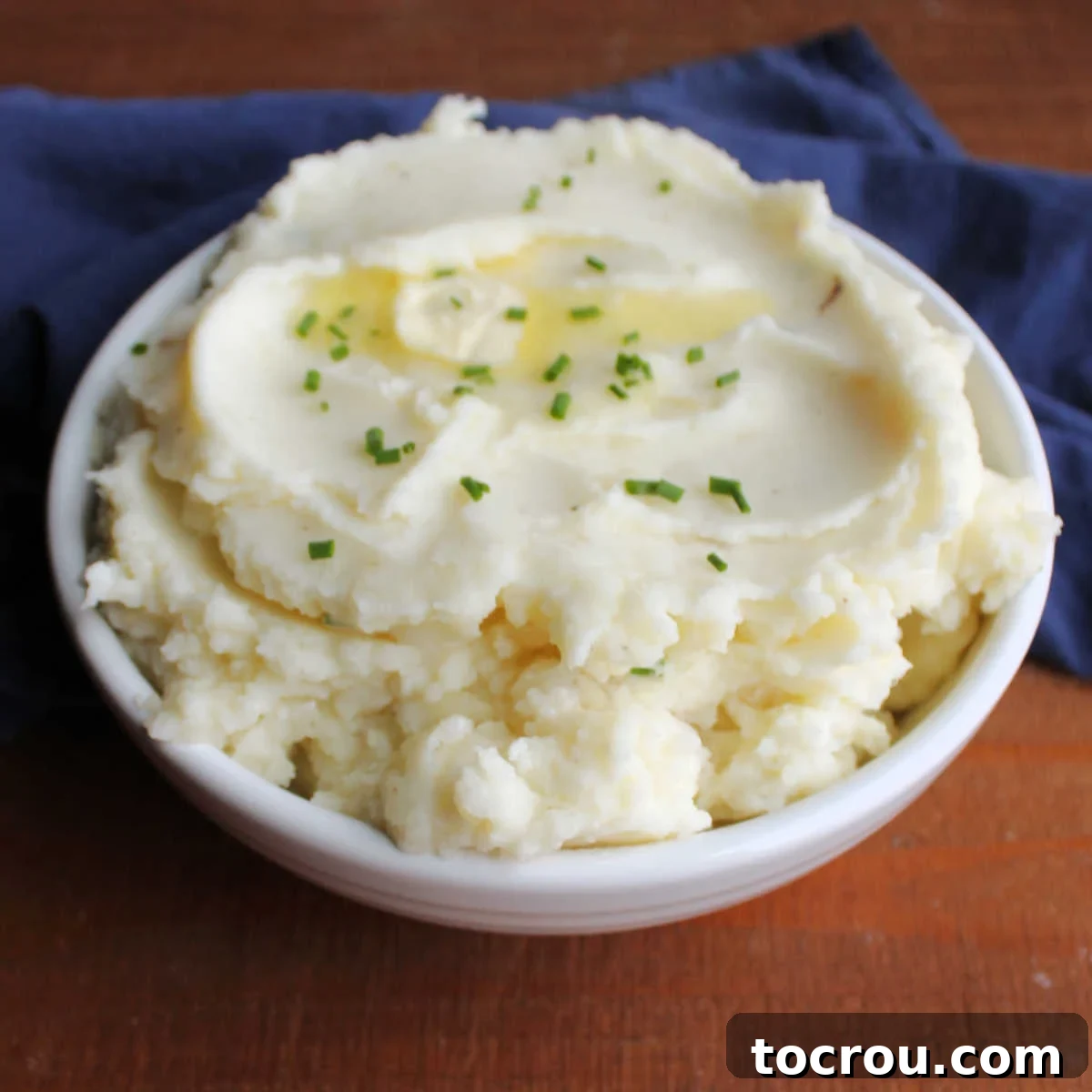
There’s nothing quite like a serving of perfectly creamy, rich, and flavorful mashed potatoes to complete a meal. But what if we told you there’s a way to elevate this classic comfort food to an even more irresistible level? Enter **Sour Cream and Chive Mashed Potatoes** – a side dish so decadent, so bursting with fresh flavor, it might just steal the show at your next dinner gathering. Forget plain mashed potatoes; this recipe combines the tangy goodness of sour cream with the subtle oniony zest of fresh chives, transforming a humble potato into a culinary masterpiece.
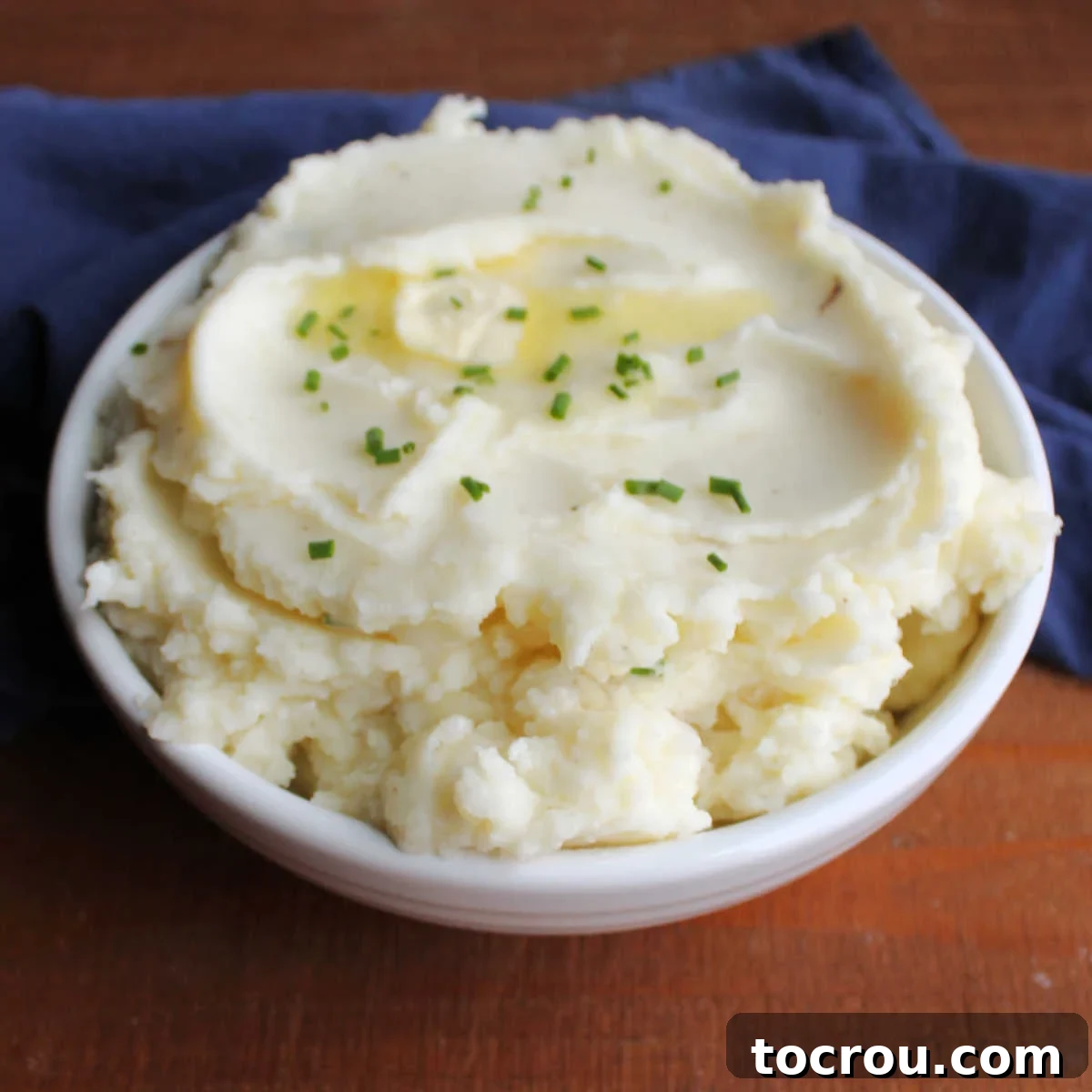
These savory mashed potatoes are designed to be a standout side. Infused with a generous helping of sour cream and a vibrant sprinkle of fresh chives, they offer a complex flavor profile that is both comforting and sophisticated. They are remarkably simple to prepare, making them an ideal choice for busy weeknights, yet elegant enough for special occasions. Whether paired with a hearty roast, a delicate fish, or a simple grilled chicken, these potatoes provide a luxurious accompaniment that complements a wide array of main courses.
Mashed potatoes have long held a cherished spot on dinner tables around the world, universally recognized as the ultimate comfort food side dish. For many, holiday feasts, especially Thanksgiving, wouldn’t be complete without a generous mound of mashed potatoes, often swimming in rich gravy. However, this particular recipe transcends the need for extra adornment. The delightful creaminess of the sour cream and the bright, fresh chives impart such a profound flavor that gravy becomes entirely optional. Of course, we won’t judge if you still reach for the gravy boat – some traditions are simply too good to break!
The inspiration for these exceptional mashed potatoes comes from our love for simple new potatoes prepared with sour cream and chives. There’s an undeniable magic in that classic flavor combination, proving that sometimes, the simplest ingredients yield the most satisfying results. Knowing how quickly those simple new potatoes disappear whenever we make them, we knew a mashed potato version, offering the same beloved flavors in an even creamier, dreamier package, would be an instant hit. And it certainly is!
Unlock the Secret to Heavenly Mashed Potatoes
Achieving the perfect mashed potatoes requires more than just boiling spuds and smashing them. It’s about understanding the nuances of potato types, preparation techniques, and seasoning. Follow these expert tips to ensure your sour cream and chive mashed potatoes are consistently light, fluffy, and bursting with flavor every single time.
Choosing the Right Potato Variety
The foundation of great mashed potatoes lies in selecting the right kind of potato. Different varieties offer distinct textures and starch levels, impacting the final consistency of your mash. Here are the top contenders:
- Russet Potatoes: Often considered the classic choice for mashed potatoes, Russets (also known as baking potatoes) are incredibly starchy with a fluffy texture. This high starch content allows them to break down easily when cooked, resulting in an exceptionally smooth and airy mash. Their absorbent nature means they readily soak up butter, sour cream, and other flavorings, making them a superb canvas for this recipe. If you’re aiming for that light, fluffy texture that everyone loves, Russets are your go-to.
- Yukon Gold Potatoes: A fantastic all-rounder, Yukon Golds strike a beautiful balance between starchiness and creaminess. They have a naturally buttery flavor and a golden hue, adding to the visual appeal of your dish. While they are slightly waxier than Russets, they still mash beautifully, creating a wonderfully creamy, rich texture without becoming gummy. They don’t absorb as much butter, but their inherent flavor often makes up for it.
- Red Potatoes: If you prefer a more rustic, “chunky” mashed potato with some texture, red potatoes are an excellent option. Their skins are thin and tender, meaning you can leave them on for added fiber, color, and a delightful bite – a great time-saver too! Red potatoes are waxier and less starchy than Russets, which means they hold their shape better and won’t yield as fluffy a mash, but they offer a creamy, hearty result that some people prefer.
- Other Options: Varieties like Maris Piper or King Edward (popular in the UK) are also excellent choices, known for their floury texture and ability to produce light, fluffy mash. The key is often to choose a potato that’s generally considered “floury” rather than “waxy” for the silkiest results, unless a chunkier texture is desired.
Preparation is Key
Proper preparation before cooking makes a significant difference in the texture and flavor of your mashed potatoes:
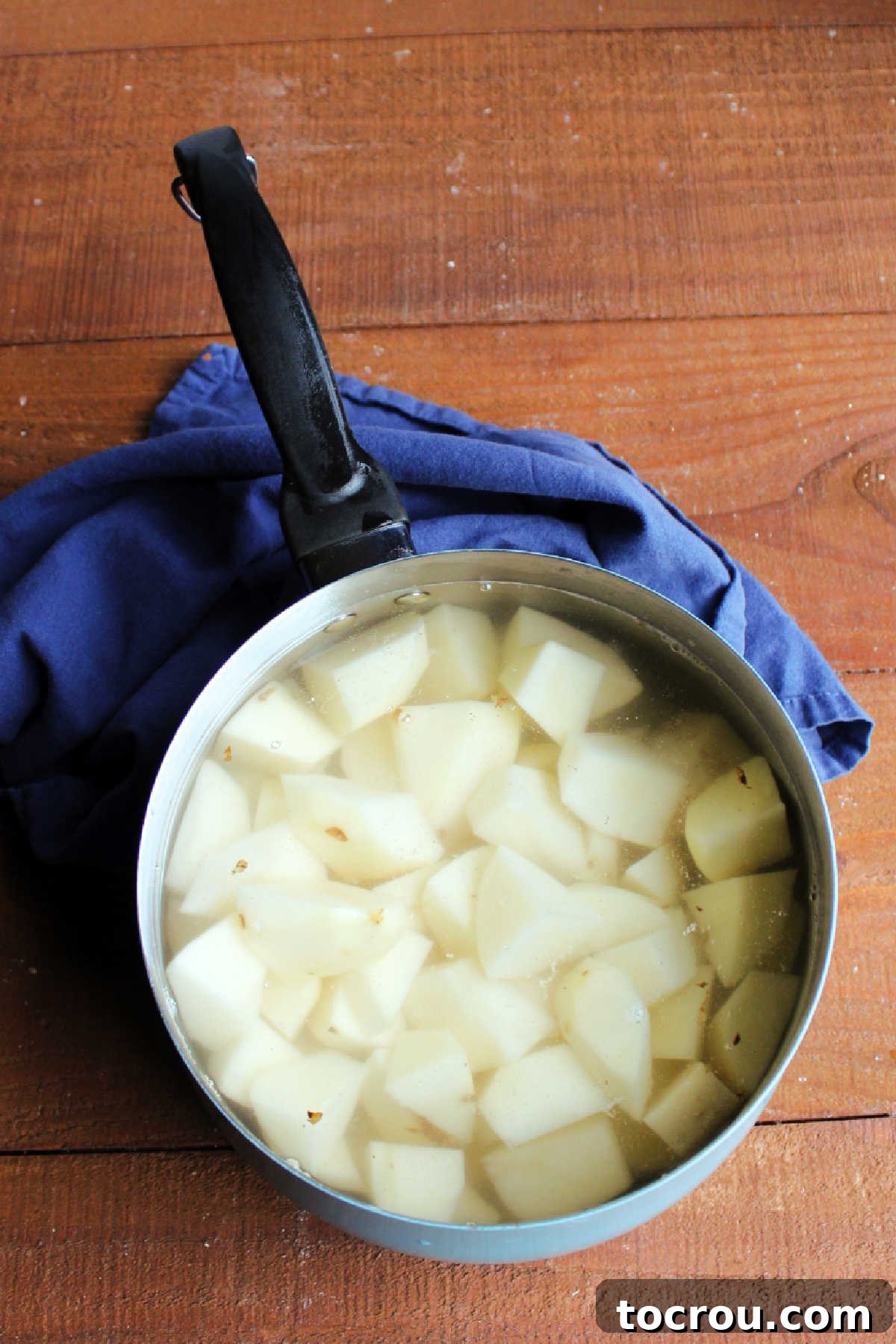
- **Peel and Cut Evenly:** Always peel your potatoes (unless using thin-skinned varieties like red potatoes for a rustic mash). The most crucial step is to cut the peeled potatoes into large, uniform chunks. This ensures that all pieces cook at the same rate, preventing some from becoming mushy while others are still hard. Aim for pieces roughly 1.5 to 2 inches in size.
- **Start in Cold, Salted Water:** Place the cut potato pieces directly into a large pot of cold, heavily salted water. Starting them in cold water allows the potatoes to cook more evenly from the outside in. Adding salt to the water seasons the potatoes from the inside out as they cook, enhancing their flavor considerably. The cold water also helps prevent oxidation, which can cause potatoes to discolor.
Mastering the Cook and Mash
The cooking and mashing process is where the magic truly happens:
- **Boil Until Fork-Tender:** Bring the pot of salted water and potatoes to a boil over medium-high heat. Once boiling, reduce the heat to a gentle simmer and cook until the potatoes are very easily pierced with a fork or a small knife. This usually takes between 15-20 minutes, depending on the size of your potato chunks. Do not undercook, as hard pieces will result in lumpy mashed potatoes. Conversely, avoid overcooking them to the point of disintegration, as this can lead to waterlogged potatoes.
- **Drain Thoroughly and Dry:** Once cooked, immediately drain all the water from the potatoes. For truly light and fluffy mashed potatoes, return the drained potatoes to the hot, empty pot over low heat for a minute or two. This step helps evaporate any remaining surface moisture, preventing gummy or watery mash.
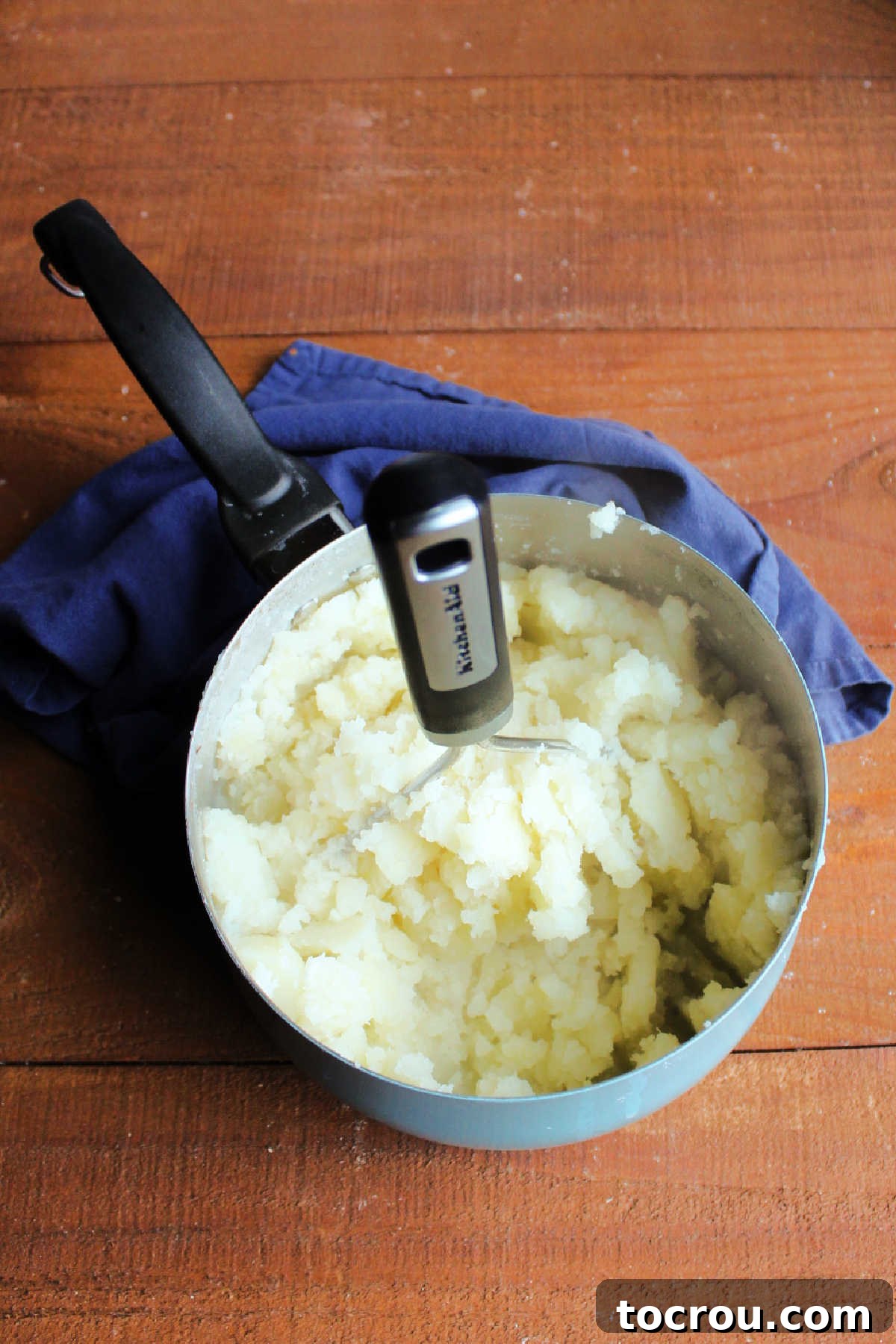
- **Mash While Hot:** As soon as the potatoes are dry, remove them from the heat and mash them immediately. Potatoes are easiest to mash when hot. Use a potato masher for a slightly rustic texture or a potato ricer for an incredibly smooth, lump-free consistency. Avoid using a food processor or an electric mixer on high speed, as this can overwork the starch and result in gluey, unappetizing mashed potatoes.
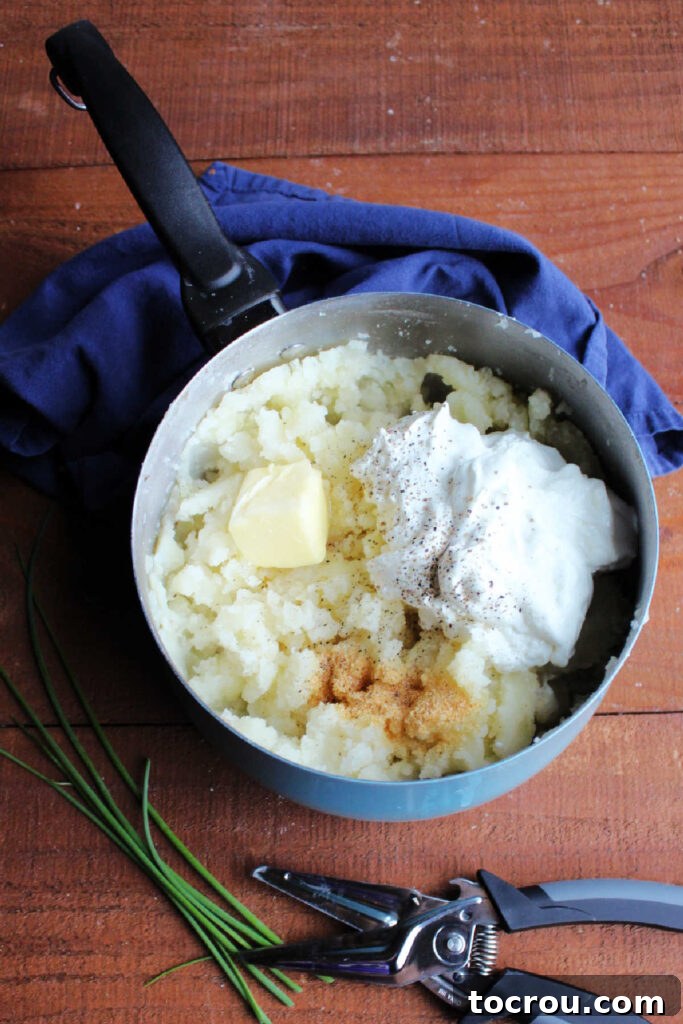
- **Incorporate Dairy and Flavorings:** Once mashed, quickly add your butter, sour cream, and other flavorings. It’s best if the butter and sour cream are at room temperature, as cold dairy can cool down the potatoes too quickly and make them harder to incorporate smoothly. The residual heat from the potatoes will help melt the butter and blend the sour cream seamlessly, creating a wonderfully creamy texture.
- **Taste and Adjust Seasoning:** Always taste your mashed potatoes before serving and adjust the seasoning as needed. Potatoes are famously bland on their own and require a generous amount of salt to bring out their best flavor. Don’t be shy with the salt and pepper! You can also add a touch more garlic powder or chives if you desire a stronger flavor.
Serving Suggestions and Pairings
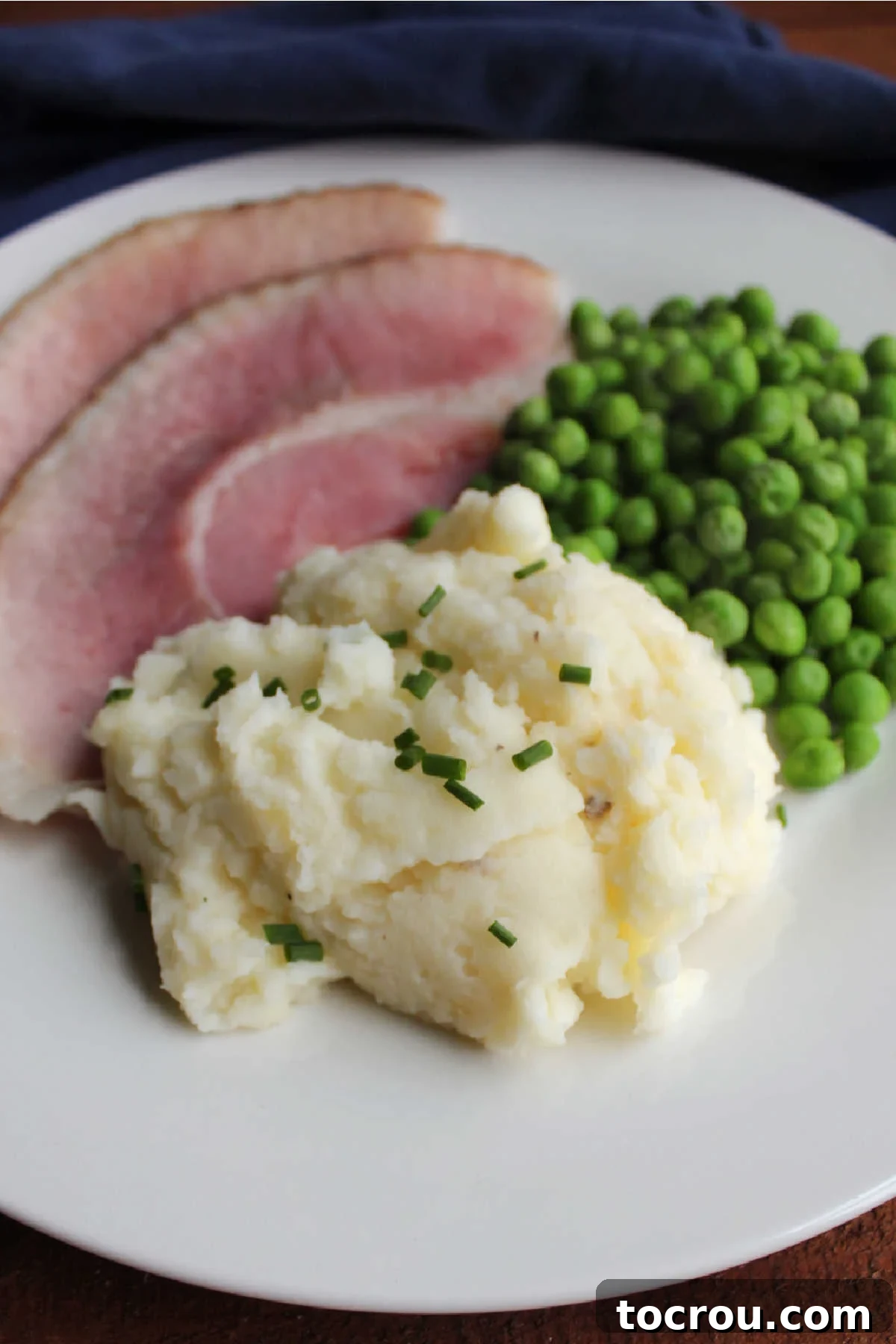
Sour Cream and Chive Mashed Potatoes are incredibly versatile and pair well with a wide variety of main courses. Their rich, creamy texture and tangy flavor make them a perfect accompaniment to almost any protein. Consider serving them alongside:
- **Roasted Meats:** A classic pairing with roasted chicken, turkey, beef, or pork loin. The potatoes absorb the delicious pan juices, creating an even more flavorful experience.
- **Grilled Salmon or White Fish:** The brightness of the chives and the tang of the sour cream beautifully cut through the richness of grilled fish.
- **Hearty Stews and Casseroles:** Perfect for soaking up flavorful gravies and sauces from comforting stews or casseroles.
- **Vegetarian Mains:** A substantial and satisfying side for mushroom steaks, lentil loafs, or roasted vegetable platters.
For an extra touch of indulgence, garnish your serving bowl with a drizzle of melted butter and an additional sprinkle of fresh chopped chives just before serving. This not only enhances the flavor but also adds a beautiful visual appeal to the dish.
Recipe Variations and Enhancements
While this recipe is perfect as is, you can always experiment with different additions to tailor it to your taste:
- **Cheesy Mashed Potatoes:** Stir in some shredded cheddar, Gruyere, or Parmesan cheese along with the sour cream and butter for an even richer, cheesier mash.
- **Garlic Lover’s Dream:** Increase the garlic powder or, for a more intense flavor, roast a head of garlic, mash the cloves, and stir them into the potatoes.
- **Herbaceous Twist:** Experiment with other fresh herbs like finely chopped parsley, dill, or a hint of thyme for a different aromatic profile.
- **Spice it Up:** A pinch of cayenne pepper or a dash of hot sauce can add a subtle kick if you like a little heat.
- **Extra Creaminess:** For an even more luxurious texture, you can add a tablespoon or two of cream cheese or a splash of warm milk or heavy cream while mashing.
Frequently Asked Questions About Mashed Potatoes
Can I make mashed potatoes ahead of time?
Yes, you can! Mashed potatoes can be made 1-2 days in advance. Store them in an airtight container in the refrigerator. To reheat, gently warm them in a saucepan over low heat, adding a splash of milk or cream and a pat of butter to restore their creaminess. You can also reheat them in the oven (covered) or microwave until heated through.
How do I prevent my mashed potatoes from becoming gummy?
Gummy mashed potatoes are usually a result of overworking the starch. Avoid using a food processor or vigorously beating the potatoes with an electric mixer. Instead, use a potato masher, ricer, or even a sturdy fork. Mash just until smooth, then gently fold in your dairy and seasonings.
What kind of salt should I use for boiling potatoes?
Coarse kosher salt is ideal for salting potato water, as it dissolves well and provides good flavor without over-salting quickly. Aim for water that tastes like a mild soup broth – about 1-2 tablespoons of salt per gallon of water.
Can I use dried chives instead of fresh?
While fresh chives offer the best flavor and vibrant color, you can substitute dried chives in a pinch. Use about 1 teaspoon of dried chives for every tablespoon of fresh chives specified in the recipe. Remember that dried herbs have a more concentrated flavor.
How do I store leftover mashed potatoes?
Store leftover mashed potatoes in an airtight container in the refrigerator for up to 3-4 days. For longer storage, mashed potatoes freeze quite well. Place them in a freezer-safe bag or container and freeze for up to 2-3 months. Thaw in the refrigerator overnight and reheat as directed above.
More Delicious Potato Recipes to Explore
If you’re a fan of potatoes, we have plenty more tempting recipes for you to try:
- Loaded Potato Salad: This potato salad is a flavor explosion, packed with crispy bacon, tangy ranch dressing, and sharp cheddar cheese, making it an utterly addictive side dish perfect for BBQs and potlucks.
- Pork Chops and Cheesy Potato Casserole: A heartwarming, family-friendly meal featuring tender pork chops baked atop a creamy, cheesy potato casserole, all finished with a delightful crunchy topping. Just add a simple vegetable, and dinner is complete!
- Seasoned Roasted Potatoes: Super simple yet incredibly satisfying, these perfectly seasoned roasted potatoes are so good, they surprise even the pickiest eaters with how much they love them every single time.
For even more tasty inspiration, be sure to check out our complete collection of potato recipes or our broader range of starchy side dish recipes. Happy cooking!
Sour Cream and Chive Mashed Potatoes
Carlee
6 Servings
Cook: 25 mins
Total: 35 mins
Ingredients
- 2½ lb. potatoes
- 2 Tablespoons butter
- 8 ounces sour cream
- 3 Tablespoons fresh chopped chives
- ½ teaspoon garlic powder
- ⅛ teaspoon ground black pepper
- ¼ teaspoon salt or to taste
Instructions
- Get butter and sour cream out of refrigerator and allow to come to room temperature.
- Peel potatoes and chop into uniform large chunks.
- Place in a large saucepan of cold salted water. Bring to a boil and cook for 10-15 minutes or until the potatoes can be easily pierced with a fork or knife.
- Drain and return to the pan. Mash potatoes.
- Stir in butter, sour cream, chives, garlic powder, salt and pepper. Taste and adjust seasoning to your liking.
- Serve topped with additional butter and chives if desired.
Nutrition Information
Calories: 286kcal |
Carbohydrates: 42g |
Protein: 6g |
Fat: 11g |
Saturated Fat: 6g |
Polyunsaturated Fat: 3g |
Cholesterol: 32mg |
Sodium: 149mg |
Fiber: 4g |
Sugar: 4g
“Cooking With Carlee” is not a dietitian or nutritionist, and any nutritional information shared is an estimate. If calorie count and other nutritional values are important to you, we recommend running the ingredients through whichever online nutritional calculator you prefer. Calories and other nutritional values can vary quite a bit depending on which brands were used.
Did you try this recipe?
We’d love to hear your thoughts! Don’t forget to leave a rating below and make sure to follow us on Pinterest and Instagram for more delicious recipes and cooking inspiration!