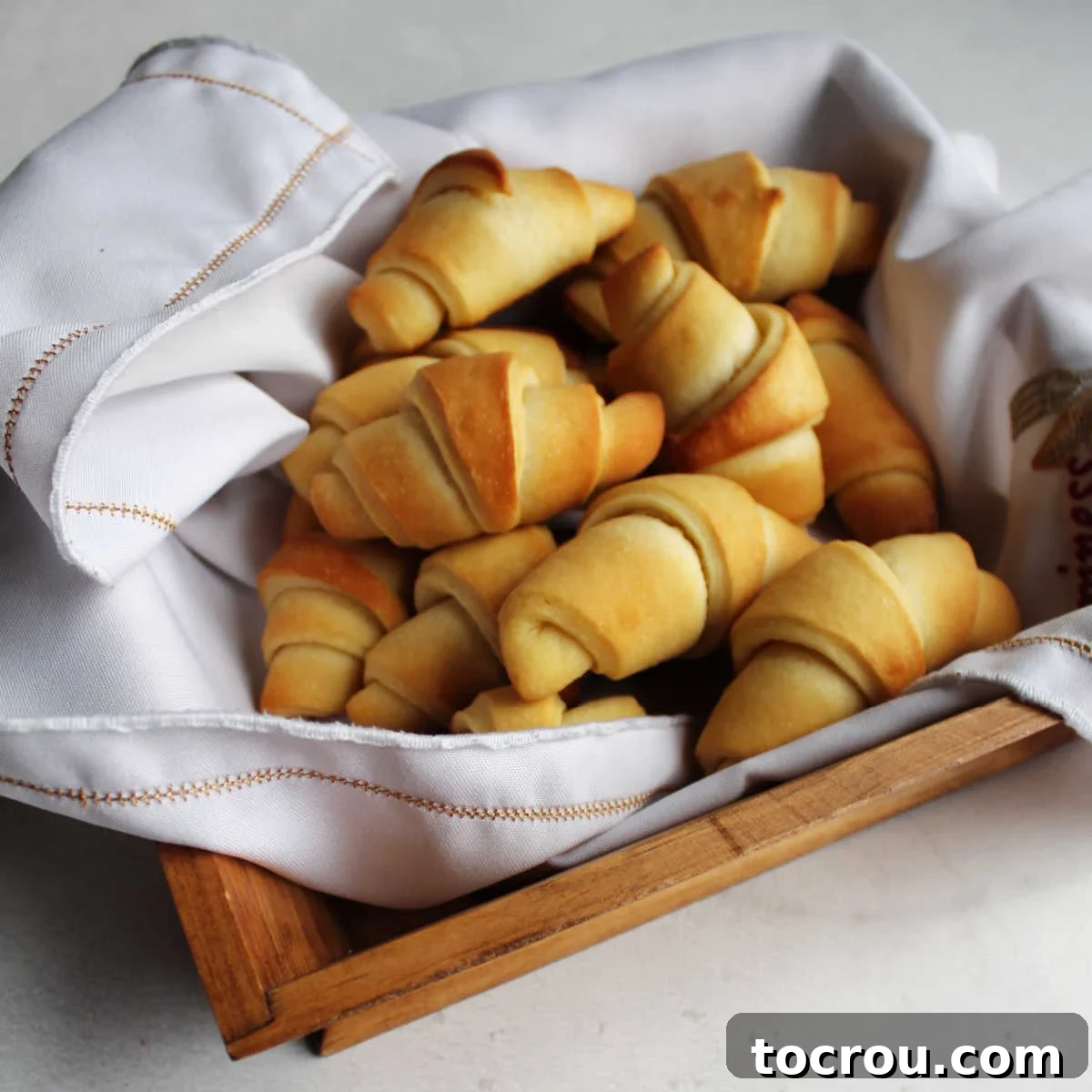
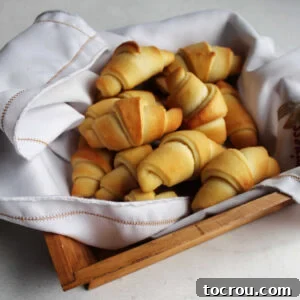
There’s nothing quite like the warmth and aroma of freshly baked bread filling your home, and homemade crescent rolls are no exception. Imagine pulling apart a soft, pillowy roll, still warm from the oven, with its delicate buttery flavor melting in your mouth. Many people think baking crescent rolls from scratch is a daunting task reserved for professional bakers, but we’re here to tell you it’s much easier than you might believe! This recipe will guide you through creating these delightful rolls that are perfect for holiday feasts, special dinners, or simply as a comforting side for any weeknight meal. Get ready to impress your family and friends with these irresistible, golden-brown beauties.
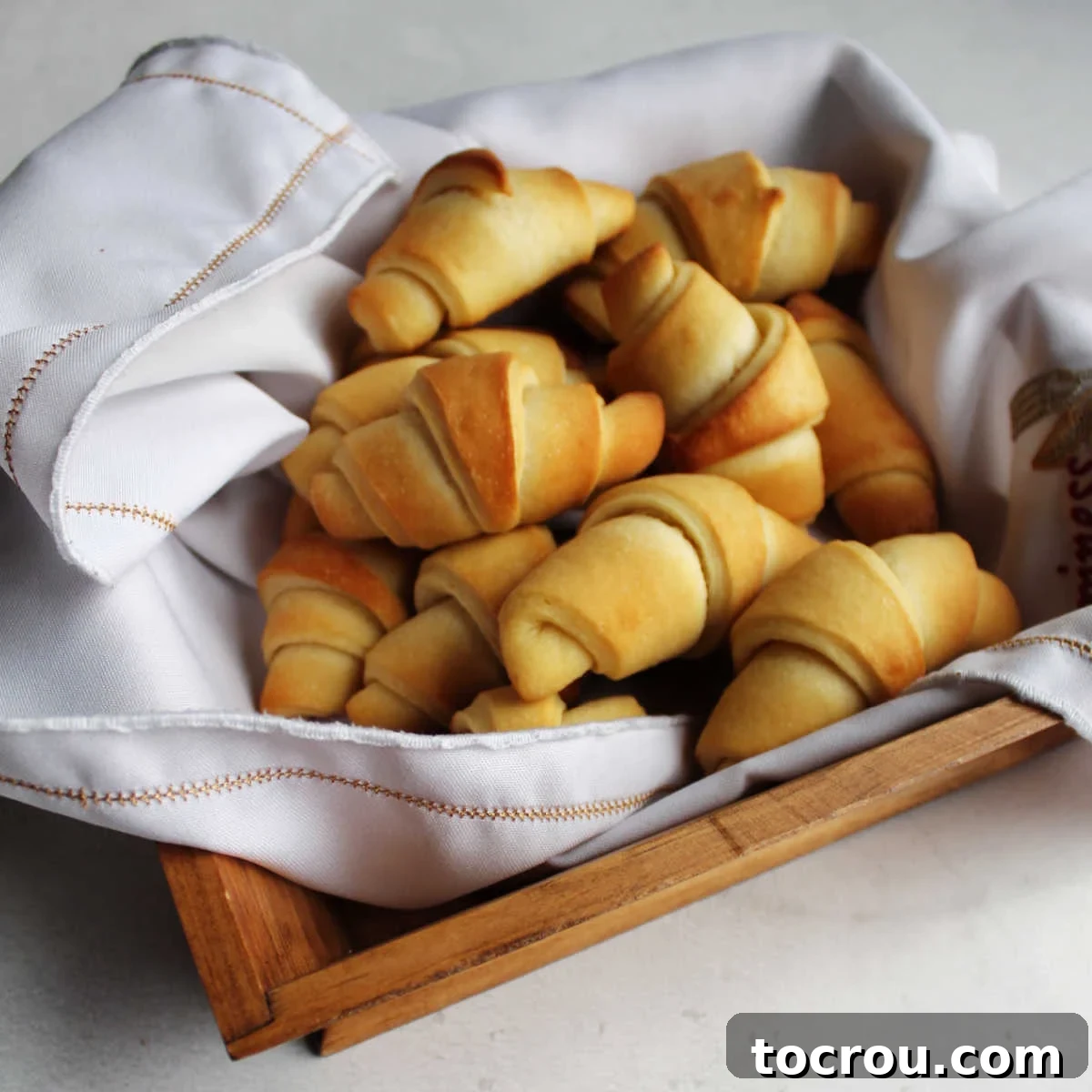
Our homemade crescent rolls are celebrated for their delicious, slightly sweet flavor and incredibly soft texture. Unlike store-bought varieties that pop out of a can, these rolls offer a superior taste and a wonderful homemade feel. The best part? This recipe yields a generous batch of dough, which means you can enjoy some now and easily freeze the rest for future cravings. Having ready-to-bake crescent roll dough in your freezer is a game-changer for quick, delicious bread whenever you need it.
You’ll absolutely adore the rich, buttery taste of these rolls, enhanced by the satisfaction of knowing every wholesome ingredient that went into them. Plus, you’ll never again have to jump at the unexpected “pop” of a refrigerated dough tube!
This cherished recipe comes from a dear family friend, Sarah, who shared it with MiMi. It’s a treasured family heirloom, passed down from Sarah’s grandma, and has been a holiday meal staple for generations. Once you try them, you’ll understand exactly why this recipe holds such a special place in their hearts – and soon, in yours too!
Why Homemade Crescent Rolls are Unbeatable
While convenience can be tempting, nothing compares to the taste and texture of crescent rolls made from scratch. The process of mixing, kneading, and watching the dough rise is a therapeutic experience that culminates in a truly superior product. Our recipe ensures a light, airy crumb with a tender crust, far exceeding the often dense and artificially flavored store-bought alternatives. You control the quality of ingredients, opting for fresh butter, eggs, and milk, which contribute to the rolls’ unparalleled richness and natural sweetness.
The Perfect Blend of Sweet and Buttery
These crescent rolls strike an exquisite balance between a subtle sweetness and a rich, buttery depth. The sugar in the dough not only aids in yeast activation and crust browning but also lends a delicate flavor that complements savory dishes beautifully. The generous amount of butter, both in the dough and brushed on during shaping and baking, creates a moist interior and a golden, irresistible exterior. This combination makes them versatile enough to be served with almost any meal, from a hearty roast to a light salad.
Mastering the Dough: Your Key to Success
Creating the perfect crescent roll dough is simpler than it seems, especially with the help of a stand mixer. The process begins with activating the yeast in warm water, a crucial step that ensures your rolls will rise beautifully and have that characteristic fluffy texture. Once the yeast is bubbly and fragrant, you combine it with melted butter, sugar, salt, eggs, and milk, creating an enriched dough that is both flavorful and pliable.
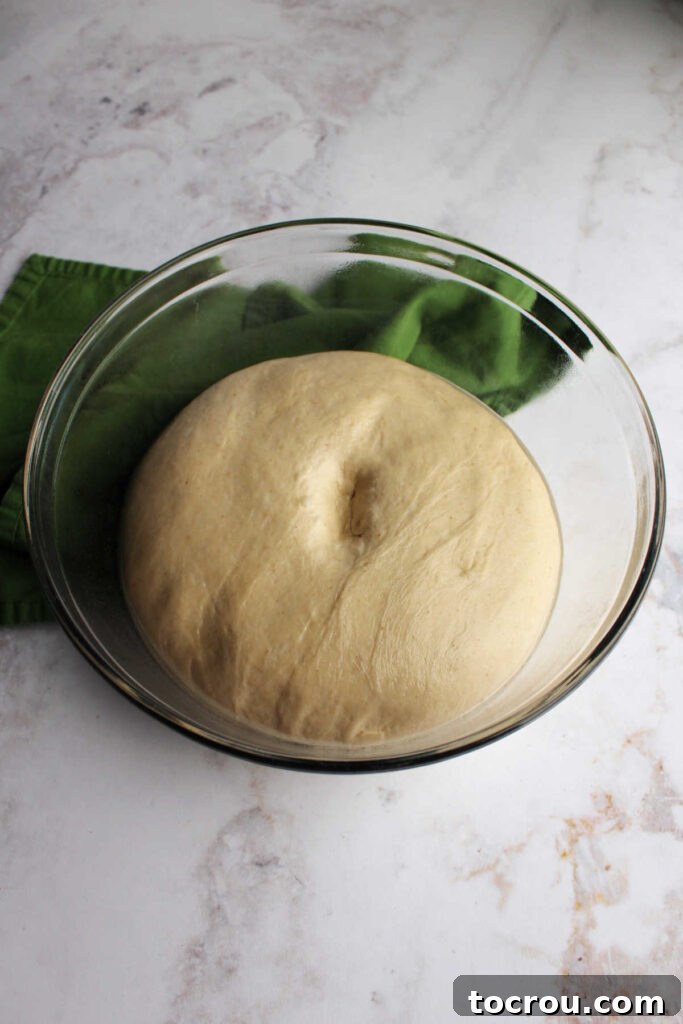
Kneading the dough for about 5 minutes is essential for developing gluten, which gives the rolls their structure and chewiness. You’ll know your dough is ready when it’s smooth, elastic, and no longer sticky. After kneading, the dough undergoes its first rise in a warm, buttered bowl. This initial proofing allows the yeast to work its magic, doubling the dough in size and developing its depth of flavor. This step typically takes about an hour, depending on the warmth of your kitchen.
How Do You Know When the Dough is Perfectly Proofed?
A simple test can tell you if your dough has risen enough. Gently stick a floured finger into the dough. If the indent springs back quickly, the dough needs a little more time to rise. If the indent slowly fills back or remains, your dough is perfectly proofed and ready for the next step: punching it down and dividing it into quarters for shaping. This ensures optimal texture and a light, airy result.
Proofing Tip: The Finger Test
To check if your dough has adequately risen after the first proof, gently press two fingers about half an inch deep into the dough. If the indent bounces back immediately, it needs more time to proof. If the indent remains or slowly fills back, your dough is ready to be punched down and shaped. This simple test prevents over-proofing or under-proofing, ensuring a perfect texture every time.
Shaping Your Perfect Crescent Rolls
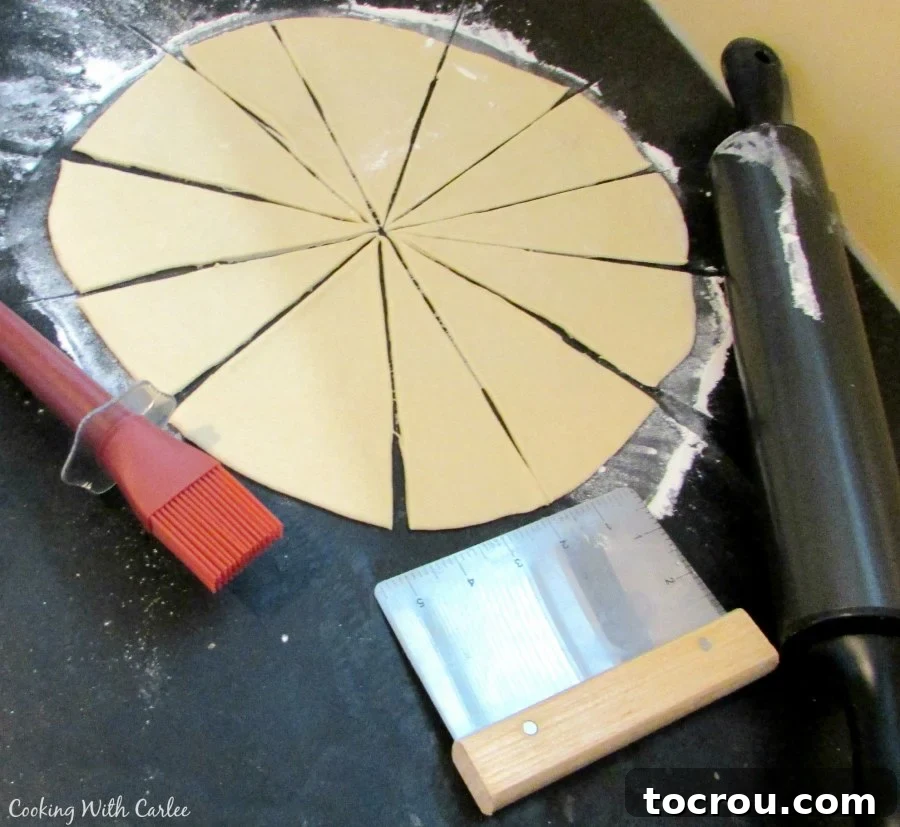
After the first rise, gently punch down the dough to release the air, then divide it into four equal portions. Each portion is then rolled into a smooth ball and allowed to rest briefly, which relaxes the gluten and makes the dough easier to work with. The next step is the iconic shaping process: roll each ball into a 14-inch circle, then use a pizza cutter or sharp knife to divide the circle into 12 equal triangles, just like slicing a pizza.
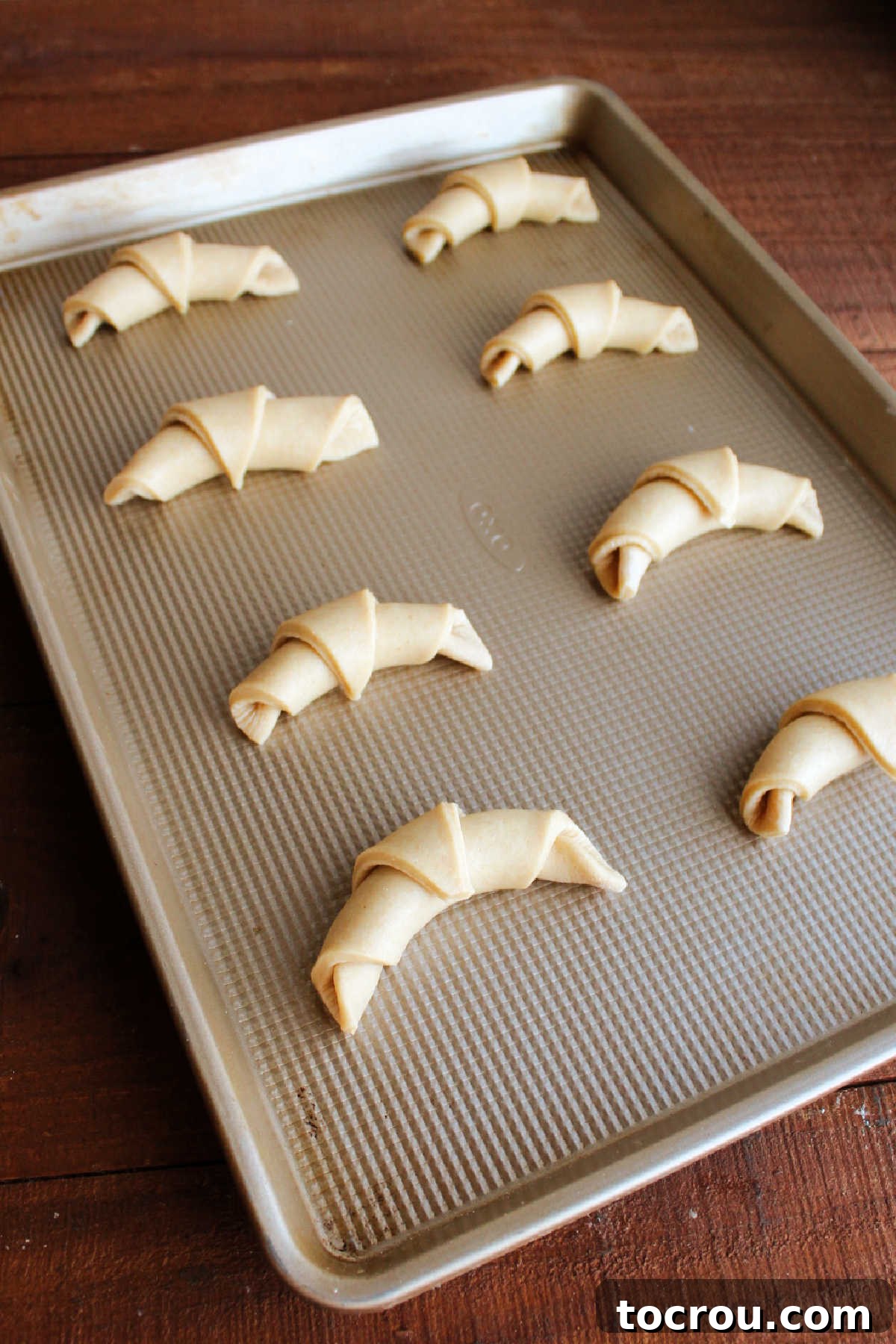
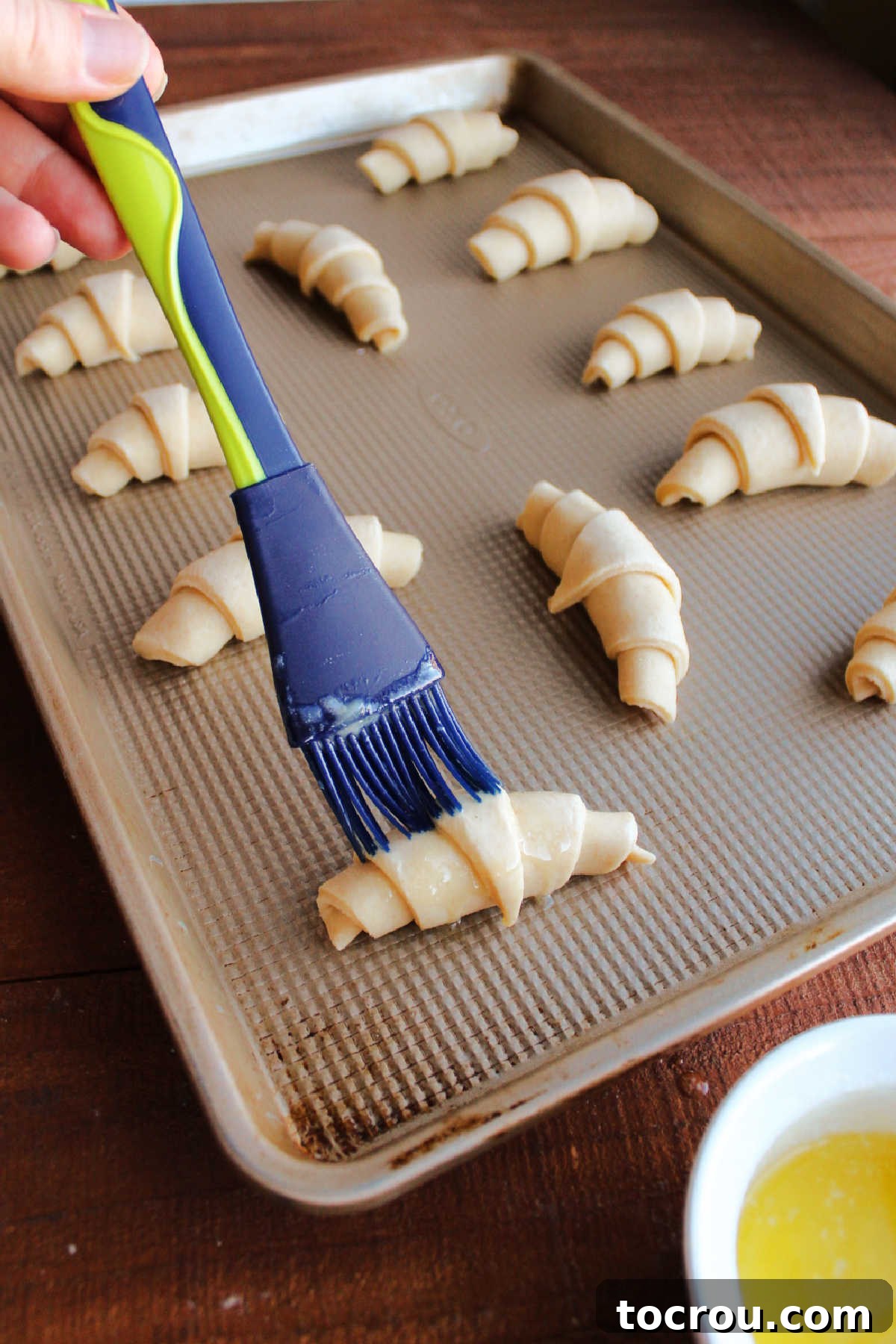
Before rolling, each triangle is brushed with a generous layer of melted butter. This not only adds to the incredible flavor but also helps create those lovely, separated layers as the rolls bake. Starting from the wide end of each triangle, gently roll it up towards the point, forming the classic crescent shape. Place the shaped rolls on a baking sheet, cover them with a lightly damp towel, and let them rise again until almost doubled in size. This second rise, or proofing, is vital for achieving that light and fluffy texture.
Can I Freeze the Dough for Later? Absolutely!
One of the many benefits of making a large batch of homemade crescent roll dough is the option to freeze some for later. You certainly don’t have to bake all 48 rolls at once. Freezing the dough offers incredible flexibility and convenience, allowing you to enjoy fresh, warm rolls whenever the craving strikes, without all the initial prep work.
Freezing Dough in Balls: The Most Versatile Option
Our preferred method for freezing extra dough is to wrap the unshaped balls of dough tightly in plastic wrap, then place them into a freezer-safe bag. This method keeps the dough fresh for several months. When you’re ready to bake fresh crescents, simply transfer a frozen ball of dough to the refrigerator to thaw overnight. Once thawed, allow it to come to room temperature, then proceed with rolling, shaping, and baking according to the instructions. This method is incredibly versatile, as it means you’re not committed to making crescent rolls specifically; you can use the thawed dough in any way you would use a can of store-bought refrigerated dough, like for pigs in a blanket, savory pockets, or sweet pastry twists.
Freezing Formed Crescent Rolls for Ultimate Convenience
For those days when you need freshly baked rolls with minimal effort, you can also freeze the crescent rolls after they’ve been shaped. This method is perfect for streamlining your meal prep for holidays or busy weeknights. After shaping the crescents, arrange them on a sheet pan and freeze them until solid, typically for a couple of hours. Once frozen, transfer the solid rolls to a large zippered freezer bag for long-term storage.
The night before you plan to serve them, simply take the desired number of frozen, formed rolls out of the freezer. Place them on a baking sheet, cover loosely with greased plastic wrap, and let them defrost and slowly rise overnight in the refrigerator. About 30 minutes to an hour before you’re ready to bake, move them to the counter to finish rising to room temperature. This final rise ensures a light and airy texture. Then, bake them off to golden perfection. This method ensures you can have warm, fluffy homemade rolls on the table without a flurry of flour and last-minute effort on a big day.
Are Crescent Rolls and Croissants the Same Thing? A Delicious Distinction
This is a common question, and the answer is a definitive “No!” While both crescent rolls and croissants share a similar iconic horn shape, their preparation, ingredients, and resulting textures are distinctly different. Understanding these differences will help you appreciate the unique qualities of each.
Crescent Rolls, like the ones in this recipe, are made from an enriched yeast dough. This means the dough contains ingredients like butter, milk, sugar, and eggs, which contribute to its rich flavor, softness, and tender crumb. They are a type of sweet and buttery bread roll that is soft, pillowy, and delightful. Their texture is uniform and spongy, perfect for soaking up gravies or simply enjoying with a pat of butter.
Croissants, on the other hand, are a much flakier pastry. Their signature flaky, layered texture comes from a complex process called lamination. During lamination, layers of dough and butter are repeatedly folded and rolled out, creating dozens of thin, distinct layers. When baked, the water in the butter creates steam, pushing the layers apart and resulting in an incredibly airy, crispy, and shattered texture. Croissants are typically less sweet than crescent rolls and are often served for breakfast or as a standalone pastry.
In essence, while both are delicious and crescent-shaped, crescent rolls are a soft, enriched bread, while croissants are a delicate, laminated pastry.
Baking Your Homemade Crescent Rolls to Golden Perfection
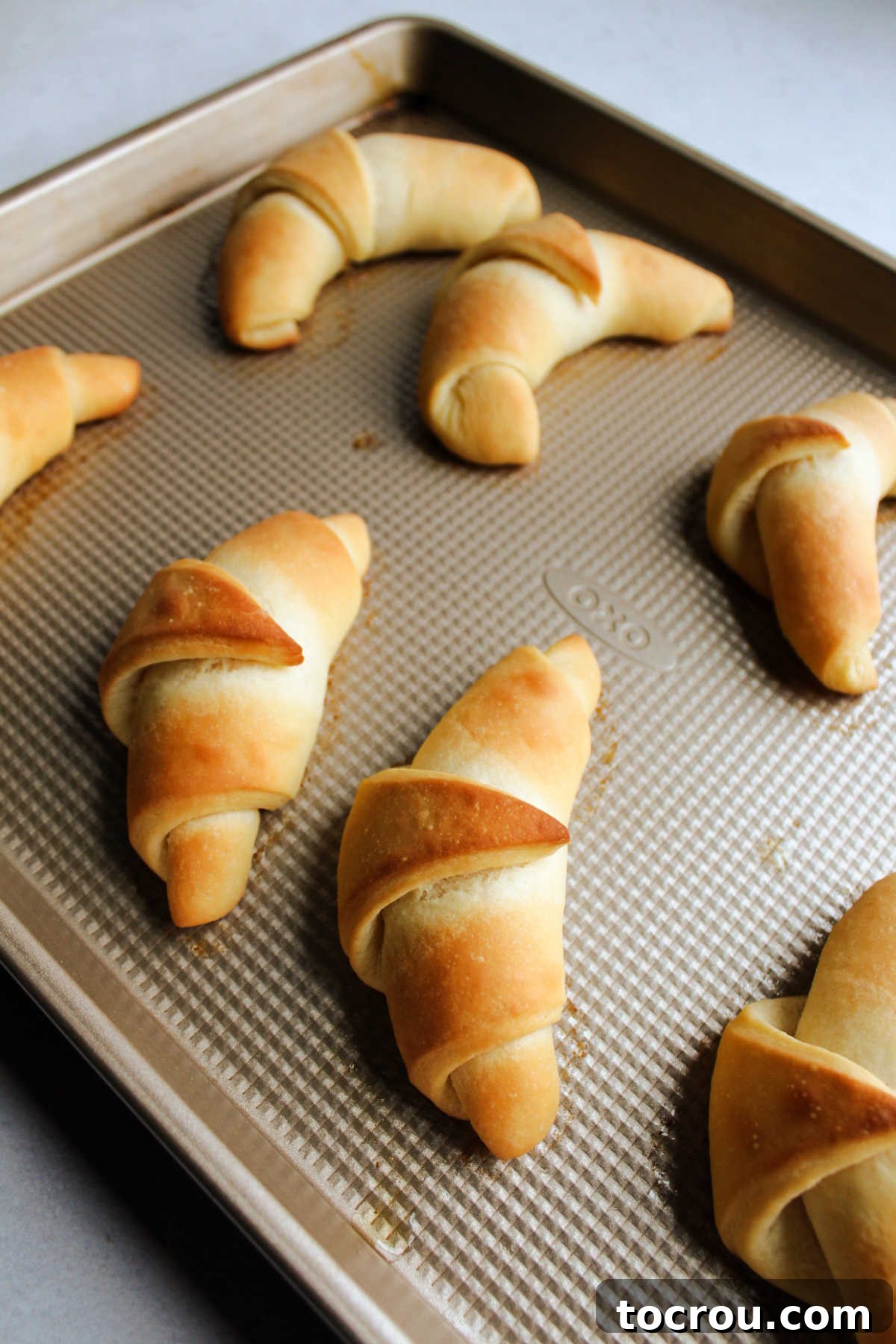
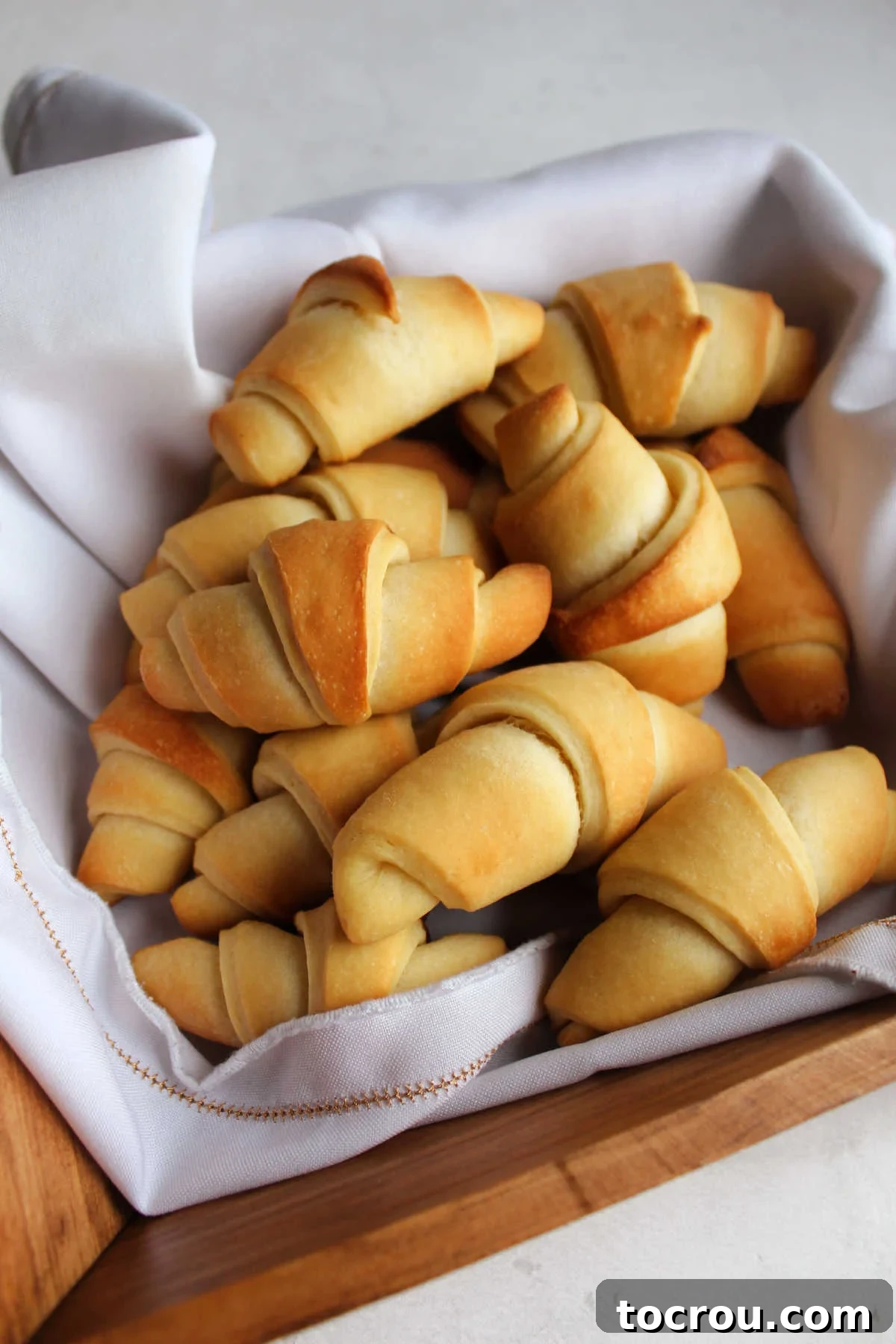
Once your shaped crescent rolls have completed their second rise, they are ready for the oven. Preheat your oven to 375°F (190°C). Before baking, give the tops of the rolls another gentle brush with melted butter. This extra layer of butter will ensure a beautiful golden-brown crust and an even richer flavor. Bake the rolls for approximately 8 minutes, or until they are puffed up and gloriously golden. Keep a close eye on them, as oven temperatures can vary. The best way to enjoy these homemade crescent rolls is warm, straight from the oven, when they are at their softest and most fragrant.
More Irresistible Bread Recipes to Explore
If you’ve fallen in love with the joy of baking fresh bread, we have a variety of other fantastic recipes you might enjoy trying. From savory twists to quick breads, there’s something for every bread enthusiast:
- Celtic Knot Rolls are a fun and flavorful twist on garlic bread, shaped into beautiful knots. They’re perfect alongside comforting soups and stews or as a festive addition to your St. Patrick’s Day menu.
- For those with an active sourdough starter, our Sourdough Crescent Rolls offer a delightful tangy flavor and a wonderful way to utilize your starter. It’s an easy recipe that promises great taste and a rewarding baking experience.
- If you’re looking for a quick and easy bread option with no yeast required, Dori’s Beer Bread is a fabulous choice. You can customize the flavor by experimenting with different types of beer – lagers for a classic taste, IPAs for a hoppy note, or even hard cider for a unique twist, as Dori suggests.
- And for lovers of fluffy, versatile homemade rolls, MiMi’s 3-Day Rolls are an absolute family favorite. This recipe is incredibly adaptable and can be used to make everything from hamburger buns to classic dinner rolls, perfect for any occasion.
Watch our step-by-step video to see just how easy it is to form these beautiful crescent rolls. Little Dude will show you the way!
Watch Little Dude Forms Homemade Crescent Rolls Here!
4.88 from 24 ratings
Homemade Crescent Rolls
Carlee
48
Servings
20 minutes
8 minutes
2 hours
2 hours
28 minutes
Equipment
-
Bench Scrape
-
KitchenAid 5-Qt. Stand Mixer
-
Silicone Basting Brushes
Ingredients
-
1
Tablespoon
active dry yeast
-
½
cup
warm water -
½
cup
unsalted butter
melted -
½
cup
granulated sugar -
½
teaspoon
salt -
2
large
eggs -
½
cup
milk -
4
cups
all purpose flour
plus additional for rolling - more melted butter for brushing on rolls as your form them
Instructions
-
Dissolve yeast in the warm water, then set it aside to proof for a few minutes until foamy.1 Tablespoon active dry yeast,
½ cup warm water -
In the bowl of your stand mixer, combine the melted butter, granulated sugar, and salt. Mix until well combined.½ cup unsalted butter,
½ cup granulated sugar,
½ teaspoon salt -
Lightly beat the 2 room temperature eggs and add them to the butter mixture in the stand mixer. Mix briefly.2 large eggs
-
Stir in the milk and the activated yeast mixture until everything is well combined.½ cup milk
-
Gradually add the all-purpose flour. Mix on low speed until the dough comes together, then increase speed and knead for 5 minutes until smooth and elastic. Add a little more flour if the dough is too sticky.4 cups all purpose flour
-
Transfer the dough to a warm, buttered bowl, turning once to coat. Cover the bowl with plastic wrap or a damp towel and let it rise in a warm place until doubled in size, which typically takes about an hour.
-
Once the dough has doubled, gently punch it down to release the air. Shape the dough into a large ball and divide it into quarters. Form each quarter into a smaller ball and let them rest for about 15 minutes to allow the gluten to relax.
-
On a lightly floured surface, roll one ball of dough into a 14-inch circle. Using a pizza cutter or a sharp knife, cut the circle into 12 equal wedge-shaped pieces (like cutting a pizza).
-
Brush each “slice” generously with melted butter. Then, starting from the wide end, roll the dough tightly towards the point to form the classic crescent shape. Place the shaped rolls on a baking sheet, leaving some space between them. Cover with a slightly damp towel and let them rise again in a warm place until almost doubled in size, about an hour.
-
Repeat the rolling and shaping process with the remaining dough balls. Alternatively, wrap any extra dough balls tightly in plastic wrap and freeze them for later use. You can also freeze formed crescent rolls at this stage if preferred (see notes for instructions).
-
Preheat your oven to 375°F (190°C) before baking.
-
Gently brush the tops of the proofed rolls with more melted butter. Bake for about 8 minutes, or until they are beautifully golden brown. For the best flavor and texture, serve them warm straight from the oven.
Notes
Freezing Formed Rolls: It is also possible to form the crescents before freezing them. After shaping, arrange them on a baking sheet and freeze for a couple of hours until solid. Once frozen, transfer them to a zippered freezer bag.
The night before you’d like to bake them, place the frozen, shaped rolls on a baking sheet and cover with greased plastic wrap. Place them in the refrigerator to defrost and begin their second rise. About thirty minutes to an hour before you’d like to bake, move them to the counter to finish rising to room temperature. Then bake them as usual. This method allows for fluffy homemade crescent rolls with minimal last-minute effort.
Video
Email Me The Link
I’ll email this post to you, so you can easily find it later. Plus you’ll get new recipes from me every week!
Nutrition Information
Serving:
1Serving
|
Calories:
68kcal
|
Carbohydrates:
10g
|
Protein:
2g
|
Fat:
2g
|
Saturated Fat:
1g
|
Polyunsaturated Fat:
1g
|
Cholesterol:
13mg
|
Sodium:
42mg
|
Sugar:
2g
“Cooking With Carlee” is not a dietitian or nutritionist, and any nutritional information shared is an estimate. If calorie count and other nutritional values are important to you, we recommend running the ingredients through whichever online nutritional calculator you prefer. Calories and other nutritional values can vary quite a bit depending on which brands were used.
Did you try this recipe?
Don’t forget to leave a rating below and make sure to follow on Pinterest and Instagram for more!